JERUSALEM: Israel’s security cabinet was set to discuss on Monday the next phase of the ceasefire in Gaza, after top US diplomat Marco Rubio and Israeli leader Benjamin Netanyahu presented a united front on their approach to Hamas and Iran.
Rubio was in Israel on his first Middle East trip as President Donald Trump’s secretary of state.
“Hamas cannot continue as a military or a government force... they must be eliminated,” Rubio said of the Palestinian group that fought Israel for more than 15 months in Gaza until a fragile ceasefire took effect on January 19.
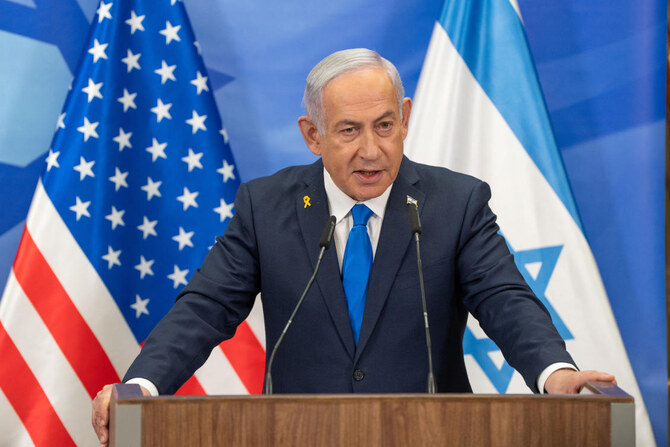
Standing beside him, Netanyahu said the two allies had “a common strategy,” and that “the gates of hell will be opened” if all hostages still held by militants in Gaza are not freed.
The comments came a day after Hamas freed three Israeli hostages in exchange for 369 Palestinian prisoners — the sixth such swap under the ceasefire deal, which the United States helped mediate along with Qatar and Egypt.
Israel and Hamas have traded accusations of ceasefire violations, and adding to strain on the deal is Trump’s widely condemned proposal to take control of rubble-strewn Gaza and relocate its more than two million residents.
“We discussed Trump’s bold vision for Gaza’s future and will work to ensure that vision becomes a reality,” Netanyahu said.
The scheme that Trump outlined earlier this month as Netanyahu visited Washington lacked details, but he said it would entail moving Gazans to Jordan or Egypt.
Trump has suggested the coastal territory could be redeveloped into the “Riviera of the Middle East.”
Washington, Israel’s top ally and weapons supplier, says it is open to alternative proposals from Arab governments, but Rubio has said that for now, “the only plan is the Trump plan.”
However, Saudi Arabia and other Arab states have rejected his proposal, and instead favor — as does much of the international community — the creation of a Palestinian state alongside Israel.
Egyptian President Abdel Fattah El-Sisi on Sunday said establishment of a Palestinian state was “the only guarantee” of lasting Middle East peace.
Hamas and Israel are implementing the first, 42-day phase of the ceasefire, which nearly collapsed last week.
“At any moment the fighting could resume. We hope that the calm will continue and that Egypt will pressure Israel to prevent them from restarting the war and displacing people,” said Nasser Al-Astal, 62, a retired teacher in southern Gaza’s Khan Yunis.
Since the truce began last month, 19 Israeli hostages have been released in exchange for more than 1,000 Palestinian prisoners.
Out of 251 people seized in Hamas’s October 7, 2023 attack on Israel, which sparked the war, 70 remain in Gaza, including 35 the Israeli military says are dead.
In a statement, Rubio condemned Hamas’s hostage-taking as “sick depravity” and called for the immediate release of all remaining captives, living and dead, particularly five Israeli-American dual nationals.
Negotiations on a second phase of the truce, aimed at securing a more lasting end to the war, could begin this week in Doha, a Hamas official and another source familiar with the talks have said.
Netanyahu’s office said he would convene a meeting of his security cabinet on Monday to discuss phase two.
It said the prime minister was also dispatching negotiators to Cairo Monday to discuss the “continued implementation” of phase one.
The team would “receive further directives for negotiations on Phase II” after the cabinet meeting, the office said.
The Gaza war triggered violent fallout throughout the Middle East, where Iran backs militant groups including in Yemen and Lebanon.
Israel fought a related war with Hamas’s Lebanese ally Hezbollah, severely weakening it.
There were also limited direct strikes by Iran and Israel against each other.
The October 7, 2023 attack on Israel resulted in the deaths of 1,211 people, mostly civilians, according to an AFP tally of Israeli official figures.
Israel’s retaliatory campaign has killed at least 48,271 people in Gaza, the majority of them civilians, according to figures from the health ministry in the Hamas-run territory that the United Nations considers reliable.
On Sunday, Hamas said an Israeli air strike killed three police officers near south Gaza’s Rafah in what the militant group called a “serious violation” of the truce.
Israel said it had struck “several armed individuals” in south Gaza.
It is at least the second Israeli air strike in Gaza since the ceasefire began.


![]()

Israel security cabinet to discuss new phase of Gaza truce after Rubio visit
Short Url
https://arab.news/5ccrr
Israel security cabinet to discuss new phase of Gaza truce after Rubio visit
- Netanyahu’s office said he would convene a meeting of his security cabinet on Monday to discuss phase two
- It said the prime minister was also dispatching negotiators to Cairo Monday to discuss the “continued implementation” of phase one


Latest updates


© 2026 SAUDI RESEARCH & PUBLISHING COMPANY, All Rights Reserved And subject to Terms of Use Agreement.