- President Asif Ali Zardari’s statement dispels the notion that China’s ambitious foreign infrastructure push has saddled poor nations with ‘hidden debt’
- China is a major ally and investor in Pakistan that has pledged over $65 billion in investment in road, infrastructure and development projects under CPEC
ISLAMABAD: Pakistan President Asif Ali Zardari has praised China’s remarkable growth and called it a positive development, saying there is no need for the world to fear it.
Zardari, who visited China on a five-day visit earlier this month, said this during an interview with Chinese broadcaster CCTV that was shared on YouTube on Saturday.
The statement dispelled the notion that China’s ambitious foreign infrastructure push has saddled poor nations with “hidden debt” worth hundreds of billions of dollars, which has raised concerns among some regional and global powers that Beijing’s growing naval presence, together with its so-called “debt-trap” diplomacy, could provide it significant advantages far from its shores.
China is a major ally and investor in Pakistan that has pledged over $65 billion in investment in road, infrastructure and development projects under the China-Pakistan Economic Corridor (CPEC), a part of the Belt and Road Initiative that is a massive China-led infrastructure project that aims to stretch around the globe.
“China has never been an occupier,” President Zardari said, when asked about China’s modernization and why he was not afraid of the development that might be threatening to some other countries.
“Why am I not? Because, A, I’m your neighbor, and I’ve been your neighbor since centuries. So why should one neighbor, which knows that the Chinese are not the kind who want to interfere in other countries, be scared. And I would never be scared of China.”
Since the launch of President Xi Jinping’s Belt and Road Initiative (BRI) investment drive, Beijing has invested hundreds of billions of dollars to build roads, bridges, ports and hospitals in some 163 nations, including many countries across Africa and Central Asia, according to a study by AidData, an international development research lab.
Nearly 70 percent of this money has been lent under opaque deals to state banks or joint ventures between Chinese businesses and local partners in countries that were already deeply indebted to Beijing.
But China and Pakistan enjoy a close strategic partnership, with the latter’s location on the Arabian Sea providing Beijing an overland route toward the Gulf of Aden and onto the Suez Canal, and enabling Chinese ships to avoid the potential chokepoint of the Malacca Strait.
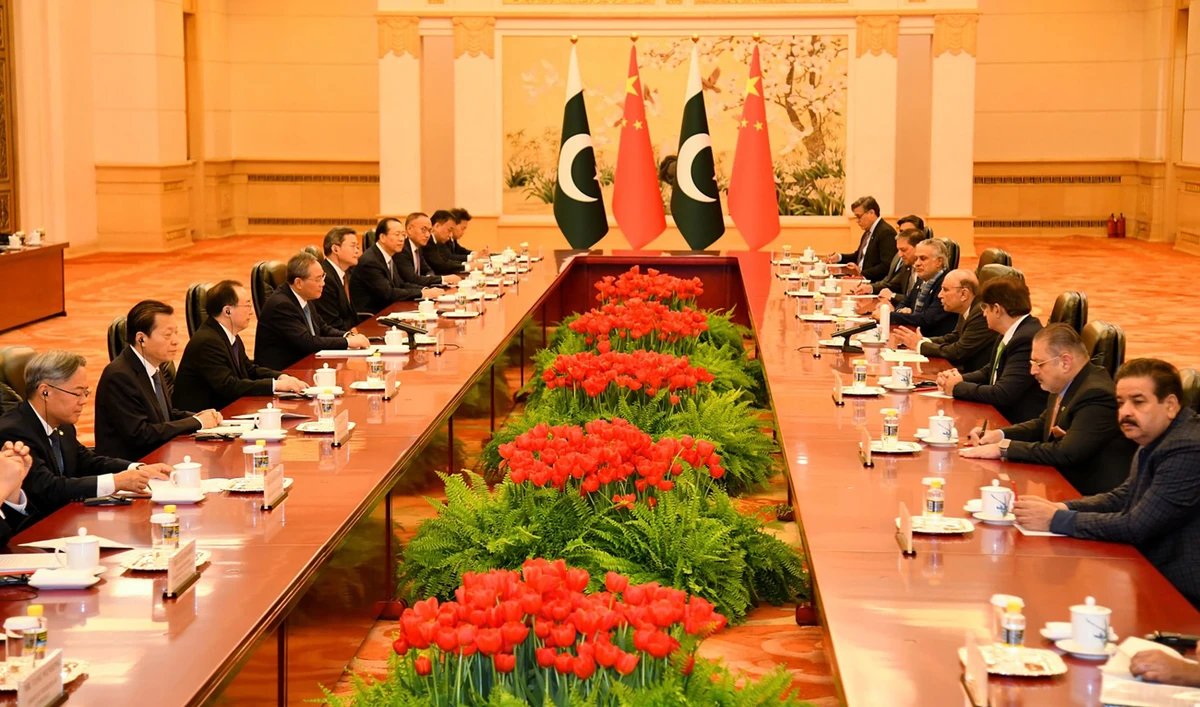
President Zardari, who discussed CPEC’s acceleration, cooperation in science and technology, renewable energy and other sectors during his visit to China this month, termed Beijing’s development program a “good thing.”
“The world can’t compete [with China]. It’s all about new technologies, the rise of China, which is a good thing,” he told the Chinese broadcaster.
“Pakistan is a very independent country. We have our independent role, but at the same time, we will look toward China and go along with China first.”