RIYADH: Saudi Arabia’s premier technology event, LEAP 2025, has showcased major investment announcements and strategic collaborations, further cementing the Kingdom’s position as a regional hub for digital transformation.
From large-scale infrastructure projects to artificial intelligence-driven innovations, companies have unveiled commitments that align with the nation’s Vision 2030’s push for technological advancement.
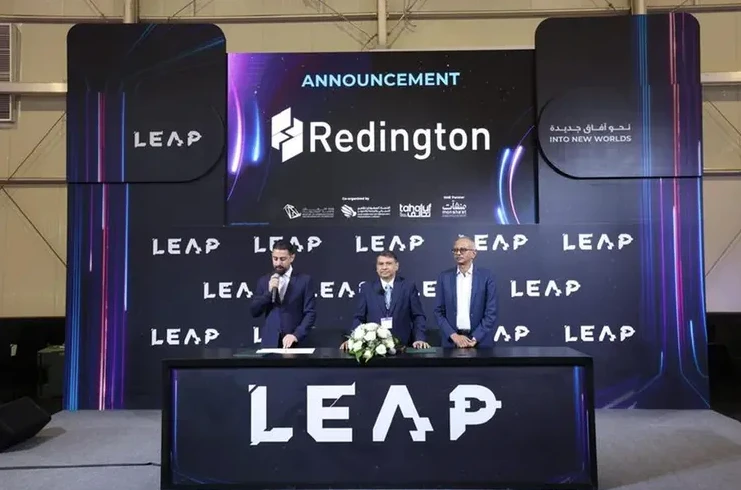
Redington Commits $533.3m to Saudi expansion
Redington, a global technology aggregator, announced an SR2 billion ($533.3 million) investment over the next decade to strengthen its presence in Saudi Arabia.
The funds, sourced from internal accruals, will be used to establish a new headquarters, a smart distribution center, and talent development initiatives.
The firm, which has operated in the Kingdom for 24 years, delivered $1.5 billion worth of technology in 2024 alone.
Viswanath Pallasena, the company’s CEO for the Middle East and Africa, said: “We are wholeheartedly committed to Saudi Vision 2030, where technology is a key component to all its three pillars — a vibrant society, a thriving economy, and an ambitious nation. We’re truly dedicated to playing an active role in bringing its transformative goals to life.”
PIF’s SEVEN and TAWAL to develop digital infrastructure for entertainment destinations
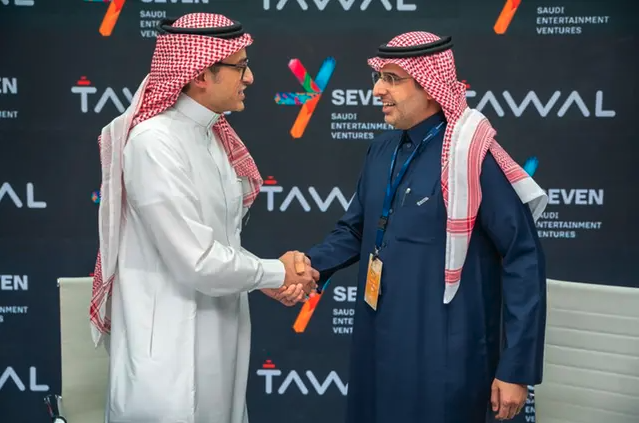
Saudi Entertainment Ventures, also known as SEVEN, a subsidiary of Qiddiya Investment Co. backed by the Public Investment Fund, signed a strategic agreement with TAWAL, a Saudi telecommunications infrastructure firm, to establish neutral digital infrastructure across its 21 entertainment destinations.
The partnership includes the development of internal and external telecom infrastructure featuring indoor coverage systems, multi-band antenna distribution, and neutral communication towers.
The goal is to enhance 4G and 5G connectivity, support Internet-of-Things applications, and enable advanced digital services for visitors.
“This partnership marks a significant step in advancing the digital infrastructure of our entertainment destinations, enabling exceptional and seamless experiences for our visitors,” said Abdulrahman Al-Ali, chief information officer at SEVEN.
Qualcomm and Aramco Digital unveil AI-enabled industrial 5G smartphones
Qualcomm Technologies and Aramco Digital announced a collaboration to develop the world’s first AI-enabled industrial 5G smartphones with native support for the 450-megahertz spectrum.
The 450MHz spectrum is a low-frequency band known for its long-range coverage and strong signal penetration, making it ideal for industrial and rural connectivity. It supports IoT, machine-to-machine communication, and private 5G networks, particularly in energy, utilities, and remote operations.
These devices, powered by Qualcomm’s QCM8550 and QCM6490 processors, will be designed for industrial applications, providing advanced connectivity and data transfer capabilities.
“At Aramco Digital, we are committed to pushing the boundaries of technological innovation,” said Eid Al-Harbi, connectivity president at Aramco Digital. “By utilizing cutting-edge 5G and AI technologies, we are enabling smarter, more sustainable industry that aligns with the Kingdom’s Vision 2030 and beyond.”
IBM and Lenovo expand AI collaboration in Saudi Arabia
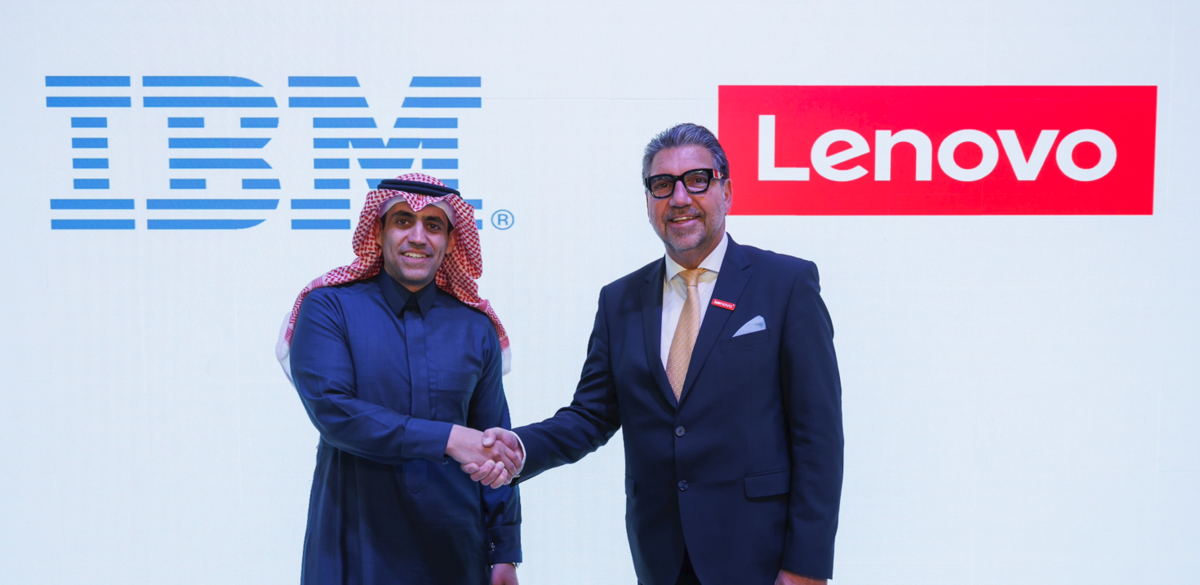
IBM and Lenovo announced an expansion of their technology partnership to accelerate generative AI adoption in the Kingdom.
The collaboration will integrate IBM’s watsonx AI portfolio, including the Saudi Data and Artificial Intelligence Authority’s open-source Arabic Large Language Model, with Lenovo’s infrastructure.
The initiative is expected to help Saudi businesses and government agencies enhance AI-driven decision-making in areas such as fraud detection, public safety, and IT operations.
Giovanni Di Filippo, president of EMEA Infrastructure Solutions Group at Lenovo, emphasized the significance of the partnership, and said: “We’re pleased to deepen our partnership to bring IBM’s fit-for-purpose generative AI offerings together with Lenovo’s infrastructure solutions to provide customers in Saudi Arabia with solutions designed to meet their unique needs.”
EDGNEX to deploy 500MW of data center capacity by 2030
EDGNEX, the digital infrastructure arm of DAMAC Group, revealed plans to roll out 500 megawatts of data center capacity across the Kingdom by 2030, targeting AI and cloud computing demands.
With existing operations in Riyadh and Dammam, EDGNEX aims to expand its Saudi footprint while engaging local vendors and creating high-value technology and engineering jobs.
The company’s broader portfolio spans 10 countries, with a projected capacity exceeding 1000MW.