


KARACHI: The United States (US) and Pakistan have agreed to strengthen cooperation on security and border management, the Pakistani interior ministry said on Saturday, with both sides reaffirming commitment to counter terrorism, enhance information-sharing and promote regional stability.
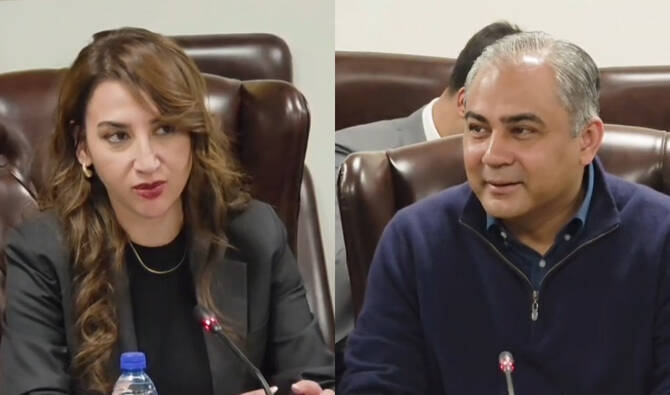
The statement came after a meeting of Pakistani Interior Minister Mohsin Naqvi with a high-level US delegation, led by US Chargé d’Affaires Natalie Baker, that featured in-depth discussions on boosting Pakistan-US relations and expanding cooperation in shared areas of interest.
The two sides discussed training programs for officials of Pakistan’s Federal Investigation Agency (FIA), Federal Constabulary and NCCIA National Cyber Crime Investigation Agency (NCCIA) as well as the establishment of a Center for Transformation Crime and an academy within FIA with US support.
“Both sides agreed to enhance collaboration in bilateral security and border management,” the interior ministry said. “It was mutually agreed to further strengthen existing cooperation with the [US] Anti-terrorist Assistance Program and the Bureau of International Narcotics and Law Enforcement Affairs.”
Both sides agreed to equip Pakistani border security agencies, coast guards and other institutions with modern US-supplied equipment.
On the occasion, Naqvi said that modern technology would enhance the capacity of Pakistani border security agencies and coast guards, according to the ministry. He welcomed US assistance in the reorganization of the Federal Constabulary and in strengthening the capabilities of FIA and NCCIA.
Pakistan and the US have maintained multifaceted relations for decades, encompassing security cooperation, economic engagement and people-to-people ties. While the partnership has experienced periods of strain, particularly over regional security dynamics in South Asia and Afghanistan, both sides have continued to engage through institutional mechanisms, including military-to-military contacts, counterterrorism cooperation and high-level diplomatic dialogues.
In August last year, both sides reaffirmed their commitment to combating militancy by boosting capabilities against emerging threats, the Pakistani foreign office said, following a Pakistan-US joint counterterrorism dialogue in Islamabad. This month, Pakistan and the US launched the 13th edition of their bilateral joint counterterrorism exercise, Inspired Gambit 2026, to boost interoperability and share counterterrorism expertise, the Pakistani military said.
Naqvi said the US support in activating FIA’s Counter-Terrorism Wing would prove to be “highly beneficial,” while the NCCIA is carrying out an extensive crackdown on illegal call centers across the country.
“Advanced software is vital for preventing financial fraud and terror financing, and US cooperation with NCCIA in this regard is highly significant,” he said.
The minister emphasized the need to further expand collaboration with Pakistani institutions, according to the Pakistani interior ministry. The US delegation appreciated Pakistan’s efforts to increase security cooperation and strengthen bilateral ties.
“The acting US ambassador acknowledged the ongoing collaboration between the Ministry of Interior and US agencies at various levels and reaffirmed that efforts would continue to further enhance partnership with Pakistan,” the ministry added.


