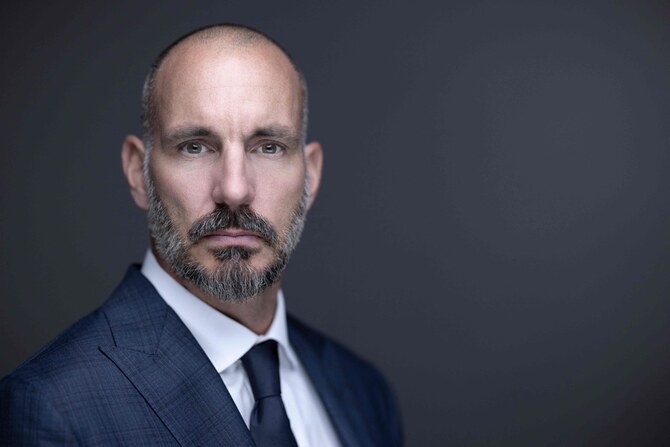
LISBON: Rahim Al-Hussaini was named Wednesday as the new Aga Khan, spiritual leader of the world’s millions of Ismaili Muslims.
He was designated as the Aga Khan V, the 50th hereditary imam of the Shiite Ismaili Muslims, in his father’s will. His father died Tuesday in Portugal.
The Aga Khan is considered by his followers to be a direct descendant of the Prophet Muhammad and is treated as a head of state.
The Aga Khan Development Network and the Ismaili religious community announced earlier that His Highness Prince Karim Al-Hussaini, the Aga Khan IV and 49th hereditary imam of the Shiite Ismaili Muslims, died surrounded by his family.
It said his burial and will-reading will be held in the coming days, followed by an homage ceremony.
The late Aga Khan was given the title of “His Highness” by Queen Elizabeth in July 1957, two weeks after his grandfather the Aga Khan III unexpectedly made him heir to the family’s 1,300-year dynasty as leader of the Ismaili Muslim sect.
A defender of Islamic culture and values, he was widely regarded as a builder of bridges between Muslim societies and the West despite — or perhaps because of — his reticence to become involved in politics.
The Aga Khan Development Network, his main philanthropic organization, deals mainly with issues of health care, housing, education and rural economic development. It says it works in over 30 countries and has an annual budget of about $1 billion for nonprofit development activities.
Ismailis lived for many generations in Iran, Syria and South Asia before also settling in east Africa, Central Asia and the Middle East, as well as Europe, North America and Australia more recently. They consider it a duty to tithe up to 12.5 percent of their income to the Aga Khan as steward.


Rahim Al-Hussaini is named new spiritual leader of Ismaili Muslims, succeeding his father
https://arab.news/wuu7s
Rahim Al-Hussaini is named new spiritual leader of Ismaili Muslims, succeeding his father

- Rahim Al-Hussaini was designated as the Aga Khan V
- The Aga Khan is treated by his followers as a head of state


Kosovo, Serbia ‘need to normalize’ relations
- Kosovo, which hopes to join NATO, has also been cultivating relations with Washington in recent months, by removing tariffs on American products
PRISTINA: Kosovo and Serbia need to “normalize” their relations, Kosovo’s Prime Minister Albin Kurti said, several days before legislative elections where he is seeking to extend his term with more solid backing.
Kurti has been in office since 2021 and previous accords signed with Serbia — which does not recognize the independence of its former province — have yet to be respected.
“We need to normalize relations with Serbia,” said Kurti. “But normalizing relations with a neighboring authoritarian regime that doesn’t recognize you, that also doesn’t admit to the crimes committed during the war, is quite difficult,” he added.
Tensions between the two neighbors are regularly high.
“We do have a normalization agreement,” Kurti said, referring to the agreement signed under the auspices of the EU in 2023.
“We must implement it, which implies mutual recognition between the countries, at least de facto recognition.”
But to resume dialogue, Serbia “must hand over Milan Radoicic,” a Serb accused of plotting an attack in northern Kosovo in 2023, Kurti asserted, hoping that “the EU, France, and Germany will put pressure” on Belgrade to do so.
Kosovo, which hopes to join NATO, has also been cultivating relations with Washington in recent months, by removing tariffs on American products and agreeing to accept up to 50 migrants from third countries extradited by the US. So far, only one has arrived.
“We are not asking for any financial assistance in return,” Kurti emphasized. “We are doing this to help the US, which is a partner, an ally, a friend,” added the prime minister, who did not rule out making similar agreements with European countries.
Unable to secure enough seats in the February 2025 parliamentary elections, Kurti was forced to call early elections on Sunday, after 10 months of political deadlock during which the divided parliament failed to form a coalition.
“We need a decisive victory. In February, we won 42.3 percent, and this time we want to exceed 50 percent,” he said.


