ISLAMABAD: Prime Minister Shehbaz Sharif on Wednesday called on India to open “meaningful and result-oriented” dialogue over Kashmir, asserting that New Delhi’s unilateral measures to integrate the disputed Himalayan region have proved futile due to resistance among people.
Kashmir, known for the mesmerizing beauty of its lakes and snowcapped mountains, has remained contested between India and Pakistan since their independence in August 1947. The two South Asian nuclear rivals both claim it in full but control only parts of it. They have fought wars over the region and continue diplomatic efforts to highlight their respective political positions on the issue.
On August 5, 2019, India unilaterally revoked the special constitutional status of Jammu and Kashmir, stripping it of the limited autonomy it had enjoyed. The development was followed by Pakistan’s decision to downgrade its diplomatic ties with New Delhi.
Last year, India held legislative elections in Kashmir for the first time since the August 5 move, but the region continues to operate as a union territory under New Delhi’s direct control, limiting the legislative powers of its assembly.
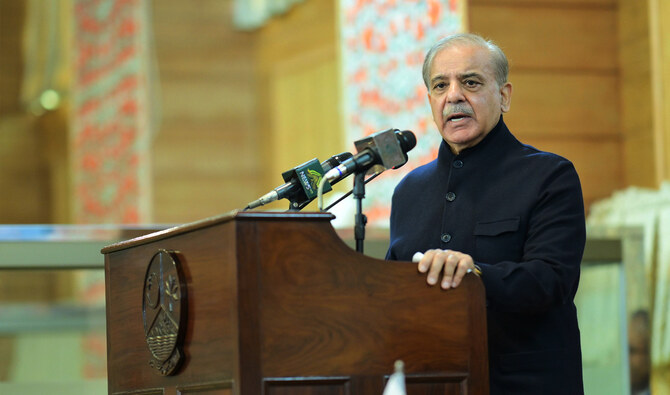
Sharif said such measures were insufficient while addressing the legislative assembly of Azad Kashmir in Muzaffarabad to mark Kashmir Solidarity Day, adding that India continues to maintain a military stranglehold over the region despite these efforts.
“It is in the best interests of India and this region, that they move beyond the mindset of August 5, 2019, by implementing the United Nations Security Council resolutions to fulfill their promises made to the Kashmiris and world and come to a meaningful and result-oriented negotiations on Kashmir dispute,” Sharif said during his address to the assembly.
“Pakistan has always adopted the attitude of living in accordance with the principles of peaceful coexistence with its neighbors,” he continued. “We want all conflicts, including Jammu Kashmir, to be resolved through peaceful means, in accordance with the principles of diplomacy and democracy.”
Earlier, the prime minister urged the international community to press India to allow the Kashmiri people to determine their own future, saying the issue was “a key pillar” of Pakistan’s foreign policy and reiterating the country’s “unwavering moral, diplomatic and political support” for the Kashmiri people.
“I also avail myself of this opportunity to salute the resolve and courage of the valiant Kashmiri people, who continue to render innumerable sacrifices in their struggle to achieve their fundamental rights and freedoms,” he said.
Kashmir Solidarity Day is observed in Pakistan on February 5 each year to express support for the people of Indian-administered Kashmir. Different groups across the country are also expected to hold rallies to discuss the issue.
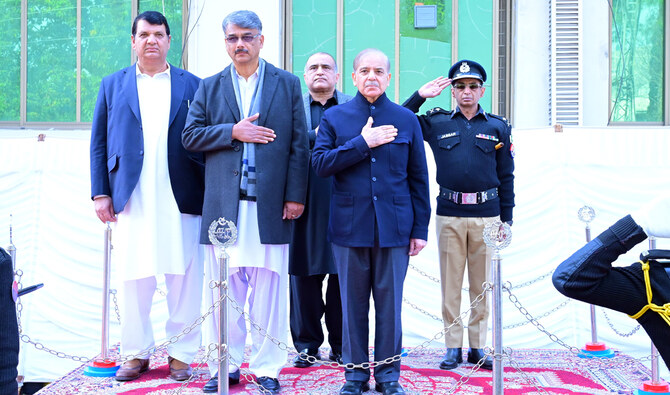
Chief of Army Staff General Asim Munir also visited Muzaffarabad during the day where he paid homage to the sacrifices of Kashmir people.
He reaffirmed that no act of aggression from the country’s enemies would go unanswered and underscored the army’s commitment to defending the nation’s sovereignty and territorial integrity.
“Without any doubt, Kashmir will be free one day and become part of Pakistan, as per the free will and destiny of the people of Kashmir,” he said.


![]()
![]()

Pakistan PM asks India to hold ‘meaningful’ talks on Kashmir, says integration efforts have failed
Short Url
https://arab.news/58yzw
Pakistan PM asks India to hold ‘meaningful’ talks on Kashmir, says integration efforts have failed
- Shehbaz Sharif visits Muzaffarabad to commemorate the annual Kashmir Solidarity Day on February 5
- Gen. Asim Munir also travels to the region, says Kashmir will be free one day and become part of Pakistan
Latest updates


© 2026 SAUDI RESEARCH & PUBLISHING COMPANY, All Rights Reserved And subject to Terms of Use Agreement.