ISLAMABAD: Pakistan’s Senate Standing Committee on Interior on Tuesday discussed increasing the minimum sentence for human smuggling to three years, as the country’s foreign office confirmed the identity of 13 Pakistanis who died last month in a boat tragedy off Morocco’s coast.
The Pakistani government has made several arrests in recent weeks after a boat carrying 86 migrants to Europe, including several Pakistanis, capsized near Morocco on January 16, according to the rights group Walking Borders.
Moroccan authorities said a day later that 36 people had been rescued, while the foreign office in Islamabad confirmed that the survivors included 22 Pakistanis.
The Morocco tragedy underscored the perilous journeys many migrants undertake due to conflict and economic hardship. Soon after the development, Pakistani authorities ramped up efforts to crack down on human smuggling networks facilitating dangerous crossings to Europe.
“The Committee discussed the ‘Prevention of Smuggling of Migrants (Amendment) Bill, 2025,’” an official statement said after the meeting was convened at Parliament House in Islamabad. “The Secretary, Ministry of Interior, emphasized the need to strengthen legal provisions to enhance deterrence.”
“The draftsman from the Ministry of Law informed the Committee that the amendment introduces a minimum sentence of three years, which will reinforce deterrence and ensure better enforcement of the law,” the statement continued. “The Committee members unanimously agreed to pass the bill and underscored the importance of strict adherence to legal enforcement.”
The Senate committee also reviewed other legislative measures related to migration and trafficking.
Meanwhile, the foreign office spokesperson, Shafqat Ali Khan, mentioned the boat tragedy in a statement.
“After a process of extensive verification, the bodies of 13 Pakistani nationals have been identified,” he said, adding the mortal remains of four victims would arrive in Islamabad on February 5 via a Saudi airline flight.
The latest tragedy adds to a series of migrant boat disasters involving Pakistanis attempting to reach Europe via dangerous sea routes.
In June 2023, an overcrowded vessel sank in international waters off the Greek town of Pylos, killing hundreds of migrants, including 262 Pakistanis, in one of the deadliest Mediterranean shipwrecks on record.
More recently, five Pakistani nationals died in a shipwreck off the Greek island of Gavdos on December 14.

Senators back tougher human smuggling laws as 13 Pakistanis identified in Morocco boat tragedy
https://arab.news/z67ac
Senators back tougher human smuggling laws as 13 Pakistanis identified in Morocco boat tragedy
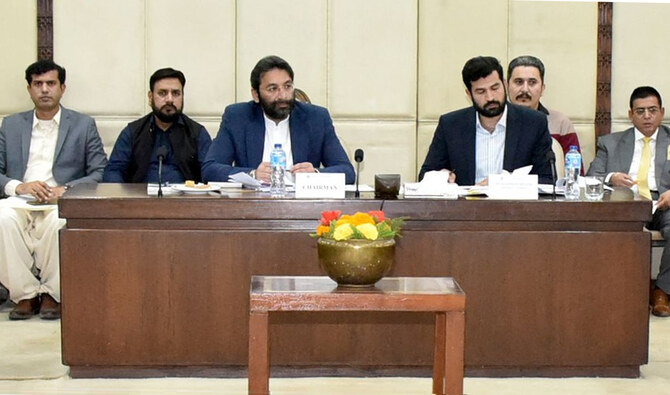
- Senate Standing Committee on Interior suggests minimum sentence of three years for human smugglers
- Foreign office says the mortal remains of four victims of Morocco boat tragedy will soon arrive in Islamabad
Pakistan minister calls for integrating ocean awareness into education to preserve ecosystems
- Pakistan’s maritime sector posted a record $360 million profit in 2025 following a year of sweeping reforms
- Junaid Anwar Chaudhry says education equips youth to make informed decisions, contribute to blue economy
KARACHI: Pakistan’s Maritime Affairs Junaid Anwar Chaudhry has urged integrating ocean awareness into formal education systems and empowering youth as active partners in order to preserve marine ecosystems, his ministry said on Saturday.
Chaudhry said this at a meeting with Minister of State for Education and Professional Training, Wajiha Qamar, who called on him and discussed strategies for enhancing marine education, literacy, and youth engagement in sustainable ocean management.
Pakistan’s maritime sector posted a record Rs100 billion ($360 million) profit in 2025 following a year of sweeping reforms aimed at improving port efficiency, cost-cutting, and safeguarding marine ecosystems to boost the blue economy.
“Understanding our oceans is no longer optional, it is essential for climate resilience, sustainable development, and the long-term health of our maritime resources,” Chaudhry said, highlighting the critical role of marine literacy.
The minister said education equips youth to make informed decisions and actively contribute to marine conservation and the blue economy, urging inclusion of marine ecosystems, conservation and human-ocean interactions into curricula, teacher training and global citizenship programs.
“Initiatives like ‘Ocean Literacy for All’ can mainstream these elements in national policies, school programs, and community workshops to build proactive citizenship on marine challenges,” he added.
Ocean Literacy for All is a UNESCO Intergovernmental Oceanographic Commission–coordinated global initiative under the UN Ocean Decade (2021–2030) that promotes ocean awareness, education, and conservation.
Chaudhry announced reforms in maritime education, including granting degree-awarding status to the Pakistan Marine Academy, and the establishment of the Maritime Educational Endowment Fund (MEEF) to provide scholarships for deserving children from coastal communities.
“The scholarship program promotes inclusive development by enabling access to quality education for youth from over 70 coastal and fishing communities, particularly in Sindh and Balochistan,” he said.
The discussions underscored raising awareness about oceans, coastal ecosystems and marine resources, according to the Pakistani maritime affairs ministry. Both ministers stressed the need to integrate climate and marine education from classrooms
to community programs, addressing risks like rising sea temperatures, coastal erosion, biodiversity loss and pollution.
“Incorporating marine science and ocean literacy into curricula can help students connect local challenges with global trends,” Qamar said, underscoring education’s transformative power in building social resilience.
The meeting explored translating complex marine science into accessible public knowledge through sustained, solution-oriented awareness campaigns, according to the maritime affairs ministry.
With coastline facing pressures from climate change, pollution, and overexploitation, the ministers called for a coordinated approach blending formal education, informal learning and youth-led advocacy.
“A joint effort by the Ministries of Maritime Affairs and Education can cultivate an ocean-literate generation, transforming vulnerability into resilience and ensuring the long-term sustainability of coastal and marine ecosystems,” Chaudhry said.


