

AlUla to host second Arab auditors conference

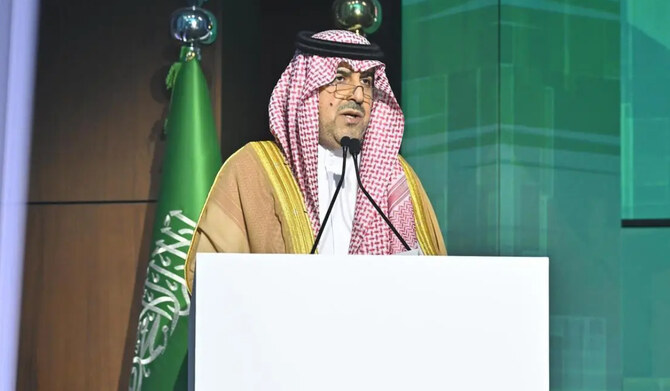
ARABCIIA Chairman Dr. Hussam Alangari. (SPA)
Short Url
Updated 31 January 2025
Follow

AlUla to host second Arab auditors conference

  • The conference will explore key international developments in internal auditing, including innovative technologies, data analysis, governance, risk management, ethical conduct and professional responsibilities

RIYADH: The Arab Confederation for Institutes of Internal Auditors will hold its second conference in AlUla governorate on Feb.19.

Under the patronage of General Court of Audit President and ARABCIIA Chairman Dr. Hussam Alangari, the conference builds on the recommendations of its inaugural edition, held in Egypt last year.

This year, it will focus on continuous human resource development to keep pace with evolving professional standards.

The conference will explore key international developments in internal auditing, including innovative technologies, data analysis, governance, risk management, ethical conduct and professional responsibilities.

By hosting the conference, ARABCIIA aims to support development through innovation, keep pace with the region’s progress, positively impact the profession and strengthen regulatory systems for the business sector.

The conference will also examine ways to add value and support business development and success, adhering to best professional practices.


Jeddah Astronomical Society explores International Space Station’s legacy 

Updated 6 sec ago
Follow

Jeddah Astronomical Society explores International Space Station’s legacy 

  • ISS ‘one of the most enduring achievements of the space age,’ society president says 
  • Structural pressures mount as space station nears end of 27-year mission

RIYADH: The International Space Station is nearing the end of its operational life, with NASA planning to conclude the station’s missions and deorbit it into the Pacific Ocean in early 2031. 

Jeddah Astronomical Society president Majed Abu Zahra said a US deorbit vehicle, under development by SpaceX, is expected to guide the ISS toward a controlled reentry over the Pacific Ocean after operations conclude in 2030. 

Since the launch of its first module in 1998, the ISS has been in continuous operation, a familiar sight in the night skies, and a landmark of human cooperation in space. 

Abu Zahra said the effort will signal a carefully managed end to an era that has shaped spaceflight and microgravity research, the Saudi Press Agency reported on Sunday. 

Over more than two decades, agencies from the US, Europe, Russia, Canada, and Japan have worked together, supporting crewed missions, maintaining systems, and conducting thousands of experiments in orbit. 

More than 260 astronauts from around the world, including several from Saudi Arabia, have visited the station, contributing to a legacy of global collaboration in science and exploration. 

Abu Zahra said that the ISS is now facing significant structural and financial pressures. 

The station has remained operational far beyond initial expectations. It was originally designed to operate for about 15 years, but has now been in orbit for 27 years. 

Mounting technical and maintenance challenges are affecting key systems on board, with some experiencing technical problems, while micrometeoroids have damaged outer surfaces and air leaks have appeared over time, he said. 

Abu Zahra added that annual expenses have risen to more than $3 billion, a major factor behind NASA’s decision to redirect resources toward other priorities, including programs focused on exploring the Moon and Mars. 

Abu Zahra said the farewell to the ISS should not be viewed solely as a scientific or technical milestone. 

Rather, it represents the end of a period of global human cooperation on an unprecedented scale, as space agencies have worked together for decades despite political differences — one of the most enduring achievements of the space age.