

Ithra showcases historic Islamic treasures at second Islamic Arts Biennale in Jeddah

1 / 6
This year’s biennale, titled And All That Is In Between, explores the profound ways faith is experienced, expressed and celebrated. (Supplied)
2 / 6
This year’s biennale, titled And All That Is In Between, explores the profound ways faith is experienced, expressed and celebrated. (Supplied)
3 / 6
This year’s biennale, titled And All That Is In Between, explores the profound ways faith is experienced, expressed and celebrated. (Supplied)
4 / 6
This year’s biennale, titled And All That Is In Between, explores the profound ways faith is experienced, expressed and celebrated. (Supplied)
5 / 6
This year’s biennale, titled And All That Is In Between, explores the profound ways faith is experienced, expressed and celebrated. (Supplied)
6 / 6
This year’s biennale, titled And All That Is In Between, explores the profound ways faith is experienced, expressed and celebrated. (Supplied)
Short Url
Updated 28 January 2025
Follow

Ithra showcases historic Islamic treasures at second Islamic Arts Biennale in Jeddah

  • Ancient edict, prayer carpet fragment, religious manuscript among artifacts
  • Event explores ways faith is experienced, celebrated

JEDDAH: Historic Islamic artifacts are being displayed by the King Abdulaziz Center for World Culture at the second edition of the Islamic Arts Biennale currently underway in Jeddah.

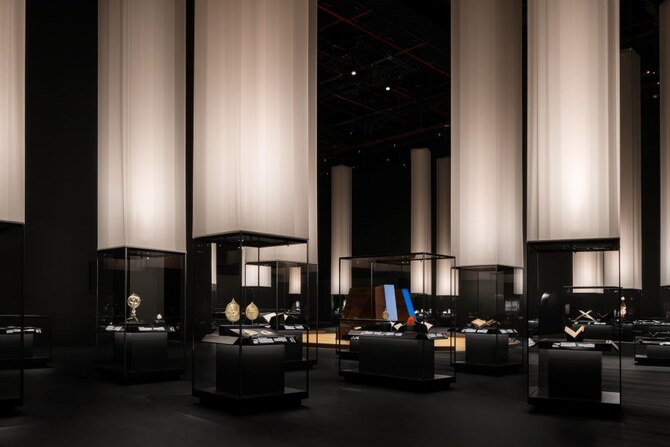
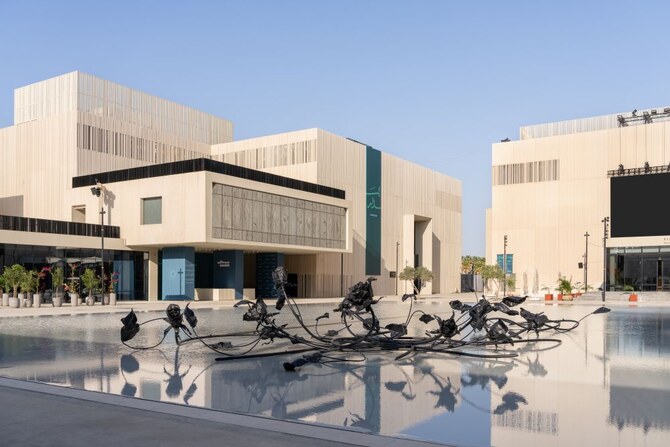
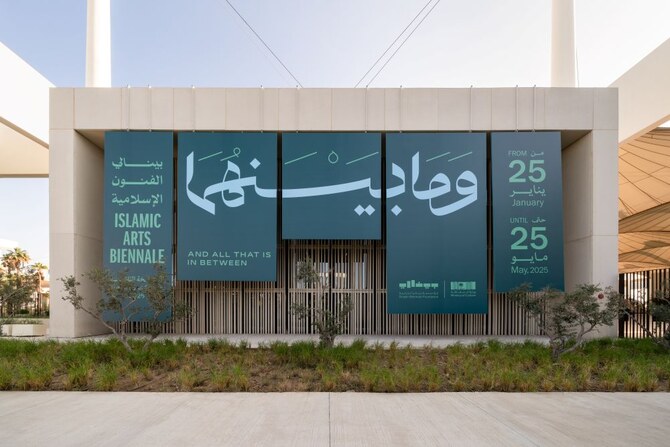
Running until May 25 at the iconic Western Hajj Terminal, this year’s biennale, titled “And All That Is In Between,” explores the profound ways faith is experienced, expressed and celebrated.

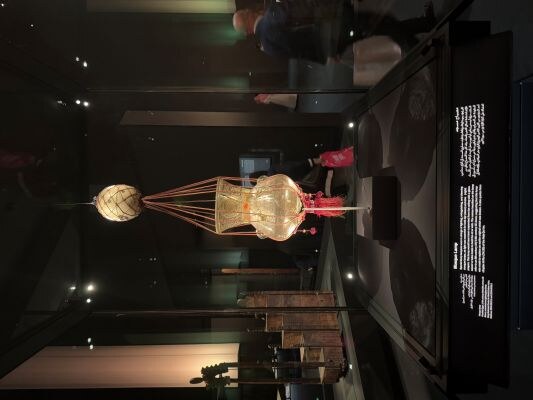
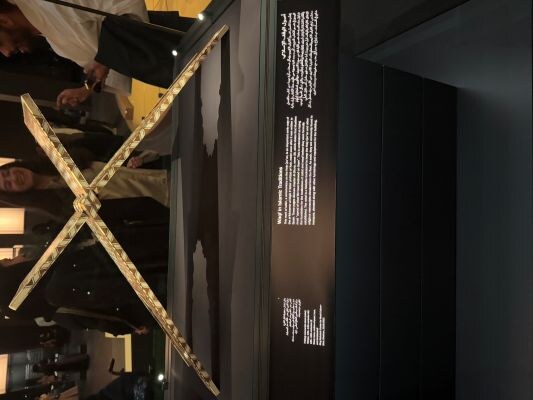
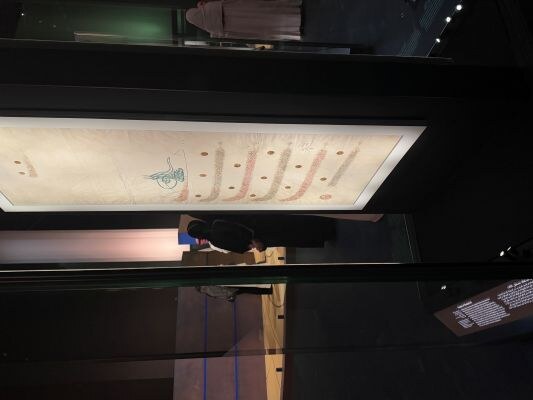
Pieces on display include an edict from the Ottoman Sultan Mustafa III, who reigned from 1757 to 1774, regarding the Prophet Muhammad’s tomb; a prayer carpet fragment; a tafsir (interpretation of the Qur’an) manuscript; a folding manuscript stand; a mosque lamp; and a large wooden minbar (pulpit).

Ithra, which is renowned as a global leader in Islamic arts and heritage, will feature its pieces in the biennale’s Al-Madar section. This exhibition brings together contributions from prominent local and international institutions, emphasizing the richness and diversity of Islamic culture.

Farah Abushullaih, the head of the museum at Ithra, said: “It is a privilege for Ithra’s Islamic collection to be featured once again at this prestigious biennale, which celebrates the diversity and depth of Islamic arts.

“Our participation underscores our ongoing commitment to preserving and sharing the rich heritage of Islamic art with a global audience while expanding knowledge of key concepts of Islamic traditions that have shaped and continue to shape Islamic identities today.”

The artifacts on display, which were carefully curated in collaboration with Heather Ecker and Marika Sardar from Al-Madar’s curatorial team, reflect the theme of waqf. This fundamental Islamic concept involves dedicating assets for communal benefit, supporting religious, educational, or charitable initiatives.

Ithra’s participation aligns with its mission to inspire, enrich and foster appreciation for Islamic heritage through various initiatives, including its triennial Islamic Art Conference and major exhibitions. Its current “In Praise of the Artisan" exhibition showcases over 130 historic and contemporary works, many of which are on public display for the first time.

With its robust programming of lectures, workshops, and live demonstrations, Ithra continues to honor the past and present, positioning Islamic craftsmanship as a living tradition. Its efforts underscore the institution’s role as a global champion of cultural exchange and creativity.

The Islamic Arts Biennale, hosted by the Diriyah Biennale Foundation, provides a platform for exploring Islamic arts and traditions.

The event’s first edition in 2023, at which Ithra also participated, attracted more than 600,000 visitors.


Creators spotlight graphic novels as powerful literacy tools at Dubai literature festival

Updated 22 January 2026
Follow

Creators spotlight graphic novels as powerful literacy tools at Dubai literature festival

DUBAI: Comic creators Jamie Smart, John Patrick Green and Mo Abedin joined the Emirates Airline Festival of Literature in Dubai this week to discuss the growing role of comics in classrooms and how graphic novels are reshaping children’s relationship with reading.

Smart is the author of the bestselling “Bunny vs. Monkey” series, Green is known for his popular “The InvestiGators” books about crime-solving alligators, and Abedin is the UAE-based creator of the sci-fi graphic novel “Solarblader."


A post shared by @jamiefumboo

A key point shared by all three speakers was that comics should be valued as a complete art form rather than a stepping stone to prose. Abedin described comics as “a very high art form,” explaining that the medium taught readers how to process complex ideas such as emotion, empathy and culture through visual storytelling. 

He added that comics allowed readers to slow down and engage on their own terms because “the reader is also able to control the pace of the narrative.”

For Smart, the power of comics lies in the emotional connection they create. He spoke about how the word “comics” immediately takes him back to childhood, recalling being “eight years old and going down the newsagent” and spending hours reading. That sense of joy, he said, is what many reluctant readers respond to. He noted that parents often tell him, “My child would not read a book, a single book … until they picked up a comic,” adding that comics inform readers even when they are simply entertaining. “They can just be an emotional, heartfelt story,” he said.

Green focused on how comics function as a visual language that readers learn over time. He described them as “almost a separate language,” noting that some adults struggle at first because they are unsure how to read a page — whether to follow images or text. But that flexibility is what gives comics their strength, allowing readers to choose how they experience a story and giving them more agency than prose or film.

The panel also discussed re-reading as a powerful part of the comics experience. Children often race through a book for the plot, then return to notice visual details, background jokes and character expressions, building deeper comprehension with each reading.

By the end of the session, all three agreed that comics should be studied and respected as their own form of literature — one that welcomes readers of all levels, builds confidence and makes reading feel like discovery rather than obligation.