Saudi Arabia’s capital markets surge with $274bn raised in 5 years, fueled by Vision 2030 growth: S&P Global

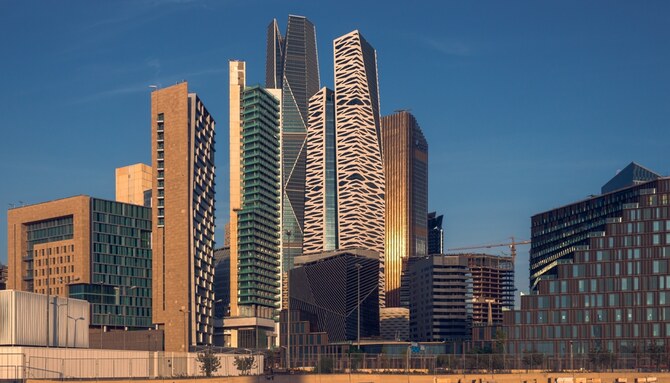
The current Saudi market environment is favorable for issuers, with declining interest rates and supportive financial conditions. Shutterstock
Short Url
Updated 23 January 2025
Follow

Saudi Arabia’s capital markets surge with $274bn raised in 5 years, fueled by Vision 2030 growth: S&P Global

  • Saudi issuers have raised more than $130 billion through US dollar-denominated issuances
  • Market conditions remain favorable, with falling interest rates providing supportive dynamics, S&P said

RIYADH: Saudi Arabia’s capital markets have raised $274 billion over the past five years, reflecting the Kingdom’s efforts to finance its Vision 2030 economic transformation plan.

The Capital Market Authority’s 2024-2026 strategy aims to promote investment, attract global interest, and support economic diversification, advancing the nation’s financial sector. 

According to a report from S&P Global, Saudi issuers, including the government and private sector, have raised more than $130 billion over the past five years through US dollar-denominated issuances.

“This comes on top of the $144 billion that they raised locally in Saudi riyal during the same period, with the implementation of Saudi Vision 2030 explaining part of this flurry,” the US-based credit rating agency said.

While the government makes up about 60 percent of these issuances, Vision 2030 has also opened significant opportunities in the non-oil economy and banking system.

Despite the rise in external leverage, market conditions remain favorable, with falling interest rates providing supportive dynamics, S&P said.

“We still expect leverage to remain manageable in our base-case scenario, with private-sector debt to GDP (gross domestic product) staying below the 100 percent mark in the next 12-24 months,” the agency added.

The current market environment is favorable for issuers, with declining interest rates and supportive financial conditions providing a conducive backdrop for sustained capital raising. This trend will continue as the Kingdom pushes ahead with large-scale projects and economic diversification efforts.

Residential mortgage-backed securities market on the horizon

One of the key factors to watch over the next one-to-two years is the potential establishment of a residential mortgage-backed securities market in Saudi Arabia. 

The credit rating agency said that at the end of September, “banks were sitting on more than $175 billion of mortgages that are predominantly at fixed rates and have short-term funding sources, primarily in the form of domestic deposits.”

If interest rates continue to decline, these mortgages could become more attractive for secondary market transactions. The ability to securitize and sell them would allow banks to move assets off their balance sheets, freeing up capital for further lending and investment in Vision 2030 initiatives. 

“This assumes that the legal hurdles relating to the issuance of RMBS are resolved, or at least the risks are floored at a level that would attract local and international investors’ interest,” S&P said.

The Saudi Real Estate Refinance Co., which has an A-/Positive rating, is expected to play a key role in facilitating RMBS market development. 

Direct market issuances could emerge as another avenue for mortgage-backed securities, potentially unlocking significant financial capacity for banks.


Saudi Arabia launches skills framework to support mining, industrial growth 

Updated 6 sec ago
Follow

Saudi Arabia launches skills framework to support mining, industrial growth 

JEDDAH: Saudi Arabia has launched a new skills framework for the mining and industrial sectors to standardize job roles and support workforce development. 

The initiative was unveiled by Minister of Industry and Mineral Resources Bandar Alkhorayef on the sidelines of the Global Labor Market Conference 2026, according to Al-Eqtisadiah. 

The framework is intended to help employers, job seekers and training providers better navigate labor demand in mining and industry, as Saudi Arabia accelerates investment in manufacturing, minerals processing and related value chains under Vision 2030. 

“This is, in fact, a tool which ensures clear definitions of occupations and their required skills. It will cover more than 500 job roles, detailing the necessary skills, responsibilities, and titles,” Alkhorayef said during a discussion panel at the event. 

The Ministry of Industry and Mineral Resources said the initiative — known as the Industry & Mining Occupations & Skills Framework — will serve as a national reference for occupations and skills in mining and industry. 

The framework is designed to achieve a set of strategic objectives that support human capital development in the industrial and mining sectors. It aims to strengthen workforce planning, training programs, and career pathways, while supporting informed decision-making. 

Covering more than 500 industrial occupations, over 300 professional specialties, 600 skills, and 900 professional certifications, the framework sets standardized job titles, descriptions, and skill requirements to support recruitment, performance, and competitiveness. 

For each occupation, a profile is developed, outlining the code, job titles, and descriptions, as well as other information such as key tasks, educational qualifications, and required skills.

These profiles give employees clarity on roles, career pathways, and accredited credentials, while helping job seekers match their qualifications with suitable roles and focus on targeted skill development. 

The framework, published by the ministry, runs to nearly 3,200 pages and was developed through collaboration with the General Authority for Statistics, alongside government bodies, private sector organizations and academic institutions. 

The launch comes as Saudi Arabia’s mining push gains momentum after new surveys of the Arabian Shield showed the Kingdom’s mineral resources are larger than previously estimated. 

Official estimates have jumped by about 90 percent to roughly SR9.37 trillion ($2.5 trillion), up from around SR5 trillion in 2016, strengthening the case for further mining investment and skills development.