

Pakistan’s exports to Europe surge to $3.8 billion in first five months of current fiscal year

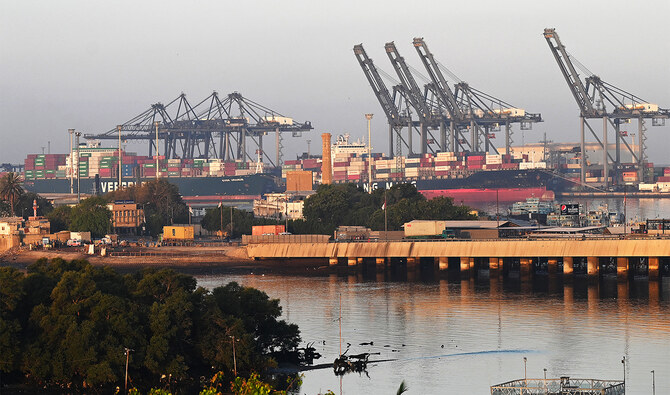
Shipping containers are seen stacked on a ship at a sea port in Karachi on April 6, 2023. (AFP/ file)
Short Url
Updated 20 January 2025
Follow

Pakistan’s exports to Europe surge to $3.8 billion in first five months of current fiscal year

  • Growth in exports driven by textile, leather, garments, sports goods and surgical instruments sectors, says state media 
  • European Union (EU) is Pakistan’s second most important trading partner, accounting for over 14 percent of Pakistan’s total trade

ISLAMABAD: Pakistan’s exports to Europe have surged to $3.8 billion in the first five months of the current fiscal year, state-run media reported on Monday, marking an increase of 8.62 percent compared to the same period last year. 

The European Union (EU) is Pakistan’s second most important trading partner, accounting for over 14 percent of Pakistan’s total trade and absorbing 28 percent of Pakistan’s total exports. Pakistani exports to the EU are dominated mostly by textiles and clothing.

Pakistan avails the Generalized Scheme of Preferences (GSP)+ status, a special trade arrangement offered by the EU to developing economies in return for their commitment to implement 27 international conventions on human rights, environmental protection and governance.

The current GSP framework came to an end in December 2023 but Members of EU Parliament (MEPs) voted in October to extend the current rules on the scheme for another four years for developing countries, including Pakistan. 

“Pakistan’s exports to Europe surged to 3.8 billion dollars, reflecting an 8.62 percent increase in the first five months of current fiscal year,” state broadcaster Radio Pakistan reported.

It said the growth in exports was driven by the Special Investment Facilitation Council (SIFC), a Pakistani hybrid civil-military body, in the sectors of textiles, leather, garments, sports goods and surgical instruments.

Pakistan’s government formed the SIFC in June 2023 to promote business opportunities in various sectors such as agriculture, mining, information technology and defense, and attract foreign investment. 

The SIFC has targeted mainly Gulf countries in its attempt to revitalize Pakistan’s economy and ensure it heads toward sustainable growth in the years to come. The council was set up in 2023 as Pakistan faced tough economic challenges amid dwindling forex reserves and a rapidly depreciating national currency.

Finance Minister Muhammad Aurangzeb has repeatedly stressed the importance of shifting Pakistan’s economy from an import-dependent one toward an export-led one, saying that without it sustainable economic growth is difficult to achieve. 

In recent months, Pakistan has vigorously pursued economic and investment deals with Gulf countries such as Saudi Arabia, the United Arab Emirates and bilateral trade cooperation with Central Asian states, Russia and others. 


US says trade with Pakistan could top $8 billion in 2025

Updated 7 sec ago
Follow

US says trade with Pakistan could top $8 billion in 2025

  • US chargé d’affaires links rising trade to deeper economic engagement with Pakistan
  • Visit comes amid broader effort by Islamabad and Washington to improve bilateral ties 

ISLAMABAD: Trade between the United States and Pakistan is projected to exceed $8 billion in 2025, the US Embassy said on Tuesday, as Washington signaled confidence in Pakistan’s export base and economic potential during a high-profile visit to the industrial city of Sialkot.

The projection was highlighted by US Chargé d’Affaires Natalie A. Baker during meetings with Pakistani exporters and business leaders, underlining the importance Washington places on trade, investment and supply-chain cooperation as the two countries seek to stabilize and expand their economic relationship.

“Highlighting the growth in trade between the United States and Pakistan, which was projected to reach over $8 billion in 2025, Baker said, ‘Expanding trade reflects a strong foundation that highlights the positive impact of US economic engagement in Pakistan and globally. The United States and Pakistan are pursuing a fair and balanced trade relationship that creates prosperity for both our nations’,” the US embassy said in a statement.

The envoy said the United States had been Pakistan’s largest export market and a leading investor, presenting significant opportunities for expanded trade and shared prosperity. 

“The United States remains deeply invested in Pakistan and its people,” Baker said, “building on a partnership that dates back to Pakistan’s independence and continues to grow through trade, innovation, education, and cultural exchange.”

The visit comes amid a broader effort by Islamabad and Washington to improve bilateral ties under US President Donald Trump’s second term, after years of uneven engagement. Since mid-2025, the two sides have stepped up diplomatic contacts, including meetings between Prime Minister Shehbaz Sharif, Pakistan’s military leadership and US officials, alongside discussions on trade, minerals, security cooperation and regional stability.

Pakistan has also sought to re-energize economic diplomacy with Washington as it works to boost exports, attract foreign investment and stabilize its economy under an IMF-backed reform program. 

In July 2025, the two countries agreed to a bilateral trade deal that included reciprocal tariff reductions and frameworks for US investment in Pakistan’s energy and mineral sectors, a step Islamabad has hailed as opening new avenues for economic collaboration.

During her visit, Baker toured leading exporters including Forward Sports, First American Corporation (FAC) and CA Sports, companies that are deeply embedded in global supply chains. The embassy said nearly 70 percent of FAC’s exports go to the United States, illustrating sustained US consumer demand for Pakistani-made goods.

Baker also visited Sialkot International Airport and met with the leadership of AirSial, highlighting private-sector-led infrastructure and logistics as key to Pakistan’s export growth.