

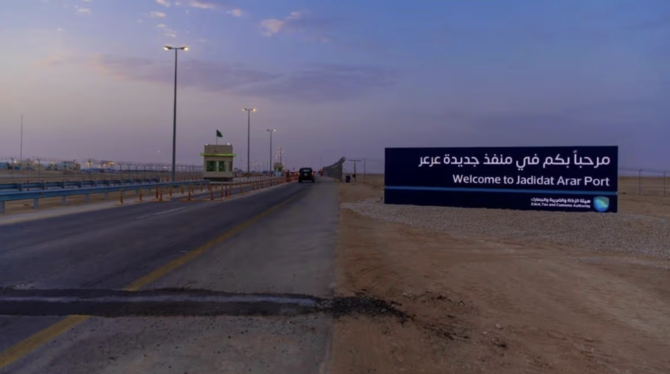

RIYADH: The number of trucks and vehicles entering and exiting through Saudi customs ports jumped to 4.7 million in 2025, recording annual growth of 24 percent compared with 2024, according to the Zakat, Tax and Customs Authority in statements to Al Eqtisadiah.
Specialists in the logistics services sector attributed the increase to transformation in the field, starting with raising the efficiency of ports, speeding up procedures, and adopting unified platforms to facilitate processes for importers and exporters.
The authority reported that the total number of trucks and vehicles that crossed Saudi customs ports over the past three years exceeded 11.8 million trucks and vehicles, with an annual average of 4 million, of which 6.3 million were incoming vehicles and 5.5 million were outgoing.
Five ports recorded the largest share of truck and vehicle traffic: Al Batha, Al Haditha, King Fahd Causeway, Al Khafji, and Salwa, which are all considered key arteries for interregional and regional trade movement.
The authority indicated that customs ports completed procedures last year for 2.6 million trucks and vehicles arriving in Saudi Arabia, in addition to 2.1 million trucks and vehicles departing, reflecting the efficiency of procedures and the speed of completing customs operations.
On the operational side, land, sea, and air ports completed procedures for 2.5 million containers and cleared 7 million customs declarations, alongside the authority’s expansion in developing procedures and programs that support the flow of goods.
Chief among these was the launch of the updated version of the Saudi Authorized Economic Operator Program, with the participation of 14 government entities.
The program contributed to increasing the number of registered establishments from 560 establishments in 2024 to 753 by the end of 2025, a growth rate of 34.5 percent, enhancing the reliability of supply chains and raising the efficiency of logistics operations in line with global best practices.
Smart platforms and ports behind the growth
Supply chain and operations management consultant Khaled Al-Zahrani explained that these positive indicators do not only reflect growth in traffic volume, but also expansion in the application of digital solutions and the linking of entities through unified platforms, which helped reduce operating costs for importers and exporters.
Logistics specialist Nashmi Al-Harbi said that the efficiency of customs ports indicates the development of digital and operational infrastructure through faster procedures and building trust with trading partners, which reduces customs clearance time and enhances supply chain flexibility.
In turn, Sami Al-Otaibi, a specialist in logistics services and customs clearance, explained that infrastructure projects and smart ports have begun to yield tangible results on the ground.


