JERUSALEM: Israel’s Cabinet approved a deal early Saturday for a ceasefire in Gaza that would release dozens of hostages held there and pause the 15-month war with Hamas, bringing the sides a step closer to ending their deadliest and most destructive fighting ever.
The government announced the approval after 1 a.m. Jerusalem time and confirmed the ceasefire will go into effect on Sunday. The hourslong Cabinet meeting went well past the beginning of the Jewish Sabbath, a sign of the moment’s importance. In line with Jewish law, the Israeli government usually halts all business for the Sabbath except in emergency cases of life or death.
Mediators Qatar and the United States announced the ceasefire on Wednesday, but the deal was in limbo for more than a day as Prime Minister Benjamin Netanyahu insisted there were last-minute complications that he blamed on the Hamas militant group. On Friday, the smaller security Cabinet recommended approving the deal.
Key questions remain about the ceasefire — the second achieved during the war — including the names of the 33 hostages who are to be released during the first, six-week phase and who among them is still alive.
Netanyahu instructed a special task force to prepare to receive the hostages. The 33 are women, children, men over 50 and sick or wounded people. Hamas has agreed to free three female hostages on Day 1 of the deal, four on Day 7 and the remaining 26 over the following five weeks.
Palestinian detainees are to be released as well. Israel’s justice ministry published a list of 700 to be freed in the deal’s first phase and said the release will not begin before 4 p.m. local time Sunday. All people on the list are younger or female.
Israel’s Prison Services said it will transport the prisoners instead of the International Committee of the Red Cross, which handled transportation during the first ceasefire, to avoid “public expressions of joy.” The prisoners have been accused of crimes like incitement, vandalism, supporting terror, terror activities, attempted murder or throwing stones or Molotov cocktails.
The largely devastated Gaza should see a surge in humanitarian aid. Trucks carrying aid lined up Friday on the Egyptian side of the Rafah border crossing into Gaza.
An Egyptian official said an Israeli delegation from the military and Israel’s Shin Bet internal security agency arrived Friday in Cairo to discuss the reopening of the crossing. An Israeli official confirmed a delegation was going to Cairo. Both spoke on condition of anonymity to discuss the private negotiations.
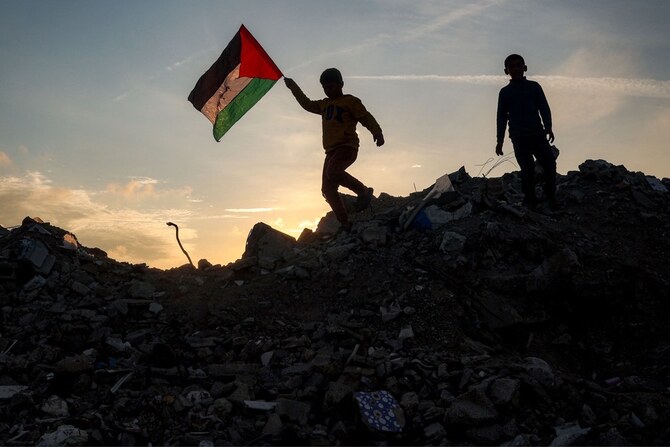
Israeli forces will also pull back from many areas in Gaza during the first phase of the ceasefire and hundreds of thousands of Palestinians will be able to return to what’s left of their homes.
“Once Sunday comes around, we would be happier, God willing,” one of Gaza’s displaced people, Ekhlas Al-Kafarna, said during the wait for word on the Israeli Cabinet decision.
Israel’s military said that as its forces gradually withdraw from specific locations and routes in Gaza, residents will not be allowed to return to areas where troops are present or near the Israel-Gaza border, and any threat to Israeli forces “will be met with a forceful response.”
Ceasefire talks had stalled repeatedly in previous months. But Israel and Hamas had been under growing pressure from both the Biden administration and President-elect Donald Trump to reach a deal before Trump takes office on Monday.
Hamas triggered the war with its Oct. 7, 2023, cross-border attack into Israel that killed some 1,200 people and left some 250 others captive. Nearly 100 hostages remain in Gaza.
Israel responded with a devastating offensive that has killed more than 46,000 Palestinians, according to local health officials, who do not distinguish between civilians and militants but say women and children make up more than half the dead.
Fighting continued into Friday, and Gaza’s Health Ministry said 88 bodies had arrived at hospitals in the past 24 hours. In previous conflicts, both sides stepped up military operations in the final hours before ceasefires as a way to project strength.
The second — and much more difficult — phase of the ceasefire is meant to be negotiated during the first. The remainder of the hostages, including male soldiers, are to be released during this phase.
But Hamas has said it will not release the remaining captives without a lasting ceasefire and a full Israeli withdrawal, while Israel has vowed to keep fighting until it dismantles the group and to maintain open-ended security control over the territory.
Longer-term questions about postwar Gaza remain, including who will rule the territory or oversee the daunting task of reconstruction.
The conflict has destabilized the Middle East and sparked worldwide protests. It also highlighted political tensions inside Israel, drawing fierce resistance from Netanyahu’s far-right coalition partners.
On Thursday, Israel’s hard-line national security minister, Itamar Ben-Gvir, threatened to quit the government if Israel approved the ceasefire. He reiterated that Friday, writing on social media platform X: “If the ‘deal’ passes, we will leave the government with a heavy heart.”
There was no immediate sign early Saturday that he had done so.
Ben-Gvir’s resignation would not bring down the government or derail the ceasefire deal, but the move would destabilize the government at a delicate moment and could eventually lead to its collapse if Ben-Gvir were joined by other key Netanyahu allies.


![]()

Israel’s Cabinet approves a deal for a ceasefire in Gaza
Short Url
https://arab.news/pcx6h
Israel’s Cabinet approves a deal for a ceasefire in Gaza
- Under the deal, 33 of some 100 hostages who remain in Gaza are set to be released over six weeks in exchange for hundreds of Palestinians imprisoned by Israel


Latest updates


Recommended


© 2026 SAUDI RESEARCH & PUBLISHING COMPANY, All Rights Reserved And subject to Terms of Use Agreement.