



JAKARTA: Scrolling on social media, Indonesian moviegoer Jessica Sihotang stumbled across a film depicting a fellow woman in her 30s struggling to make the dream of buying a Jakarta home a reality.
Nearly two million like-minded Indonesians tuned in to watch the protagonist’s house-hunting journey when “Home Sweet Loan” was released last year, the movie’s producer said.
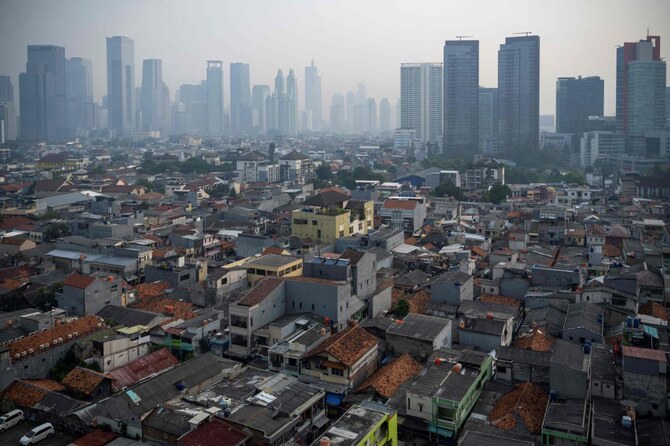
Residents of the megalopolis of 11 million are finding it impossible to climb the property ladder, as space shrinks and prices rise, forcing them to seek faraway homes that come with arduous commutes.
The movie sparked widespread chatter among Jakartans, as its main character’s grievances resonated with their own long-held housing woes.
“I can relate so much. I’ve been thinking about it for the past 10 years,” said Sihotang.
“I want to have my own house, but my savings have never been enough even just for the down payment,” added the 35-year-old university admissions worker.
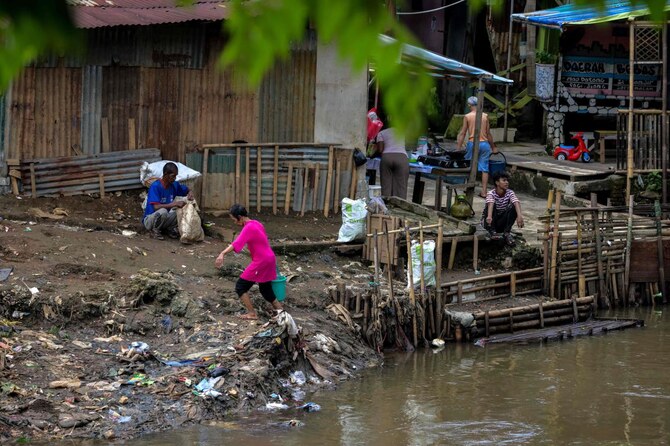
Jakarta is where Indonesia’s growing wealth gap is most evident — with unofficial slum housing sitting below shiny new apartment complexes and skyscrapers.
Less than two-thirds of Jakartans own a home, according to Indonesia’s Central Statistics Bureau, the lowest figure compared to other provinces.
Sihotang said she cannot afford a home within 60 kilometers (37 miles) of her job.
“I have to find side hustles for additional income, or maybe try my luck for a few years abroad” before buying a property, she said.
The price of a Jakarta house is on average 20 times higher than an employee’s annual salary, a University of Indonesia survey in June found.
DAILY COMMUTE
Jakartans like Rizqi Arifuddin have resorted to buying a house in neighboring provinces.
The office worker in one of Jakarta’s main business districts commutes by train for an hour from his home in West Java province.
He then jumps on a motorcycle taxi for another half an hour to reach the office.
“I can never afford a house in the city. Even researching the prices makes me upset,” he said.
With limited space available in the cramped capital known for its brutal traffic jams, prices have skyrocketed.
Housing complexes are now being built further from the city to meet demand.
“This is the reality, people are now competing for places which at least have access to mass transportation,” said Yayat Supriyatna, an urban planner from Trisakti University in Jakarta.
“Jakarta is not a place for the poor,” he told AFP.
HOUSING CRISIS
Some Indonesians like Muhammad Faris Dzaki Rahadian and his wife have chosen to rent, rather than buy, a property close to work.
“Even with our joint income, it is still not affordable,” said journalist Rahadian, 27.
“I don’t think buying is a rational option.”
To address the housing crisis, the government will require employees from 2027 to contribute three percent of their salaries to a savings fund which they can use for housing.
But it has angered Indonesians who think it won’t be enough — or that it could be taken from them by a government many distrust.
“Who’s going to benefit? It seems to me that people are getting constantly pressured,” Supriyatna said.
Despite the grim housing market, some are still holding on to their dreams.
“Having a house, no matter how small is a symbol of peace of mind for me,” Sihotang said.
“It will give me peace when I’m old.”


