

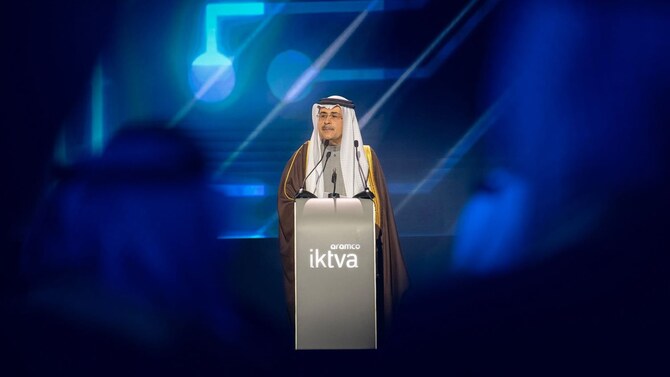

RIYADH: Saudi Aramco has secured 145 agreements and memorandums of understanding worth an estimated $9 billion on the opening day of the In-Kingdom Total Value Add Forum and Exhibition 2025.
These deals are expected to drive the localization of products and services in Saudi Arabia, enhancing local content in the supply chain and fostering collaboration.
The agreements align with the core objectives of iktva, which aim to enhance supply chain efficiency and add value across Saudi Aramco’s operations.
By increasing local content, the program helps develop a more diverse and competitive energy industry in the Kingdom. It also supports the strategic goal of retaining 70 percent of procurement spending within Saudi Arabia, directly benefiting local businesses.
On its first day, the event highlighted 210 localization opportunities across 12 sectors, with a combined annual market value of $28 billion. These opportunities are seen as key to driving long-term industrial growth and reducing reliance on imports.
During the event, Saudi Aramco President and CEO Amin Nasser reflected on the company’s progress, noting that Aramco achieved a 67 percent local content score for its procurement of goods and services in 2024, up from just 35 percent in 2015.
“Since launching iktva in 2015, we’ve made significant strides. Back then, most of our materials and services were sourced from outside Saudi Arabia,” Nasser said.
Nasser emphasized that the success of iktva depends on its ability to create value for all stakeholders.
“For Aramco, a largely localized supply chain ensures continuity and helps us navigate operational challenges more effectively,” he said. “Since 2015, iktva has contributed over $240 billion to Saudi Arabia’s GDP and led to the creation of 350 local manufacturing facilities with investments totaling more than $9 billion.”
These new facilities cover a range of sectors, including chemicals, non-metallics, information technology, electrical and instrumentation, and drilling. As a result, 47 products are now being manufactured for the first time in Saudi Arabia.
Saudi Energy Minister Prince Abdulaziz bin Salman also addressed the gathering, announcing the Kingdom’s plans to enrich and sell uranium. “We’re committed to monetizing all our mineral resources, including uranium,” the minister said. “By enriching and selling uranium, along with producing yellowcake, we will secure essential raw materials for energy security.”
Prince Abdulaziz discussed the future of the petrochemical sector, emphasizing the importance of producing more advanced chemicals. “The future of petrochemicals is not just about plastics or polymers. We’re aiming for better, more sophisticated chemical products,” he noted.
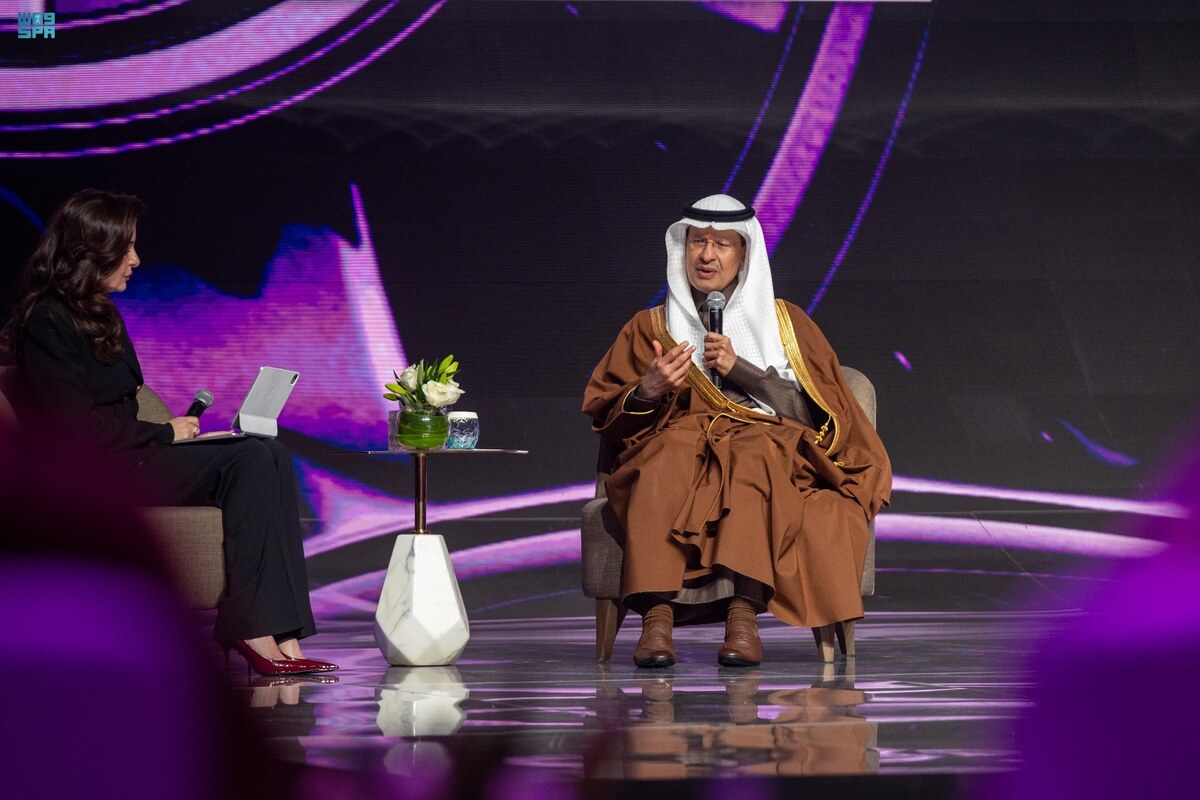
Saudi Energy Minister Prince Abdulaziz bin Salman. SPA
Looking ahead, the energy minister spoke about potential collaborations with Egypt, indicating that a roadmap for joint ventures would be outlined in February. “We have much to look forward to with Egypt,” he said.
In a separate panel, Prince Abdulaziz highlighted the role of integrated collaboration between sectors in achieving the Kingdom’s Vision 2030.
He explained that major energy expansion projects are key to supporting industrial development by providing diverse energy sources and offering competitive prices for gas feedstock.
This, he added, would help stimulate the growth of manufacturing and facilitate the transition to cleaner energy.
Saudi Investment Minister Khalid Al-Falih also spoke during the ministerial dialogue session, stressing that standardized incentives for the industrial sector are critical to achieving Vision 2030.
These incentives, he said, will help accelerate the creation of new industrial facilities and strengthen local supply chains at all stages of the value chain, making Saudi industries more competitive.
The first day of the forum also saw the launch of ASMO, a joint venture between Saudi Aramco Development Co. and DHL. The new venture aims to transform the procurement and supply chain landscape across the Middle East and North Africa region.
Additionally, the opening ceremonies for the Novel Non-Metallic Solutions facility at King Salman Energy Park and the NMDC Offshore Fabrication Yard at Ras Al-Khair were held.
Novel, a partnership between Aramco and Baker Hughes, is focused on introducing a range of composite products to the market, while the NMDC fabrication yard will provide maritime engineering services and fabricate equipment and materials.
Running from Jan.13-16 in Dammam, the iktva Forum continues to spotlight critical infrastructure projects and collaborative opportunities aimed at advancing the local supply chain ecosystem and supporting the Kingdom’s long-term industrial goals.


