

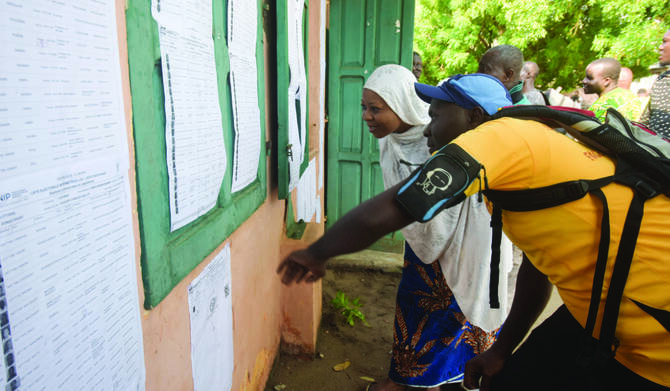

COTONOU: Benin voted Sunday in parliamentary and local elections, just one month after a failed coup plot shook the West African country and three months ahead of presidential polls.
President Patrice Talon’s ruling coalition is expected to strengthen its already powerful hand in the elections, with the main opposition Democrats party barred from the local polls.
The elections come at a fraught moment for Benin, still reeling from a deadly coup attempt by army mutineers on Dec. 7, which was put down by the military, with support from Nigeria and France.
Talon, 67, who is nearing the end of his second five-year term, called on all voters to “do their duty” as he cast his ballot.
HIGHLIGHTS
• The elections come at a fraught moment for Benin, still reeling from a deadly coup attempt by army mutineers on Dec. 7, which was put down by the military.
• The single-round legislative polls will elect the 109 seats in the National Assembly, where Talon’s three-party bloc hopes to strengthen its majority.
“Today is the beginning of a better life,” he said.
The legislative elections will define the political landscape ahead of April’s presidential polls, from which the opposition has also been struck from the ballot for failing to obtain the required number of signatures.
Talon, who has served the constitutional two-term limit, is barred from running in April’s elections.
His hand-picked successor, Finance Minister Romuald Wadagni, is a strong favorite to win.
Talon has presided over strong economic development across his nearly one decade in power, but critics accuse him of restricting political opposition and basic rights.
The single-round legislative polls will elect the 109 seats in the National Assembly, where Talon’s three-party bloc hopes to strengthen its majority.
The Democrats, only running in the parliamentary races, risk ceding ground to the ruling coalition, which currently holds 81 seats.
Some observers say the opposition may lose all its 28 seats, given the current electoral law’s tough requirement for parties to gather signatures from 20 percent of registered voters in each of the country’s 24 voting districts to stand for parliament.
The streets of economic capital Cotonou were calm as polling stations opened, reporters said.
“I’m proud of the process and the organization, and I hope everything goes well until the end,” said craftsman Claude Somakpo.
The campaign unfolded without large rallies, with most parties opting for grassroots strategies like door-to-door canvassing.
“All measures have been taken to guarantee a free, transparent and secure vote. No political ambition can justify violence or endanger national unity,” the head of the electoral commission, Sacca Lafia, said Saturday.


