BERLIN: European leaders on Wednesday warned Donald Trump against threatening “sovereign borders” after the US President-elect refused to rule out military action to take Greenland.
Germany’s Olaf Scholz said Trump’s comments had sparked “notable incomprehension” among EU leaders the chancellor had spoken with.
Trump has designs on the mineral- and oil-rich Arctic Island, an autonomous territory of European Union member Denmark that itself has eyes on independence.
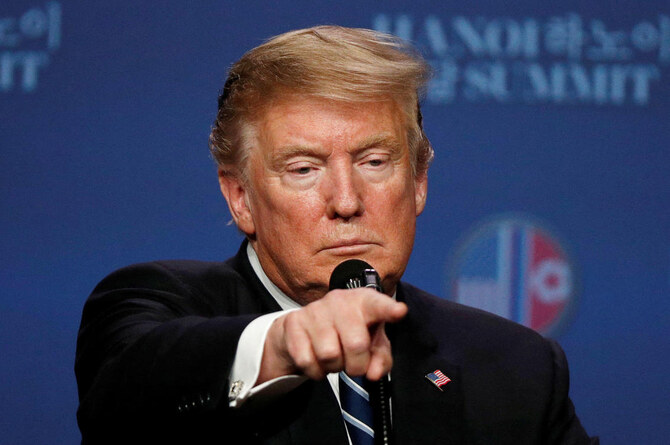
He set off new alarm bells on Tuesday at a news conference when he refused to rule out military intervention over the Panama Canal and Greenland, both of which he has said he wants the United States to control.
“We need Greenland for national security purposes,” he declared.
Trump also labelled the US-Canada border an “artificially drawn line” and promised to rename the Gulf of Mexico the “Gulf of America.”
In Berlin, Scholz convened a press conference at short notice and stressed that the “inviolability of borders is a fundamental principle of international law.”
In a later tweet in English, Scholz reiterated Berlin’s position that “borders must not be moved by force” and that Trump’s latest outburst had cause “uneasiness” among European governments.
Referring indirectly to Russia’s invasion of Ukraine, Scholz said that the principle of sovereign borders “applies to every country, whether in the East or the West.”
Donald Trump Jr made a whistlestop visit to Greenland’s capital Nuuk on Tuesday, insisting he was only making a day-long trip as a “tourist” and he was not there to “buy” the territory.
Denmark itself struck a more emollient tone, even as Trump threatened to slap high tariffs on Copenhagen if it refused to cede Greenland.
Foreign minister Lars Lokke Rasmussen said the Danish Realm — which includes Denmark, Greenland and the Faroe Islands — is “open to a dialogue with the Americans on how we can cooperate, possibly even more closely than we already do, to ensure that American ambitions are fulfilled.”
French Foreign Minister Jean-Noel Barrot said Greenland was “European territory” and there was “no question of the EU letting other nations in the world, whoever they may be... attack its sovereign borders.”
In Brussels, the EU attempted to avoid being drawn into a war of words, one spokesman dismissing Trump’s territorial claim as “wild hypothetical stuff.”
Greenland has been autonomous since 1979 and has its own flag, language and institutions. But justice, monetary, defense and foreign affairs all remain under Danish control.
Another EU spokeswoman confirmed that Greenland was covered by a mutual defense clause binding EU members to assist one another in case of attack.
“But we are indeed speaking of something extremely theoretical on which we will not want to elaborate,” EU Commission spokeswoman Paula Pinho told reporters.
Barrot ruled out the possibility of a US invasion of Greenland but told France Inter radio: “We have entered an era that is seeing the return of the law of the strongest.
“Should we be intimidated? Should we be overcome with worry? Evidently, no.
“We need to wake up and reinforce ourselves, militarily, in competition, in a world where the law of the strongest prevails.”
Barrot said he believed the United States was “inherently not imperialistic” and said he “did not believe” that that was changing.
However French government spokeswoman Sophie Primas told reporters after a cabinet meeting that there was a “form of imperialism” in Trump’s comments.
“Today we are seeing the rise in blocs, we can see this as a form of imperialism, which materializes itself in the statements that we saw from Mr.Trump on the annexation of an entire territory.
“More than ever, we and our European partners need to be conscious, to get away from a form of naivety, to protect ourselves, to rearm,” she added.


![]()

‘Uneasy’ Europe warns Trump over Greenland ambitions
Short Url
https://arab.news/nrcgq
‘Uneasy’ Europe warns Trump over Greenland ambitions
- Germany’s Olaf Scholz said Trump’s comments had sparked “notable incomprehension” among EU leaders the chancellor had spoken with
- The EU attempted to avoid being drawn into a war of words, one spokesman dismissing Trump’s territorial claim as “wild hypothetical stuff“


Latest updates


© 2026 SAUDI RESEARCH & PUBLISHING COMPANY, All Rights Reserved And subject to Terms of Use Agreement.