BERLIN: Germany’s president said Tuesday that a deadly car-ramming attack on a Christmas market had cast a “dark shadow” over this year’s celebrations but urged the nation not to be driven apart by extremists.
In his traditional Christmas address, President Frank-Walter Steinmeier sought to issue a message of healing four days after the brutal attack in the eastern city of Magdeburg killed five people and left over 200 wounded.
“A dark shadow hangs over this Christmas,” said the head of state, pointing to the “pain, horror and bewilderment over what happened in Magdeburg just a few days before Christmas.”
He made a call for national unity as a debate about security and immigration is flaring again: “Hatred and violence must not have the final word. Let’s not allow ourselves to be driven apart. Let’s stand together.”
His words came a day after the far-right Alternative for Germany (AfD) held what it called a memorial rally for the victims in Magdeburg, where one speaker demanded that Germany “must close the borders.”
Nearby an anti-extremist initiative was held under the motto “Don’t Give Hate a Chance.”
Steinmeier recognized that there was a “great deal of dissatisfaction about politics” in Germany but insisted that “our democracy is and remains strong.”
A Saudi doctor, Taleb Al-Abdulmohsen, 50, was arrested Friday at the scene of the attack in which a rented SUV plowed at high speed through the crowd of revellers, bringing death and chaos to the festive event.
His motive still remains unclear, days after Germany’s deadliest attack in years.
Abdulmohsen has in his many online posts voiced strongly anti-Islam views, anger at German authorities and support for far-right conspiracy narratives on the “Islamization” of Europe.
News outlet Der Spiegel reported he wrote on social media platform X in May that he expected to die “this year” and was seeking “justice” at any cost.
Investigators found his will in the BMW that he used in the attack, the outlet said — he stated that everything he owned was to go to the German Red Cross, and it contained no political messages.
Die Welt daily, citing unnamed security sources, said that Abdulmohsen had been treated for a mental illness in the past, thought this was not immediately confirmed by authorities.
The attack has fueled an already bitter debate on migration and security in Germany, two months before national elections and with the far-right AfD party riding high in opinion polls.
The government is facing mounting questions about possible errors and missed warnings about Abdulmohsen, who was arrested next to the battered BMW sports utility vehicle.
Saudi Arabia said it had repeatedly warned Germany about its citizen, who came to Germany in 2006 and was granted refugee status 10 years later.
A source close to the Saudi government told AFP that the kingdom had sought his extradition.
Chancellor Olaf Scholz’s government has pledged to fully investigate whether there were security lapses before the attack.
The Saudi suspect has been remanded in custody in a top-security facility on five counts of murder and 205 of attempted murder, prosecutors said, but not so far on terrorism-related charges.
German Christmas markets have been specially secured since a jihadist attacker rammed a truck through a Berlin Christmas market in 2016, killing 13 people.
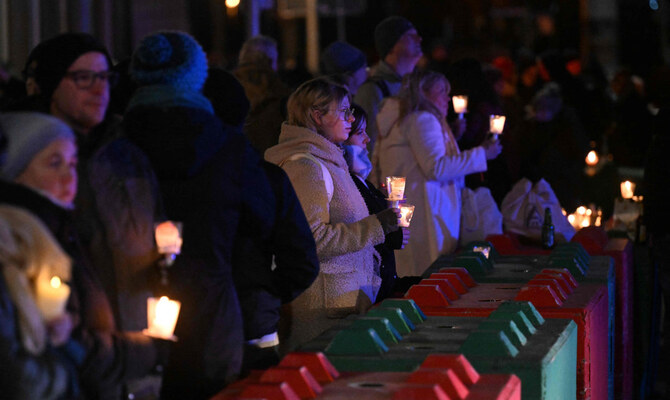
The Magdeburg event too had been shielded by barricades, but the attacker managed to exploit a five-meter gap when he steered the car into the site and then raced into the unsuspecting crowd.
Steinmeier offered his condolences for relatives of those injured and killed “in such a terrible way” — when the attack killed a nine-year-old boy and four women aged 45 to 75.
“You are not alone in your pain,” he told the hundreds of affected families. “The people throughout our country feel for you and mourn with you.”


![]()

German president urges unity after ‘dark shadow’ of Christmas market attack
Short Url
https://arab.news/vd6ud
German president urges unity after ‘dark shadow’ of Christmas market attack
- Steinmeier recognized that there was a “great deal of dissatisfaction about politics” in Germany but insisted that “our democracy is and remains strong”


Latest updates


© 2026 SAUDI RESEARCH & PUBLISHING COMPANY, All Rights Reserved And subject to Terms of Use Agreement.