QUTAYFAH, Syria: An international war crimes prosecutor said on Tuesday that evidence emerging from mass grave sites in Syria has exposed a state-run “machinery of death” under toppled leader Bashar Assad in which he estimated more than 100,000 people were tortured and murdered since 2013.
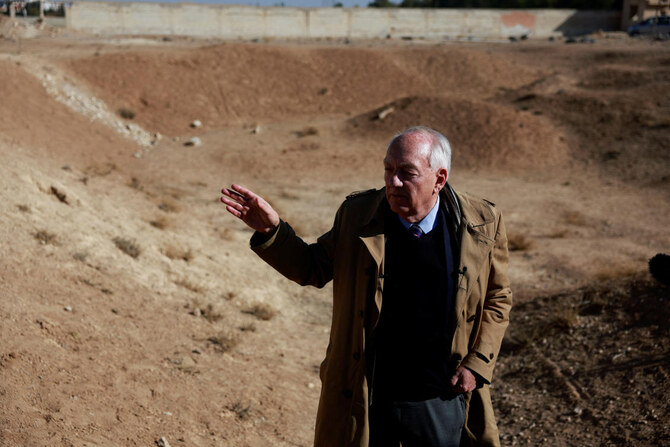
Speaking after visiting two mass grave sites in the towns of Qutayfah and Najha near Damascus, former US war crimes ambassador at large Stephen Rapp told Reuters: “We certainly have more than 100,000 people that were disappeared into and tortured to death in this machine.
“I don’t have much doubt about those kinds of numbers given what we’ve seen in these mass graves.”
“We really haven’t seen anything quite like this since the Nazis,” said Rapp, who led prosecutions at the Rwanda and Sierra Leone war crimes tribunals and is working with Syrian civil society to document war crimes evidence and is helping to prepare for any eventual trials.
“From the secret police who disappeared people from their streets and homes, to the jailers and interrogators who starved and tortured them to death, to the truck drivers and bulldozer drivers who hid their bodies, thousands of people were working in this system of killing,” Rapp said.
“We are talking about a system of state terror, which became a machinery of death.”
Hundreds of thousands of Syrians are estimated to have been killed since 2011, when Assad’s crackdown on protests against him spiralled into a full-scale war.
Both Assad and his father Hafez, who preceded him as president and died in 2000, have long been accused by rights groups and governments of widespread extrajudicial killings, including mass executions within the country’s prison system and using chemical weapons against the Syrian people.
Assad, who fled to Moscow, had repeatedly denied that his government committed human rights violations and painted his detractors as extremists.
The head of US-based Syrian advocacy organization the Syrian Emergency Task Force, Mouaz Moustafa, who also visited Qutayfah, 25 miles (40 km) north of Damascus, has estimated at least 100,000 bodies were buried there alone.
The International Commission on Missing Persons in The Hague separately said it had received data indicating there may be as many as 66, as yet unverified, mass grave sites in Syria. More than 157,000 people have been reported missing to the commission.
Commission head Kathryne Bomberger told Reuters its portal for reporting the missing was now “exploding” with new contacts from families.
By comparison, roughly 40,000 people went missing during the Balkan wars of the 1990s.
For the families, the search for the truth in Syria could be long and difficult. A DNA match will require at least three relatives providing DNA reference samples and taking a DNA sample from each one of these skeletal remains found in the graves, Bomberger said.
The commission called for sites to be protected so that evidence was preserved for potential trials, but the mass grave sites were easily accessible on Tuesday.
The United States is engaged with a number of UN bodies to ensure the Syrian people get answers and accountability, the State Department said on Tuesday.
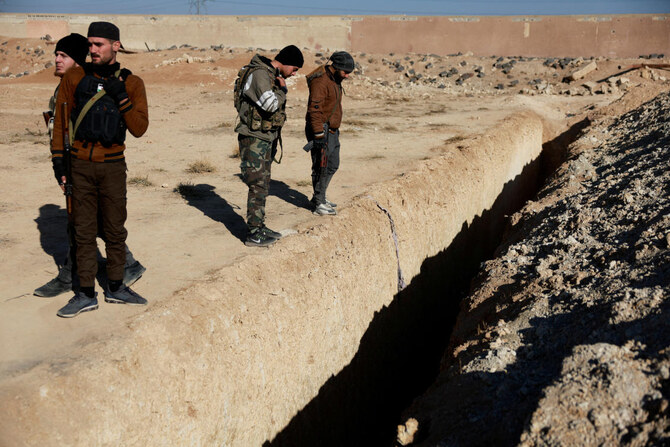
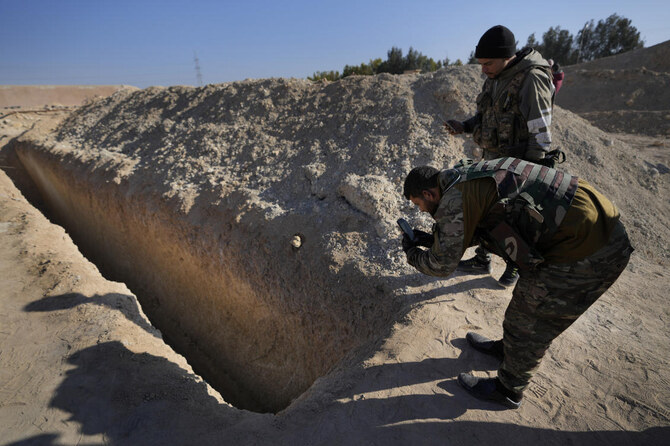
Syrian residents living near Qutayfah, a former military base where one of the sites was located, and a cemetery in Najha used to hide bodies from detention sites described seeing a steady stream of refrigeration trucks delivering bodies which were dumped into long trenches dug with bulldozers.
“The graves were prepared in an organized manner — the truck would come, unload the cargo it had, and leave. There were security vehicles with them, and no one was allowed to approach, anyone who got close used to go down with them,” Abb Khalid, who works as a farmer next to Najha cemetery, said.
In Qutayfah, residents declined to speak on camera or use their names for fear of the retribution, saying they were not yet sure the area was safe after Assad’s fall.
“This is the place of horrors,” one said on Tuesday.
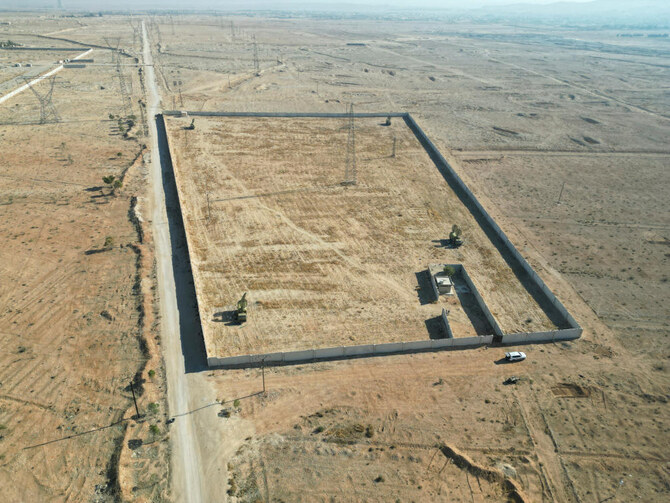
Inside a site enclosed with cement walls, three children played near a Russian-made military satellite vehicle. The soil was flat and levelled, with straight long marks where the bodies were believed buried.
Satellite imagery analyzed by Reuters showed large-scale digging began at the location between 2012 and 2014 and continued up until 2022. Multiple satellite images taken by Maxar during that time showed a digger and large trenches visible at the site, along with three or four large trucks.
Omar Hujeirati, a former anti-Assad protest leader who lives near the Najha cemetery, which was used until the larger Qutayfah site was created because it was full, said he suspected several of his missing family members may be in the grave.
He believes at least some of those taken, including two sons and four brothers, were detained for protesting against Assad’s government.
“That was my sin, what made them take my family,” he said, a long, exposed trench behind him where the bodies were apparently buried.
Details of Syria’s mass graves first emerged during German court hearings and US congressional testimony in 2021 and 2023. A man identified only as “the grave digger” testified repeatedly as a witness about his work at the Najha and Qutayfah sites during the German trial of Syrian government officials.
While working in cemeteries around Damascus at the end of 2011, two intelligence officers showed up at his office and ordered him and his colleagues to transport and bury corpses. He testified that he rode in a van adorned with pictures of Assad and drove to the sites several times a week between 2011 and 2018, followed by large refrigeration trucks filled with bodies.
The trucks carried several hundred corpses from Tishreen, Mezzeh and Harasta military hospitals to Najha and Qutayfah, he said in the trial. At the sites deep trenches were already dug and the grave digger and his colleagues would unload the corpses into the trenches, which would be covered with dirt by excavators as soon as a section of the trench was full, he said.
“Every week, twice a week, three trailer trucks arrived, packed with 300 to 600 bodies of victims of torture, starvation, and execution from military hospitals and intelligence branches around Damascus,” he told Congress in a written statement.
The grave digger escaped from Syria to Europe in 2018 and has repeatedly testified about the mass graves, but always with his identity shielded from the public and the media. (Reporting by Timour Azhari in Qutayfah and Anthony Deutsch in Amsterdam; Additional reporting by Reade Levinson and Stephanie van den Berg; Editing by Angus MacSwan and Alison Williams)


![]()
![]()
![]()
![]()

Syrian mass graves expose Assad’s ‘machinery of death’
Short Url
https://arab.news/8zwnp
Syrian mass graves expose Assad’s ‘machinery of death’
- Former US war crimes ambassador Stephen Rapp: "We haven't seen anything like this since the Nazis"
- More than 157,000 people have been reported missing to Hague commission


Latest updates


Recommended


© 2026 SAUDI RESEARCH & PUBLISHING COMPANY, All Rights Reserved And subject to Terms of Use Agreement.