Pakistan mulls 'Super App' for public services, document verification in major technology push

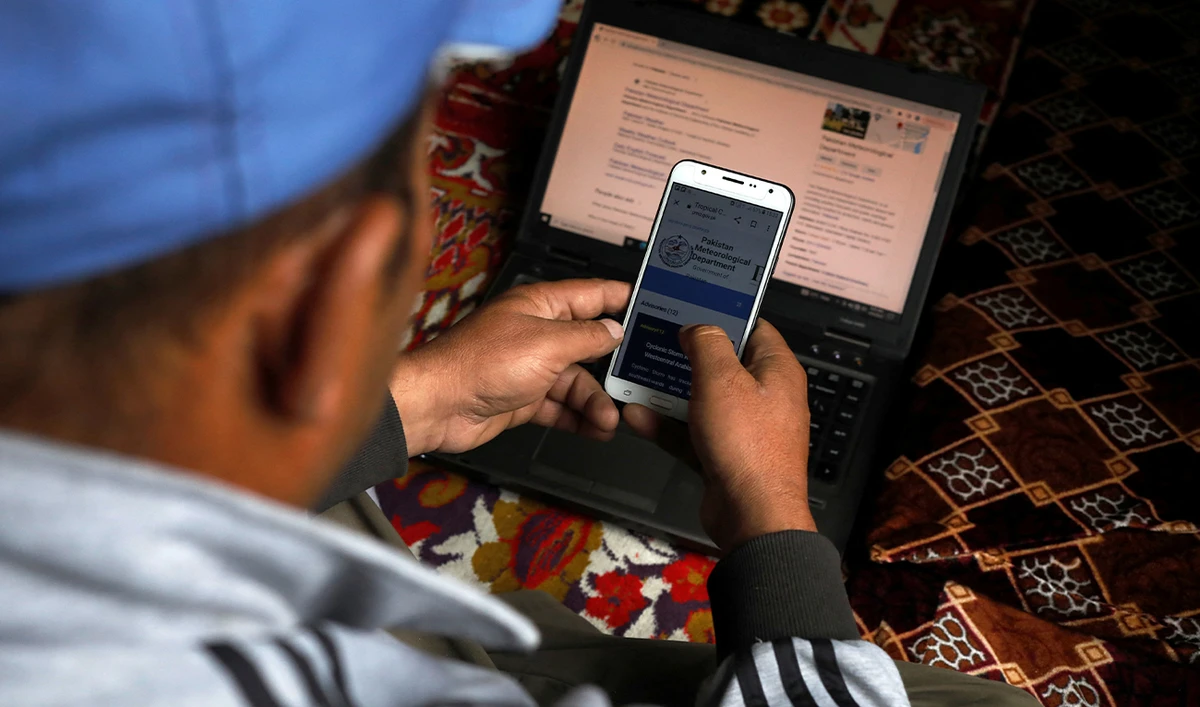
Tariq Jamil, 51, chairman of the Community Based Disaster Risk Management Centre, monitors a metrological website on his mobile phone and laptop, at home in Hassanabad village, Hunza valley, in the Karakoram mountain range in the Gilgit-Baltistan region of Pakistan, October 9, 2023.
Short Url
Updated 15 February 2026
Follow

Pakistan mulls 'Super App' for public services, document verification in major technology push

  • Pakistan has been urging technology adoption in public, private sectors as it seeks to become a key tech player globally
  • The country this month launched the Indus AI Week to harness technology for productivity, skills development and innovation

KARACHI: Pakistan is planning to launch a “Super App” to deliver public services and enable digital document verification, the country's information technology (IT) minister said on Sunday, amid a major push for technology adoption in public and private sectors.

Pakistan, a country of 240 million people, seeks to become a key participant in the global tech economy, amid growing interest from governments in the Global South to harness advanced technologies for productivity, skills development and innovation.

The country's information and communications technology (ICT) exports hit a record $437 million in Dec. last year, according to IT Minister Shaza Fatima Khawaja. This constituted a 23% increase month on month and a 26% increase year on year.

Pakistan's technology sector is also advancing in artificial intelligence (AI) and cloud computing, marked by the launch of Pakistan’s first sovereign AI cloud in November, designed to keep sensitive data domestic and support growth in the broader digital ecosystem.

“In developed countries, citizens can access all government services from a mobile phone,” Fatima said, announcing plans for the Super App at an event in Karachi where more than 7,000 students had gathered for an AI training entrance test as part of the ‘Indus AI Week.’

“We will strive to provide similar facilities in the coming years.”

Khawaja said the app will reduce the need for in-person visits to government offices such as the National Database and Registration Authority (NADRA) and the Higher Education Commission (HEC).

The Indus AI Week initiative, which ran from Feb. 9 till Feb. 15. was aimed at positioning Pakistan as a key future participant in the global AI revolution, according to the IT minister.

At the opening of the weeklong initiative, Prime Minister Shehbaz Sharif announced that Pakistan would invest $1 billion in AI by 2030 to modernize the South Asian nation’s digital economy.

“These initiatives aim to strengthen national AI infrastructure and make the best use of our human resource,” Khawaja said, urging young Pakistanis to become creators, inventors and innovators rather than just being the consumers of technology.
Pakistan awaits mandate clarity before committing troops to Gaza stabilization force, FO says

Updated 9 sec ago
Follow

Pakistan awaits mandate clarity before committing troops to Gaza stabilization force, FO says

  • Foreign office says Islamabad cannot commit to contributing troops unless it obtains clarity on the force’s mandate
  • Says Pakistan can be part of peacekeeping force but not of any disarming or de-militarization mandates

ISLAMABAD: Foreign office spokesperson Tahir Andrabi said on Thursday that Pakistan has identified its “red lines” on contributing to the International Stabilization Force (ISF) in Gaza, adding that Islamabad would be unable to take a decision on the matter without clarity about the force’s mandate. 

Andrabi’s comments come as Prime Minister Shehbaz Sharif gears up to attend the inaugural Board of Peace meeting to be chaired by US President Donald Trump in Washington today, Thursday. 

Trump’s 20-point peace plan for Gaza calls for ‌a multi-nation force to oversee a ‌transition period for reconstruction and economic recovery in the Palestinian territory. Pakistan has previously said it is willing to contribute troops for the peace force but would not be part of any move to disarm Hamas. 

“On the international security assistance force, we understand that a decision is awaited on the contours of the mandate of the Board of Peace, on the mandate of the International Stabilization Force,” Andrabi said during a weekly briefing to reporters. 

“And till such time, we would obviously not be in a position to take any decision on this matter. We have identified our red lines quite explicitly.”

Andrabi quoted a previous statement of Deputy Prime Minister Ishaq Dar by saying: “Pakistan can be part of the peacekeeping mandate, but we would obviously not be part of any disarming, de-militarization mandates.”

He said discussion on the international force might take place in Washington today.

The foreign office spokesperson said Pakistan has joined the Board of Peace with a particular focus of aiding in the reconstruction of Gaza and for the long-term settlement of issues faced by Palestinians.

Andrabi said Israel’s recent move to register lands in the West Bank will also come up in the Board of Peace meeting today. 

“That is how Israel is violating international law, UN resolutions on wider occupied Palestinian territories, not just Gaza,” he said.

“So, I think the board of peace meeting affords an opportunity to discuss this important development.”

SAUDI MEDIATION FOR PAKISTANI DETAINEES
To a question about the release of three Pakistani detainees by Afghanistan this week on Saudi Arabia’s mediation, Andrabi welcomed the role played by the Kingdom and “other brotherly Muslim countries.”

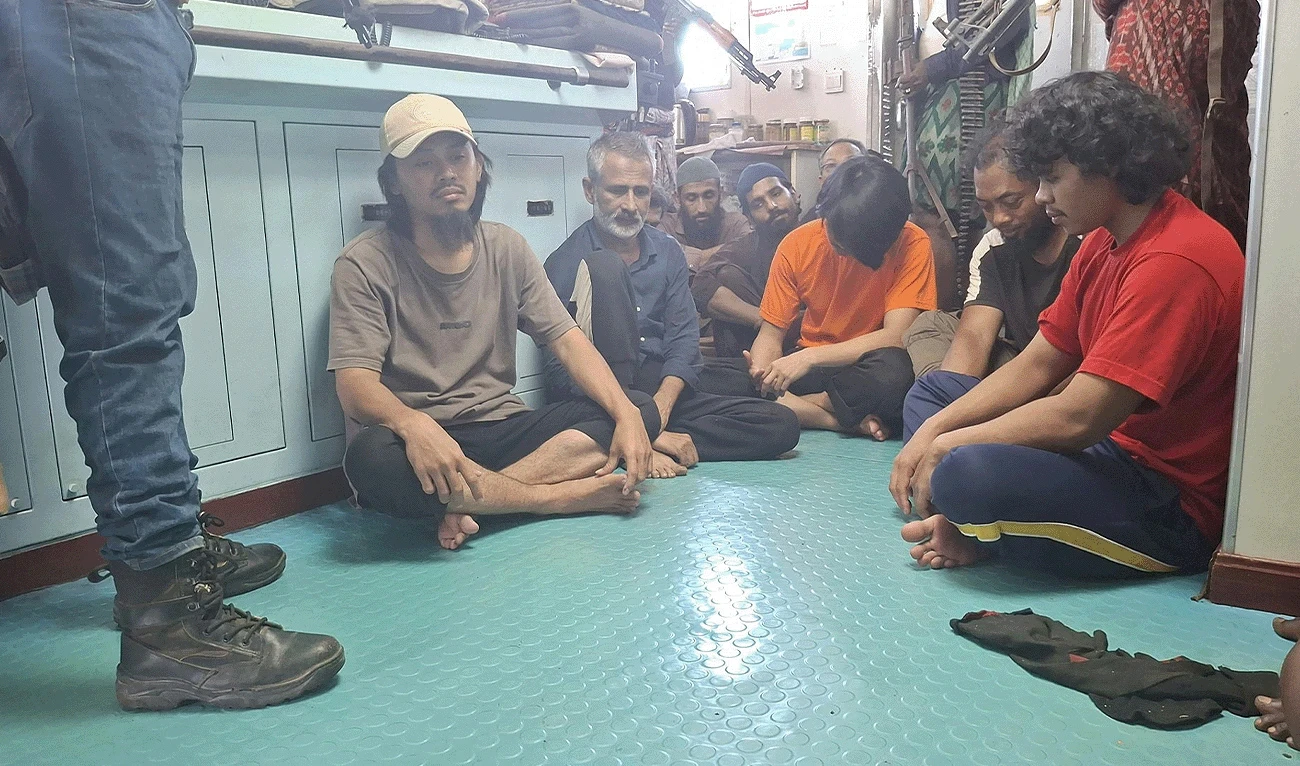
 Afghanistan government spokesperson Zabihullah Mujahid announced on Tuesday that it had released three Pakistani soldiers captured during border clashes between the two countries in October after mediation from Saudi Arabia. Mujahid said the detainees were handed over to a visiting Saudi delegation in Kabul.

“Pakistan values the positive role of our brotherly countries, our important OIC Islamic countries, in basically messaging Taliban leadership, reminding them of their obligations under international law, to ensure that their territory is not used for terrorism in Pakistan,” the spokesperson said.

“I think such an exchange also took place between Riyadh and Kabul.”

However, he said Saudi Arabia was not part of any “structured mediation talks” between Pakistan and Afghanistan.

“I am not aware of that role and I would strongly urge you not to speculate into it,” he said. 

To a question about Pakistan’s response if India violates the Indus Waters Treaty, Andrabi said Islamabad will not compromise on its water rights.

“We will not let India weaponize water. We will not compromise on even a single drop of water that this treaty allows us to have a share of, and we will not compromise on the water rights of the people of Pakistan,” he added.