

UAE’s economic resilience to continue in 2025: report

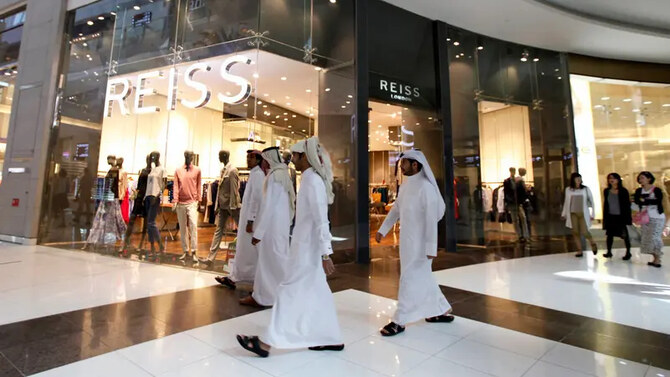
Inflation in the UAE has been steadily decreasing, dropping to 2.4 percent year on year in October, the slowest pace since August 2023. Reuters/File
Short Url
Updated 17 December 2024
Follow

UAE’s economic resilience to continue in 2025: report

  • Growth to be driven by spending, FDI, and diversification

JEDDAH: Despite ongoing regional challenges, the UAE is expected to maintain strong economic resilience in 2025, fueled by robust consumer spending, record-breaking foreign direct investment, and successful diversification efforts, according to a new industry report.

The UAE’s strategic position as a global trade hub connecting Europe, Africa, and Asia, along with its status as a prime real estate destination, continues to drive its growth trajectory.

The report, from FOREX.com, a subsidiary of StoneX Group Inc., a global US-based financial services firm, emphasizes that these factors will help sustain the country’s economic momentum.

One key indicator of this resilience is the UAE’s thriving real estate market. In October, the country saw a record 19,390 residential transactions, bringing the year-to-date total to 140,000 units — an increase of 36 percent compared to the previous year.

“The UAE is on track to maintain robust economic growth in 2025, with GDP growth forecasts ranging from 6.2 percent by the Central Bank of the UAE, 5.1 percent by the International Monetary Fund, and 4.1 percent by the World Bank,” said Razan Hilal, market analyst and chartered market technician at FOREX.com.

Hilal further noted that inflation in the UAE has been steadily decreasing, dropping to 2.4 percent year on year in October, the slowest pace since August 2023.

“With the Federal Reserve’s ongoing monetary easing, mirrored by the Central Bank of the UAE, interest rates are expected to decline further, which should help stimulate economic growth in 2025,” she added.

While the outlook remains positive, the report does acknowledge potential risks stemming from local, regional, and global factors. These include pressures on oil revenues due to falling oil prices, challenges from oversupply risks from non-OPEC countries, and the economic slowdown in China.

On the global stage, China’s anticipated shift to a more accommodative monetary policy in 2025 — the first such move since 2011 — could stabilize demand.

Meanwhile, the UAE’s non-oil sectors, aligned with the country’s ambitious D33 Agenda, are expected to continue driving economic expansion. These sectors include trade, tourism, and technology, with the UAE aiming for foreign trade worth 25.6 trillion dirhams ($6.97 trillion) and FDI inflows of 60 billion dirhams annually by 2033.

Hilal also highlighted that Dubai’s role as a global innovation hub will be further reinforced by initiatives like the 2030 artificial intelligence and sustainable development strategies, along with the launch of “Sandbox Dubai,” which aims to foster the testing and commercialization of new technologies. These efforts will strengthen Dubai’s leadership in technological advancements and further fuel the UAE’s economic growth.

The report also touched on the potential impact of a future US presidential term under Donald Trump, predicting that fiscal spending, tax cuts, a stronger US dollar, and rising geopolitical uncertainties could have mixed effects. While US stock indices have reached record highs in anticipation of Trump’s policies, the UAE’s MSCI index is also nearing its 2024 peaks.

However, these market gains remain vulnerable to volatility, particularly given the increasing geopolitical tensions and potential disruptions in global trade caused by Trump’s policies, tariffs, and regional decisions.

Furthermore, gold prices are expected to remain crucial in 2025, with potential gains reflecting heightened demand for safe haven assets amid global uncertainties.

This presents a challenge for the UAE, which must navigate these global economic and political risks while maintaining its status as a regional safe haven.

In conclusion, the report emphasizes that staying attuned to global political and economic developments will be vital for shaping an accurate perspective on the UAE's financial performance in the years ahead.


Saudi investment pipeline active as reforms advance, says Pakistan minister

Updated 08 February 2026
Follow

Saudi investment pipeline active as reforms advance, says Pakistan minister

ALULA: Pakistan’s Finance Minister Mohammed Aurangzeb described Saudi Arabia as a “longstanding partner” and emphasized the importance of sustainable, mutually beneficial cooperation, particularly in key economic sectors.

Speaking to Arab News on the sidelines of the AlUla Conference for Emerging Market Economies, Aurangzeb said the relationship between Pakistan and Saudi Arabia remains resilient despite global geopolitical tensions.

“The Kingdom has been a longstanding partner of Pakistan for the longest time, and we are very grateful for how we have been supported through thick and thin, through rough patches and, even now that we have achieved macroeconomic stability, I think we are now well positioned for growth.”

Aurangzeb said the partnership has facilitated investment across several sectors, including minerals and mining, information technology, agriculture, and tourism. He cited an active pipeline of Saudi investments, including Wafi’s entry into Pakistan’s downstream oil and gas sector.

“The Kingdom has been very public about their appetite for the country, and the sectors are minerals and mining, IT, agriculture, tourism; and there are already investments which have come in. For example, Wafi came in (in terms of downstream oil and gas stations). There’s a very active pipeline.”

He said private sector activity is driving growth in these areas, while government-to-government cooperation is focused mainly on infrastructure development.

Acknowledging longstanding investor concerns related to bureaucracy and delays, Aurangzeb said Pakistan has made progress over the past two years through structural reforms and fiscal discipline, alongside efforts to improve the business environment.

“The last two years we have worked very hard in terms of structural reforms, in terms of what I call getting the basic hygiene right, in terms of the fiscal situation, the current economic situation (…) in terms of all those areas of getting the basic hygiene in a good place.”

Aurangzeb highlighted mining and refining as key areas of engagement, including discussions around the Reko Diq project, while stressing that talks with Saudi investors extend beyond individual ventures.

“From my perspective, it’s not just about one mine, the discussions will continue with the Saudi investors on a number of these areas.”

He also pointed to growing cooperation in the IT sector, particularly in artificial intelligence, noting that several Pakistani tech firms are already in discussions with Saudi counterparts or have established offices in the Kingdom.

Referring to recent talks with Saudi Minister of Economy and Planning Faisal Alibrahim, Aurangzeb said Pakistan’s large freelance workforce presents opportunities for deeper collaboration, provided skills development keeps pace with demand.

“I was just with (Saudi) minister of economy and planning, and he was specifically referring to the Pakistani tech talent, and he is absolutely right. We have the third-largest freelancer population in the world, and what we need to do is to ensure that we upscale, rescale, upgrade them.”

Aurangzeb also cited opportunities to benefit from Saudi Arabia’s experience in the energy sector and noted continued cooperation in defense production.

Looking ahead, he said Pakistan aims to recalibrate its relationship with Saudi Arabia toward trade and investment rather than reliance on aid.

“Our prime minister has been very clear that we want to move this entire discussion as we go forward from aid and support to trade and investment.”