



RIYADH: The mindset in the Gulf region that fosters the development of iconic projects is “uplifting” and will make its way back to the US under Donald Trump’s next presidency, Eric Trump told Arab News on Thursday.
The president-elect’s second son, who serves as executive vice president of the Trump Organization, praised the region for its innovative approach, which he believes defies common misconceptions held by Western nations.
During a visit to the Saudi capital following an official launch event in Jeddah for a new Trump Tower, Eric Trump suggested that the Gulf’s no-limits mentality is something that the incoming US president will adopt.
“It’s a different mindset in the Gulf, and that mindset is going to return to America, believe me, in the next four years under my father. But that mindset really, it’s uplifting. It’s almost empowering. It makes you want to come over here and do something really great. And it kind of makes you want to say no to those other countries where it’s just impossible to navigate the political system. They’re just too cumbersome. They’re too lethargic.”
Trump went on to explain that Gulf countries actively encourage developers to realize their grand visions, offering not just permits but also support for larger, more ambitious projects.
“They tell you, ‘not only are we going to give you the permits, but we actually want you to make your project bigger. We want you to make it even more iconic. We want you to make it more luxurious. We want you to attract the greatest restaurants and the greatest amenities. Sky’s the limit.’ And that's a beautiful thing for a developer,” he said.
He also revealed that the Trump Organization is planning additional projects in Riyadh, though he did not disclose further details.
The Trump Organization has lent its branding to several properties across the Gulf region, including a hotel and golf club in Oman, a golf club and tower in Dubai, and most recently, the Jeddah hotel. Trump Tower Jeddah is being developed in partnership with Saudi developer Dar Global, with the two companies having previously collaborated on projects in Oman and Dubai.
Praising Saudi Arabia’s safety and political stability, Trump said: “Obviously, the people in this country love us, love our company, love our brand, love what we stand for. We have so much unbelievable support in this amazing country.”
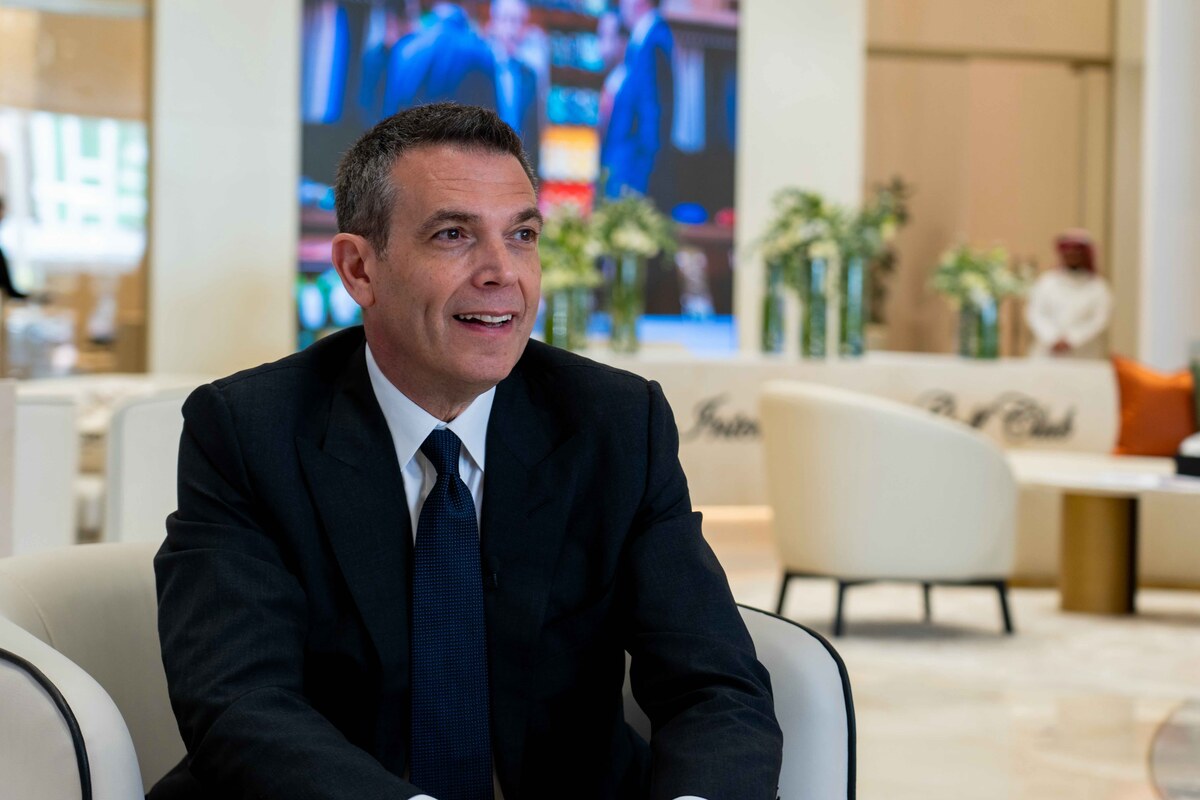
Dar Global CEO Ziad El Chaar speaks to Arab News during an interview on Thursday. AN photo
Ziad El Chaar, CEO of Dar Global, told Arab News that the Trump brand is synonymous with success. “The Trump name is a global brand that people attach to it always a very big sense of success,” he said.
“You can see the projects of Trump; they always feature the best material, the best design, and are really created for a great living experience and customer experience.”
Eric Trump’s visit to the Kingdom came after attending a cryptocurrency conference in Abu Dhabi earlier in the week.
The Trump family has ties to a new cryptocurrency called World Liberty Financial, and Donald Trump has pledged to launch a strategic national crypto stockpile during his second term.
Bitcoin’s value surged following Trump's election win in November, and this week it surpassed the $100,000 mark for the first time.


