BEIRUT, Lebanon: Many in Lebanon who suffered through decades of brutal rule in Syria that extended across the border say the fall of longtime leader Bashar Assad is “divine justice,” but want him held accountable.
For almost 30 years, the government of Hafez Assad and then his son Bashar — whom militants ousted on Sunday after 13 years of war — held Lebanon in a stranglehold.
The Syrian army entered the country in 1976 as part of an Arab force that was supposed to put an end to Lebanon’s civil war, which began a year earlier.
But instead it became the dominant military and political force, looming over all aspects of Lebanese life.
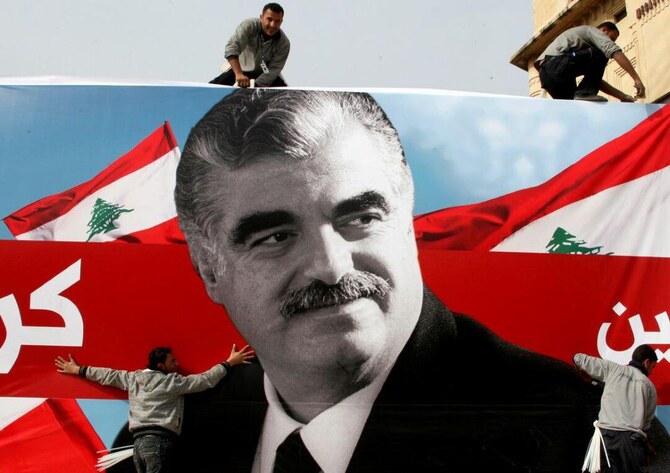
Syrian forces only quit Lebanon in 2005 after enormous pressure following the assassination of former prime minister Rafic Hariri, a killing attributed to Damascus and its ally Hezbollah.
A United Nations-backed court in 2022 sentenced two Hezbollah members in absentia to life imprisonment for the crime.
“Divine justice has been served, even if there has been no punishment” for Assad, said Rania Ghanem Gantous, who maintains her father Antoine Ghanem was killed by Syrian forces in a 2007 car bomb blast near his east Beirut home.
“We want to see those who committed these crimes punished here on earth,” said Gantous, whose father was a lawmaker with Lebanese Christian Kataeb (Phalange) party, which opposed the Syrian presence.
Gantous said the fall of Assad was a “glorious day,” but that she was torn between “joy and sadness.”
“My father’s death was a terrible loss and I miss him a lot,” she said, adding she was also “happy for the end of the tyranny” of the Assad family’s rule “after 50 years of oppression.”
Zaher Eido expressed similar sentiment, 17 years after his father Walid Eido was assassinated in a 2007 car bomb.
Another son of the former lawmaker from Hariri’s Future Movement was also killed in the blast.
“The fall of the regime in Damascus has lifted the spirits of my mother and those who have endured its repression,” Eido told AFP.
But with “a father who was a judge, and a brother who was a lawyer, I believe justice will not be served until Bashar Assad is tried and his punishment, whether death or life in prison or something else, is served,” he added.
The evening of Assad’s ouster, Lebanese television channel LBCI began its news broadcast announcing that “he who committed the worst butchery, murders, explosions and arrests, whether in Syria, Lebanon or against the Palestinians, has fallen.”
Fireworks lit up the sky over another local broadcaster MTV, whose journalists began the news program displaying photographs of presumed victims of Assad’s government.
The included president-elect Bashir Gemayel, who was killed in 1982 less than a month after his election, as well as president Rene Mouawad, assassinated in 1989, and Druze leader Kamal Jumblatt, who was killed in 1977.
“Assad’s Syria is dead, long live the new Syria. A free Syria is born,” the channel’s news broadcast said, inviting “Beirut to rejoice.”
Presenter Marcel Ghanem later opened a bottle of champagne on air to celebrate “the fall of the regime of repression.”
“I’ve always thought that justice was a question of time,” said Yasma Fleihan, the widow of former minister and lawmaker Bassel Fleihan, who died of wounds sustained in the 2005 blast that killed Hariri.
“Assad’s fall brings justice to all those who were killed, threatened or tortured,” she told AFP.
In Beirut’s Sassine Square, Nassib Ibrahim, 76, recalled the days in 1978 when Syrian forces were bombing the area, where his brother was also killed.
The fall of Assad was “the best day of my life,” he said.
“He tried to humiliate us but he fled and was humiliated himself.


![]()

Lebanese haunted by Assad say his fall is ‘divine justice’
Short Url
https://arab.news/zbzy2
Lebanese haunted by Assad say his fall is ‘divine justice’
- Syrian forces only quit Lebanon in 2005 after enormous pressure following the assassination of former PM Rafic Hariri, a killing attributed to Damascus and its ally Hezbollah
- Presumed victims of the Assad regime include President-elect Bashir Gemayel, killed in 1982, President Rene Mouawad, in 1989, and Druze leader Kamal Jumblatt, in 1977


Latest updates



© 2026 SAUDI RESEARCH & PUBLISHING COMPANY, All Rights Reserved And subject to Terms of Use Agreement.