

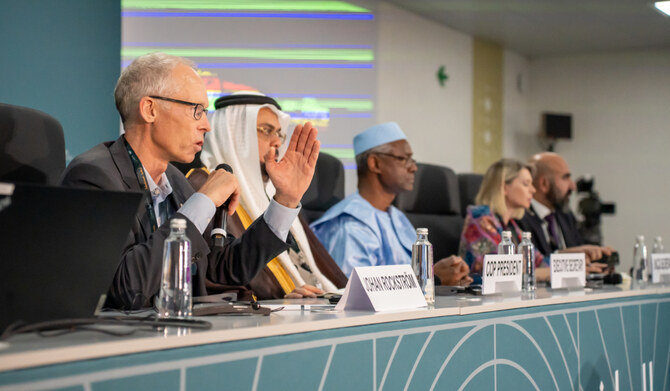

RIYADH: International experts convened in Riyadh for the 16th session of the Conference of the Parties to the UN Convention to Combat Desertification from Dec. 2-13 to address the increasing prevalence of floods and droughts and how to mitigate their impact.
In Saudi Arabia, a nation known for its arid climate and vast deserts, such extreme weather events could heavily affect water resources.
Andrew Robertson, senior research scientist at Columbia University’s Center for Climate System Research and the International Research Institute for Climate and Society, said that climate change is impacting this region, which has some of the highest temperature increases in the world, more than the global average.
Robertson highlighted advancements that could help Saudi Arabia mitigate harsh climate conditions in the future.
“Heatwave early warning … (will) be important in the future here,” Robertson said.
Advanced seasonal forecasting capabilities can significantly help people adapt to extreme weather conditions, he added.
“The weather is not constant; it fluctuates daily and even annually,” Robertson said.
Although Saudi Arabia’s climate is predominantly dry, it is not immune to flooding. Intense rainfall, often linked to seasonal weather patterns, can cause urban flooding, particularly in areas with inadequate drainage systems.
A notable example is the devastating 2009 flood in Jeddah, which led to significant property damage, loss of life, and economic disruption.
Floods not only damage infrastructure but also exacerbate issues like soil erosion and water pollution, further straining the country’s already limited water resources.
In 2020, Crown Prince Mohammed bin Salman launched the Regional Center for Climate Change, which provides research on climate conditions in Saudi Arabia and the Gulf Cooperation Council.
Mazen Asiri, executive director of the center, told Arab News that the center aims to develop a high-resolution climate change database projecting up to 2100. The database will analyze various climate scenarios to assess climate change and the impact of human activity on the environment.
Another major challenge in Saudi Arabia is drought, as the country is among the most water-scarce in the world. With no rivers, it relies heavily on desalination and underground water for its supply.
Recognizing the threat of drought, the Saudi government is actively implementing water conservation and management strategies. Initiatives such as rainwater harvesting and cloud seeding offer promising solutions to address the nation’s water challenges.
Asiri said: “We have seen examples today of how we can use techniques such as ‘seeding the skies’ in mountainous areas during the winter season to create snow. This is a recent but ongoing study that might succeed in mountainous locations here, such as Tabuk.”
He added: “This method may help improve tourism as well as support the water supply. It will also enhance vegetation cover and biodiversity.”
Asiri emphasized the importance of raising public awareness in addressing environmental issues and the role of the media in helping to achieve this. “We should focus on education from a young age to have thriving results in the future. We also offer workshops at our center and other similar entities, which are significant in raising awareness of these issues,” he said.


