

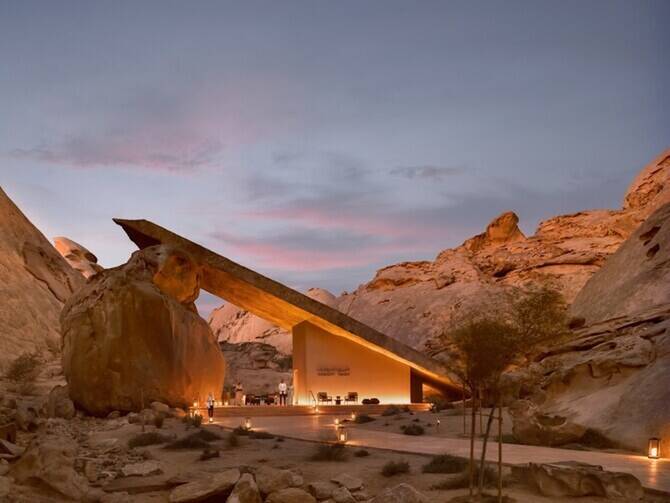

ALKHOBAR: A growing number of Saudi families are spending Eid Al-Fitr in hotels rather than at home this year, as so-called staycations begin to replace traditional domestic gatherings.
This trend is visible across major cities, with occupancy rates at high-end properties in Riyadh, Jeddah and Alkhobar approaching capacity during the Eid break, according to industry estimates.
For many families, this is driven by practicality. Hosting Eid at home often involves days of preparation, from cleaning and cooking to coordinating visits across extended family networks. A segment of urban Saudis is increasingly choosing to outsource that workload.
Hotels have responded by building packages around this demand. Major hospitality groups now offer Eid-specific stays that combine accommodation with shared meals, children’s activities, traditional performances and on-site prayer facilities.
The aim is to preserve the social aspects of Eid while removing the domestic labor behind it.
“In the past, my family spent the entire week before Eid cleaning the house and preparing food for 50 guests. Last year, we booked three suites at a local resort instead,” said Lulwa Al-Rashid, from Alkhobar.
“We had the big family breakfast, but the hotel handled everything. It was the first time my mother actually sat down and enjoyed the holiday without working.”
The trend aligns with national tourism targets.
The Saudi Tourism Authority has identified domestic travel as a key growth driver under Vision 2030, with the Kingdom aiming to increase tourism’s contribution to the gross domestic product to 10 percent by the end of the decade.
Eid periods remain among the highest-demand windows in the local travel calendar.
At the same time, investment in hospitality infrastructure has expanded the range of options available.
Tourism developments such as the Red Sea Project, along with the rise of boutique hotels in urban centers, have raised the standard of domestic stays.
For some families, that has changed longstanding travel habits.
“We used to feel that we had to travel to Europe or Dubai to feel like we were truly on vacation.
“Now, with the new developments in AlUla and the Red Sea … there is no need to deal with airports,” said Fahad Al-Otaibi, from Riyadh.
Still, this new way of celebrating the holiday is not universally welcomed. Some Saudis, particularly in older neighborhoods, argue that moving celebrations into hotels reduces the visibility and spontaneity that once defined Eid.
The movement between homes, open-door visits, and street-level interactions have historically been central to the holiday’s atmosphere.
A hotel environment, even with curated programming, offers a more contained experience as well as higher costs.
Younger Saudis tend to interpret the change differently. For them, relocating to a resort or hotel is less about abandoning tradition and more about restructuring it.
“It is not about moving away from family. We prefer making the time we spend together more meaningful,” said Mona Al-Zahrani, from Jeddah.
“When we’re at a resort, we don’t get distracted by chores or errands … it feels like a true reward after a month of fasting.”
This trend is also redirecting spending patterns. Budgets that were previously allocated to outbound travel to destinations such as Dubai, London or Istanbul are increasingly being spent within the Kingdom.
That redistribution has economic implications. Domestic hotel stays support local operators, staff and service providers, keeping more holiday spending within the national economy.
With changing holiday habits, Eid is becoming not only a time for gathering, but also a reflection of how lifestyles in the Kingdom are evolving under Vision 2030.


