ISLAMABAD: World Bank Country Director Najy Benhassine met Pakistan’s Interior Minister Mohsin Naqvi on Thursday to discuss collaborative efforts to address the growing smog crisis and improve access to clean water and sanitation in urban areas, an official statement said
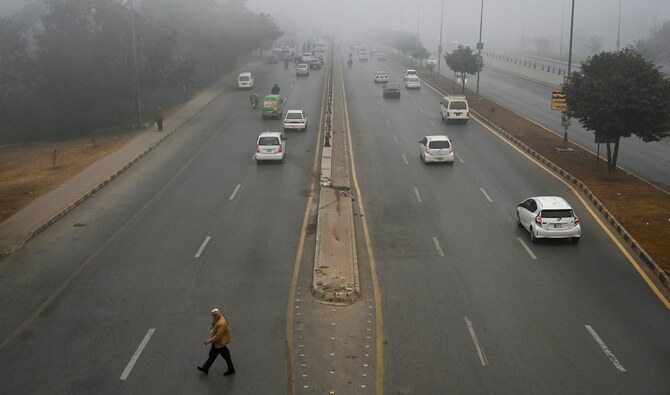
The smog issue has become a pressing environmental and public health concern in Pakistan, particularly in Punjab’s major cities such as Lahore, Multan and Faisalabad, where Air Quality Index levels reached hazardous levels this winter.
Even Islamabad, which has historically enjoyed better air quality, experienced the problem this year, highlighting the urgency to deal with the issue.
According to the interior ministry, the meeting concluded with an agreement to prepare an anti-smog plan for the federal capital through a joint team of the World Bank and the Capital Development Authority (CDA).
“We are ready to formulate an anti-smog strategy in consultation with the CDA,” Benhassine said, noting that a detailed report would be prepared to help identify the causes of the problem.
Meanwhile, Naqvi said the government was introducing Islamabad Water as a dedicated entity to address the city’s water and sanitation needs.
The minister also noted that clean water and sanitation were among the government’s key priorities.
The World Bank has long supported Pakistan in addressing urban challenges, from infrastructure development to disaster recovery.
In recent years, it has financed significant initiatives, including flood relief and housing projects, to aid vulnerable communities and improve urban resilience.
The collaboration on smog mitigation marks a new milestone, highlighting the growing recognition of air quality as a critical component of sustainable urban development.

World Bank to help Pakistan’s capital combat smog, improve water and sanitation
https://arab.news/zq8ms
World Bank to help Pakistan’s capital combat smog, improve water and sanitation
- Smog has become a pressing environmental and public health concern for Pakistan in winter
- World Bank and CDA plan to work together to prepare a report to identify causes of the problem
Pakistan’s National Assembly speaker to attend Khaleda Zia’s funeral in Dhaka
- Ayaz Sadiq will convey Pakistan’s condolences to Zia’s family, interim government
- Visit comes amid warming ties between Islamabad and Dhaka after years of strain
ISLAMABAD: Pakistan’s National Assembly Speaker Sardar Ayaz Sadiq is due to travel to Dhaka on Wednesday to attend the funeral of Bangladesh’s former prime minister Khaleda Zia, a move that highlights a recent thaw in relations between the two South Asian countries after decades of unease.
Zia, Bangladesh’s first female prime minister and a key political figure for decades, died on Tuesday at the age of 80 after a prolonged illness, her Bangladesh Nationalist Party (BNP) said. Her death prompted messages of condolence from leaders across the region, including Pakistan’s prime minister.
“The Speaker of Pakistan’s National Assembly, Sardar Ayaz Sadiq, will depart for Dhaka, Bangladesh, on Wednesday,” Pakistan’s National Assembly said in a post on social media platform X on Tuesday. “The National Assembly Speaker will attend the funeral prayers of Bangladesh’s former prime minister, Begum Khaleda Zia.”
“The Speaker will also convey condolences to Khaleda Zia’s family on behalf of the government, parliament and the people of Pakistan,” it added. “Speaker Sardar Ayaz Sadiq will also meet senior officials of Bangladesh’s interim government.”
Sharif had earlier described Zia as a “committed friend of Pakistan,” praising her role in Bangladesh’s political life and expressing solidarity with the Bangladeshi people during what he called a difficult moment.
Zia, who served three terms as prime minister, led the BNP and remained a central figure in Bangladeshi politics despite years of ill health and imprisonment under the government of her longtime rival, Sheikh Hasina. She was released last year following Hasina’s ouster after a violent uprising.
Pakistan and Bangladesh were part of the same country until Bangladesh’s secession following a bloody civil war in 1971, an event that has long cast a shadow over bilateral ties. Relations remained largely strained for decades, shaped by historical grievances and political mistrust.
However, Islamabad enjoyed comparatively warmer ties with Dhaka during Zia’s tenure than under Hasina.
Engagement between Islamabad and Dhaka has increased since Hasina’s removal and the formation of an interim administration, with both sides signaling interest in improving political, diplomatic, economic and security ties.


