
ISLAMABAD: Despite the expiry of the agreed “temporary pause” in its military operations against Afghanistan, Pakistan said on Tuesday the ceasefire remains intact for now, as long as hostilities are not resumed from the other side.
Pakistan last week announced a pause in its military operations against Afghanistan during Eid Al-Fitr, describing the move as a gesture in line with Islamic values. Information Minister Ataullah Tarar said the pause — facilitated at the request of “brotherly Islamic countries” including Saudi Arabia, Qatar and Türkiye — would remain in effect from midnight March 18–19 to midnight March 23–24.
The two countries have been locked in their worst fighting in decades, with Islamabad accusing the Afghan Taliban of harboring militants responsible for cross-border attacks, a charge Kabul denies.
“The ceasefire [with Afghanistan] is holding so far ... Pakistan reserves the right to respond to any terrorist incidents originating from across the border,” a senior Pakistani official privy to the operation told Arab News.
Pakistan already warned Kabul last week that any cross-border attack would lead to an immediate resumption of its military operation with renewed intensity.
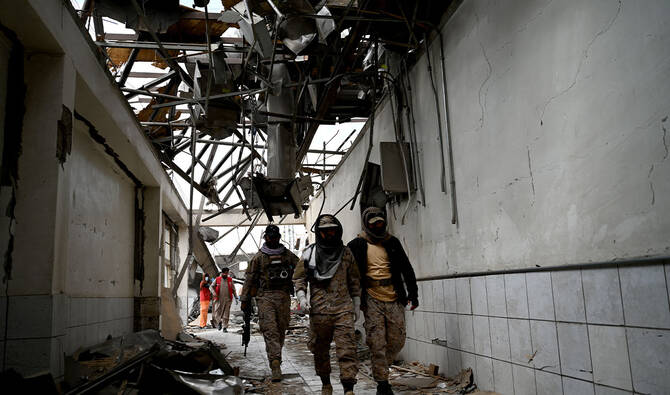
The pause in fighting followed a major escalation in the conflict, including Pakistani airstrikes inside Afghanistan that Kabul said hit a drug rehabilitation center in the capital, killing hundreds of civilians.
Pakistan has denied targeting non-military sites, saying its operations were aimed at militant infrastructure and its strike was against a drone and explosive storage facility in Kabul.
Over the last three weeks, both countries have launched attacks against each other and engaged in ground firing across their 2,600-kilometer (1,600-mile) border, with each claiming to have inflicted heavy damage and killed hundreds of troops, without providing evidence.
CEASEFIRE EXTENSION
Meanwhile, 22 prominent religious clerics, 11 from each of Pakistan and Afghanistan, urged the two countries to extend the ceasefire in a joint statement released on Tuesday.
The statement in Pashto was circulated on social media and called for a “sustainable and dignified” end to the conflict between the two neighboring countries.
Speaking to Arab News, Afghan analyst Sami Yousafzai said the “mood on both sides” seemed to in favor of extending the ceasefire.
He described the plea for peace by the religious clerics as a positive development while acknowledging that the militant violence remained the key sticking point between the two countries.
“Let’s hope the TTP does not launch any activity to spoil the current atmosphere,” Yousafzai continued, adding there were indications that Pakistan could open the Torkham border to facilitate returning Afghan refugees.
Islamabad shut down all border crossing points following clashes between the two countries last year.
Pakistani analysts believe, however, the ceasefire is unlikely to hold without concrete action by Kabul against militants, warning that tensions between the two neighbors remain high after a recent surge in violence.
Pakistan’s former ambassador to the United States Maleeha Lodhi told Arab News last week that Pakistan’s long-standing demand that Kabul rein in the Tehreek-e-Taliban Pakistan (TTP) and prevent cross-border attacks remained unchanged.
“If it can do that, then the path will open to normalization of relations,” she said. “Words are not enough.”
Although a ceasefire was reached after similar border clashes in October, after Türkiye, Qatar and Saudi Arabia intervened and encouraged the two sides to negotiate, no talks have taken place this time, despite calls from countries including China and Russia to resolve differences through diplomacy.
The Afghan Taliban has said it is willing to negotiate with Pakistan, but Islamabad has shown no such inclination.