
RIYADH: Investment strategies must be compatible with sustainable development goals to ensure economically viable and environmentally responsible global growth, a top official said at the World Investment Conference.
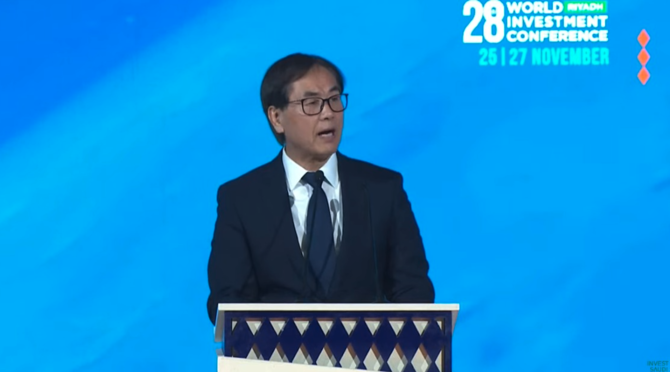
Speaking on the first day of the Riyad-based event, James Zhan, chair of the WIC executive board, said reforming the global financial system should be a priority alongside helping to deliver social and environmental reform.
The 28th WIC is being held from Nov. 25 to 27, and will see global stakeholders gather to explore investment trends and how best to foster sustainable development.
During a panel discussion titled “Impact Maximization: Leveraging Trade and Investment for Growth and Development,” Zhan said: “We need to embed investment strategies into the SDG implementation plans. We need to transform these international investment regimes into a kind of SDG promotion instrument.”
The SDGs are a set of 17 global objectives established by the UN to address pressing social, economic, and environmental challenges, aiming to achieve a sustainable and equitable future by 2030.
Zhan also called for transforming international investment: “We need to be practicing incentives for investment on the ground.”
Ibrahim Al-Mubarak, assistant minister of investment and CEO of the Saudi Investment Promotion Authority, outlined the Kingdom’s focused approach to investment.
“Our investment strategy focuses on quality, FDI. That’s a very big word. So, what I like to call it is smart capital,” he said.
Al-Mubarak also emphasized Saudi Arabia’s reform journey under Vision 2030, saying: “Since the launch of Vision 2030, we have set a very ambitious reform agenda. That reform agenda comes in various ways, be it in the reform of existing laws, launching new laws, removing subsidies.”
These reforms aim to bolster the Kingdom’s investment environment, which has already been recognized as the 16th most competitive economy globally, according to the IMD’s World Competitiveness Index.
Al-Mubarak highlighted the significance of comprehensive and consistent regulatory reforms in enhancing investment appeal.
One measure of this is the success of Saudi Arabia’s Regional Headquarters Program, which came into effect in January and encouraged multinational companies to set up regional offices in Riyadh.
“We already have exceeded our target by having 550 regional headquarters companies here. Our location, our infrastructure, our youth are enabling us to achieve those (goals), but they have to be clubbed with positive, unified, consistent regulatory reform agenda,” Al-Mubarak said.
The assistant minister highlighted that attracting investments requires groundwork, adding: “The promotion piece of investment is one thing, but the attraction is a much tougher one because it requires a lot more reforms and work on the ground, on the infrastructure, on the policies, on the procedures.”
Chairman of the Berlin Global Dialogue and Professor of Economics at the European School of Management and Technology Lars-Hendrik Roller called for a broader perspective on global investments.
“The world is changing, and now I think we need to look eye level (at) Africa and other continents as well,” he said.
He also cautioned about the interplay of foreign policy and national security with economic agendas, adding: “What is now overarching more and more (is) foreign policy and economic policy, national security issues. And I think we have to be very careful with that.”
Roller pointed out the distorting effects of subsidies on global markets and stressed the urgency of private investments in the green economy, saying: “We’re not going to solve the climate crisis unless we generate a lot more private investment in the green economy.”