

Moody’s upgrades Saudi Arabia’s rating on strong diversification progress and fiscal prudence

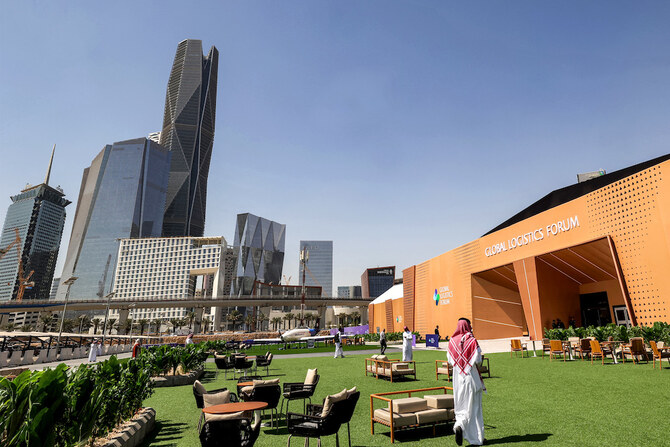
Moody’s expects Saudi Arabia’s non-hydrocarbon private sector GDP to continue expanding by about 4 percent to 5 percent in the coming years. (AFP file photo)
Short Url
Updated 24 November 2024
Follow

Moody’s upgrades Saudi Arabia’s rating on strong diversification progress and fiscal prudence

  • Saudi Arabia’s local and foreign currency medium-term note program ratings was also upgraded to (P)Aa3 from (P)A1

RYADH: Global credit ratings agency Moody’s Ratings upgraded Saudi Arabia’s long-term local and foreign currency issuer and senior unsecured ratings to Aa3 from A1, taking note of the Kingdom’s progress in diversifying its economy.

Saudi Arabia’s local and foreign currency medium-term note program ratings was also upgraded to (P)Aa3 from (P)A1.

“Continued progress will, over time, further reduce Saudi Arabia’s exposure to oil market developments and long-term carbon transition,” the ratings agency said.

“The recent fiscal space exercise and recalibration and reprioritization of diversification projects – which will be regularly reviewed – will provide a more conducive environment for sustainable development of the kingdom’s non-hydrocarbon economy and help preserve the relative strength of the sovereign’s balance sheet.”

Moody’s expects Saudi Arabia’s non-hydrocarbon private sector GDP to continue expanding by about 4 percent to 5 percent in the coming years, among the highest in the Gulf region, as its diversification strategy reduces the Kingdom’s exposure to oil market developments and long-term carbon transition over time.

“Our baseline projections assume there will be no significant downward pressure to oil prices or production over the next few years. We also assume that heightened geopolitical tensions in the region, which are having a limited impact on Saudi Arabia so far, will not escalate into a full-scale military conflict between Israel and Iran with collateral effects that could affect the kingdom’s ability to export oil or deter private sector investment supporting the diversification momentum,” Moody’s said.

Saudi Arabia has invested heavily to induce growth in the non-hydrocarbon private sector, particularly that of the Public Investment Fund’s (PIF) outlays for capital expenditure and domestic investments.

“We estimate that the total spending on projects and long-term investments by the government and PIF will continue to exceed 20 percent of non-hydrocarbon GDP. Private consumption growth will also be strong, as the design of many ongoing projects, including the PIF’s giga projects and other large-scale projects of the government, incorporates commercialization phases that will boost supply-side capacity in the services sector, particularly in hospitality, leisure and entertainment, retail and restaurants,” Moody’s said.

The ratings agency also noted while Saudi Arabia’s fiscal prudence as well as recalibration and reprioritization of projects may affect project implementation and the development of the non-hydrocarbon sectors, “the focus on macroeconomic and fiscal sustainability is credit positive.”

“Regularly reviewing projects to maximize the economic impact on the domestic economy and develop a domestic industrial base and related ecosystems will help the non-hydrocarbon economy develop more sustainably,” Moody’s said.


Saudi POS spending jumps 28% in final week of Jan: SAMA

Updated 06 February 2026
Follow

Saudi POS spending jumps 28% in final week of Jan: SAMA

RIYADH: Saudi Arabia’s point-of-sale spending climbed sharply in the final week of January, rising nearly 28 percent from the previous week as consumer outlays increased across almost all sectors. 

POS transactions reached SR16 billion ($4.27 billion) in the week ending Jan. 31, up 27.8 percent week on week, according to the Saudi Central Bank. Transaction volumes rose 16.5 percent to 248.8 million, reflecting stronger retail and service activity. 

Spending on jewelry saw the biggest uptick at 55.5 percent to SR613.69 million, followed by laundry services which saw a 44.4 percent increase to SR62.83 million. 

Expenditure on personal care rose 29.1 percent, while outlays on books and stationery increased 5.1 percent. Hotel spending climbed 7.4 percent to SR377.1 million. 

Further gains were recorded across other categories. Spending in pharmacies and medical supplies rose 33.4 percent to SR259.19 million, while medical services increased 13.7 percent to SR515.44 million. 

Food and beverage spending surged 38.6 percent to SR2.6 billion, accounting for the largest share of total POS value. Restaurants and cafes followed with a 20.4 percent increase to SR1.81 billion. Apparel and clothing spending rose 35.4 percent to SR1.33 billion, representing the third-largest share during the week. 

The Kingdom’s key urban centers mirrored the national surge. Riyadh, which accounted for the largest share of total POS spending, saw a 22 percent rise to SR5.44 billion from SR4.46 billion the previous week. The number of transactions in the capital reached 78.6 million, up 13.8 percent week on week. 

In Jeddah, transaction values increased 23.7 percent to SR2.16 billion, while Dammam reported a 22.2 percent rise to SR783.06 million. 

POS data, tracked weekly by SAMA, provides an indicator of consumer spending trends and the ongoing growth of digital payments in Saudi Arabia.  

The data also highlights the expanding reach of POS infrastructure, extending beyond major retail hubs to smaller cities and service sectors, supporting broader digital inclusion initiatives.  

The growth of digital payment technologies aligns with Saudi Arabia’s Vision 2030 objectives, promoting electronic transactions and contributing to the Kingdom’s broader digital economy.