Saudi GDP grows 2.8% in Q3 amid strong non-oil expansion: GASTAT 

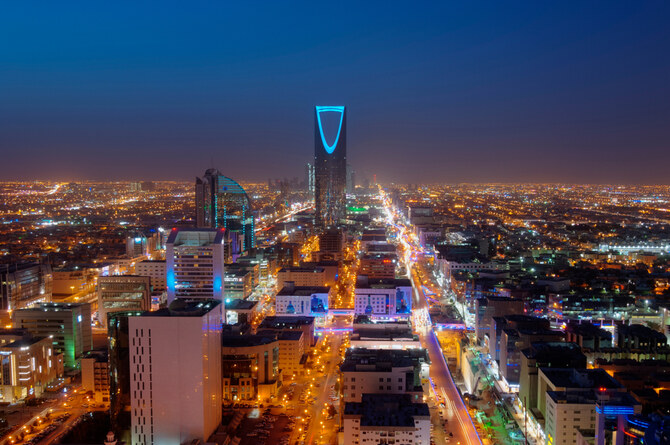
According to the General Authority for Statistics, the Kingdom’s non-oil sector expanded by 4.2 percent year on year in the third quarter, reflecting the goals of Vision 2030 to diversify the economy beyond oil revenues. Shutterstock
Short Url
Updated 31 October 2024
Follow

Saudi GDP grows 2.8% in Q3 amid strong non-oil expansion: GASTAT 

RIYADH: Saudi Arabia’s real gross domestic product rose by 2.8 percent in the third quarter of this year compared to the same period in 2023, driven by an increase in non-oil activities, official data showed.  

According to the General Authority for Statistics, the Kingdom’s non-oil sector expanded by 4.2 percent year on year in the third quarter, reflecting the goals of Vision 2030 to diversify the economy beyond oil revenues. 

GASTAT data also showed a 3.1 percent rise in government activities year on year, while oil activities grew by a modest 0.3 percent. On a quarterly basis, Saudi Arabia’s seasonally adjusted real gross domestic product rose by 0.8 percent in the third quarter compared to the second quarter. 

Breaking down quarterly figures, non-oil activities increased by 0.5 percent, while oil activities saw a 1.5 percent gain. However, government activities declined by 0.3 percent quarter over quarter. 

Earlier this month, the International Monetary Fund projected Saudi Arabia’s economy to grow by 1.5 percent in 2024 and 4.6 percent in 2025, affirming the Kingdom’s economic resilience. The World Bank echoed similar optimism, forecasting growth of 1.6 percent this year and acceleration to 4.9 percent in 2025. 

These IMF and World Bank projections exceed Saudi Arabia’s own pre-budget forecast, which estimated GDP growth of 0.8 percent in 2024, bolstered by a 3.7 percent rise in non-oil activities. 

Credit rating agency S&P Global, in its September report, also highlighted Saudi Arabia’s economic resilience, forecasting GDP growth of 1.4 percent in 2024 and 5.3 percent in 2025, driven by the Kingdom’s commitment to economic diversification and reducing reliance on oil revenues. 

Affirming the progress of Saudi Arabia’s economic diversification, GASTAT reported earlier this month that the Kingdom’s non-oil exports, including reexports, increased by 7.5 percent in August, reaching SR27.52 billion compared to the same month last year. 

On a monthly basis, Saudi Arabia’s non-oil exports rose by 8.13 percent in August from July levels. 

During the Future Investment Initiative’s eighth edition, Saudi Arabia’s Minister of Finance Mohammed Al-Jadaan highlighted the sector’s growth, noting that non-oil GDP now represents 52 percent of the Kingdom’s economy. 


Saudi POS spending jumps 28% in final week of Jan: SAMA

Updated 06 February 2026
Follow

Saudi POS spending jumps 28% in final week of Jan: SAMA

RIYADH: Saudi Arabia’s point-of-sale spending climbed sharply in the final week of January, rising nearly 28 percent from the previous week as consumer outlays increased across almost all sectors. 

POS transactions reached SR16 billion ($4.27 billion) in the week ending Jan. 31, up 27.8 percent week on week, according to the Saudi Central Bank. Transaction volumes rose 16.5 percent to 248.8 million, reflecting stronger retail and service activity. 

Spending on jewelry saw the biggest uptick at 55.5 percent to SR613.69 million, followed by laundry services which saw a 44.4 percent increase to SR62.83 million. 

Expenditure on personal care rose 29.1 percent, while outlays on books and stationery increased 5.1 percent. Hotel spending climbed 7.4 percent to SR377.1 million. 

Further gains were recorded across other categories. Spending in pharmacies and medical supplies rose 33.4 percent to SR259.19 million, while medical services increased 13.7 percent to SR515.44 million. 

Food and beverage spending surged 38.6 percent to SR2.6 billion, accounting for the largest share of total POS value. Restaurants and cafes followed with a 20.4 percent increase to SR1.81 billion. Apparel and clothing spending rose 35.4 percent to SR1.33 billion, representing the third-largest share during the week. 

The Kingdom’s key urban centers mirrored the national surge. Riyadh, which accounted for the largest share of total POS spending, saw a 22 percent rise to SR5.44 billion from SR4.46 billion the previous week. The number of transactions in the capital reached 78.6 million, up 13.8 percent week on week. 

In Jeddah, transaction values increased 23.7 percent to SR2.16 billion, while Dammam reported a 22.2 percent rise to SR783.06 million. 

POS data, tracked weekly by SAMA, provides an indicator of consumer spending trends and the ongoing growth of digital payments in Saudi Arabia.  

The data also highlights the expanding reach of POS infrastructure, extending beyond major retail hubs to smaller cities and service sectors, supporting broader digital inclusion initiatives.  

The growth of digital payment technologies aligns with Saudi Arabia’s Vision 2030 objectives, promoting electronic transactions and contributing to the Kingdom’s broader digital economy.