


LOS ANGELES: Erik and Lyle Menendez still have a long way to go before they can walk out of prison, even though the Los Angeles County district attorney has recommended their life-without-parole sentences be thrown out and the brothers be resentenced and immediately eligible for parole.
The brothers, convicted in the 1989 killings of their parents at the family’s Beverly Hills mansion, will need to get a judge to go along with the recommendation Los Angeles District Attorney George Gascón made Thursday and then a parole board must approve their release. The final stop is with Gov. Gavin Newsom, who could reject the board’s decision.
It’s an uncertain process likely to stretch out over months.
Lyle Menendez, then 21, and Erik Menendez, then 18, admitted they fatally shot their entertainment executive father, Jose Menendez, and their mother, Kitty Menendez. The brothers said they feared their parents were about to kill them to stop people from finding out that Jose Menendez had sexually abused Erik Menendez for years.
Prosecutors at the time contended that there was no evidence of molestation. The brothers’ first trial ended in a hung jury, and prosecutors secured a conviction in the second after much of the evidence of abuse was disallowed from the trial. The district attorney’s office also said back then that the brothers were after their parents’ multimillion-dollar estate.
Now, the DA and relatives say the world better understands the role of trauma in sexual abuse cases.
Critics accuse DA of playing politics
Meanwhile, Gascón faces fights over his resentencing recommendation: His opponent in his bid for reelection next month, as well as some of his own prosecutors, have called the latest development in the case politically motivated and the result of a recent Netflix documentary about the notorious crime.
Michele Hanizee, president of the Association of Los Angeles Deputy District Attorneys, on Wednesday said Gascón’s decision smacks of “opportunism” to get headlines.
“Throughout his disastrous tenure as DA, Gascón has consistently prioritized celebrity cases over the rights of crime victims, showing more interest in being in the spotlight than in upholding justice,” Hanizee said in a statement.
But the district attorney said he made the final decision only an hour before Thursday’s news conference and it was separate from politics.
Since their sentencing in 1996, the brothers have been model prisoners, Gascón and their attorney say, and committed themselves to rehabilitation and redemption.
“I came to a place where I believe, under the law, resentencing is appropriate,” Gascón said during the news conference.
What comes next?
Gascón’s office filed paperwork Thursday that recommends the brothers — now 54 and 56 years old — receive a new sentence of 50 years to life. Because they were under 26 years old at the time of the crimes, they would be eligible for parole immediately.
“I believe that they have paid their debt to society,” the DA said.
A hearing before a judge could come within the next month or so. If the judge agrees to the resentencing, the state parole board will hold its own proceeding to determine whether they should go free. If the board recommends parole, Newsom would have 150 days to review the case. The governor could green-light parole, or overrule the board and deny their release.
Despite Gascón’s goal of freeing the brothers, Laurie Levenson, a professor of criminal law at Loyola Law School in Los Angeles, warned that the judge would not likely be a “rubber stamp” due to dissent within the DA’s office.
“That puts the judge actually in a very challenging position,” Levenson said, noting she had not heard of any cases until recently where the head of the office disagreed with other lawyers involved in the case. Ultimately, Gascón chose the “safest route” for his decision — leaving it up to the court and parole board, she said.
Mark Geragos, an attorney for the brothers, has said he’s hopeful the brothers could be freed by Thanksgiving. Levenson called that deadline “awfully hopeful.”
Family largely unites to call for brothers’ freedom
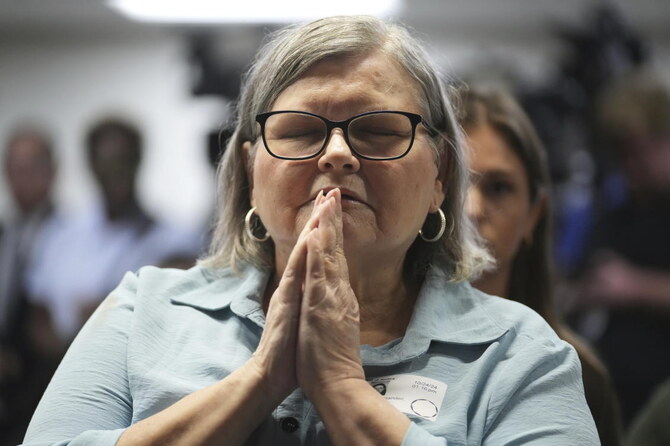
The brothers’ extended family has pleaded for their release. Several family members have said that in today’s world — which is more aware of the impact of sexual abuse — the brothers would not have been convicted of first-degree murder and sentenced to life without parole.
Anamaria Baralt, a niece of Jose Menendez, said the district attorney’s “brave and necessary” decision means “Lyle and Erik can finally begin to heal from the trauma of their past.”
Not all Menendez family members support resentencing. Attorneys for Milton Andersen, the 90-year-old brother of Kitty Menendez, filed a legal brief seeking to keep the brothers’ original punishment.
“They shot their mother, Kitty, reloading to ensure her death,” Andersen’s attorneys said in a statement Thursday. “The evidence remains overwhelmingly clear: the jury’s verdict was just, and the punishment fits the heinous crime.”
DA’s challenger weighs in
The LA district attorney is in the middle of a tough reelection fight against former federal prosecutor Nathan Hochman, who has blamed Gascón’s progressive reform policies for recent high-profile killings and increased retail crime.
Gascón said Thursday that his office has recommended resentencing for some 300 offenders, including people behind bars for murder.
Hochman questioned the timing of the Gascón’s announcement, coming less than two weeks before the election and calling it a “desperate political move.”
He said he is unable to form his own opinion on the case without access to confidential records and relevant witnesses.
“If I become DA and the case is still pending at that time, I will conduct a review consistent with how I would review any case,” Hochman said.
Geragos said the DA took the case seriously before there was any talk of him losing reelection.
New attention to case
The case has gained new traction in recent weeks after Netflix began streaming the true-crime drama ” Monsters: The Lyle and Erik Menendez Story.”
Roy Rossello, a former member of the Latin pop group Menudo, also recently came forward saying he was drugged and raped by Jose Menendez when he was a teen in the 1980s.
Rossello spoke about his abuse in the 2023 Peacock docuseries “Menendez + Menudo: Boys Betrayed.” His allegations are part of the evidence listed in the petition filed last year by the Menendez brothers’ attorney in seeking a review of their case.
Menudo was signed under RCA Records, which Jose Menendez headed at the time.


