Saudi Arabia calls on private sector to bridge $10bn agriculture investment gap 

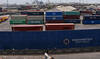
In alignment with Vision 2030, the Kingdom aims to expand its agricultural capabilities, ensuring food security and driving economic diversification as part of its broader sustainable development strategy. Shutterstock
Short Url
Updated 24 October 2024
Follow

Saudi Arabia calls on private sector to bridge $10bn agriculture investment gap 

  • Official calls on need for private investment in key areas such as plant production, animal husbandry, fisheries, and agricultural processing
  • Investment opportunities also extend to alternative feed production and livestock and fisheries

JEDDAH: Saudi Arabia has unveiled an SR37 billion ($10 billion) investment gap in its agriculture sector, urging the private sector to seize this opportunity to enhance production and infrastructure.  

Sulaiman Al-Khateeb, assistant deputy minister for agriculture affairs, highlighted the shortfall during the 41st Saudi Agricultural Exhibition in Riyadh, the Saudi Press Agency reported.  

He emphasized the need for private investment in key areas such as plant production, animal husbandry, fisheries, and agricultural processing.  

These efforts are critical to achieving the National Agriculture Strategy 2034 goals and advancing Saudi Arabia’s push toward food self-sufficiency and sustainability. 

In alignment with Vision 2030, the Kingdom aims to expand its agricultural capabilities, ensuring food security and driving economic diversification as part of its broader sustainable development strategy. 

Despite having approximately 90 percent of its territory as desert, Saudi Arabia is spearheading an agricultural boom to enhance domestic crop production and reduce reliance on food imports. The Kingdom has already achieved self-sufficiency in dates, fresh dairy products, and table eggs, according to the General Authority for Statistics’ Agricultural Statistics Publication. 

Saudi Arabia’s food strategy focuses on sustainable natural resource use, innovation, leadership, pest prevention, boosting the agricultural sector’s contribution to the national economy, and building a vibrant agricultural community. 

Al-Khateeb outlined prominent investment opportunities, such as SR4.1 billion in integrated facilities for producing and processing vegetables like potatoes, tomatoes, strawberries, onions, and leafy greens.  

He also noted SR2.1 billion in potential investments for citrus and mango production and SR690 million for seed and seedling facilities. 

Investment opportunities also extend to alternative feed production and livestock and fisheries, including intensive livestock breeding projects worth approximately SR8.9 billion. Additional investments of SR5.4 billion are available for poultry farming and by-product utilization, while aquaculture projects, including shrimp and algae farming, present opportunities worth SR7 billion. 

Al-Khateeb also highlighted SR8.1 billion in potential investments in agricultural processing and manufacturing for importing raw materials and producing coffee, cocoa, and sugar products. Olive oil production offers an additional SR400 million in opportunities. 

To support these efforts, the Ministry of Environment, Water, and Agriculture has established various incentives and enablers for the agricultural sector, aimed at increasing production efficiency and achieving self-sufficiency in key crops and products to bolster food security in the Kingdom. 

Key initiatives include promoting investment in agriculture, adopting modern technologies through loans from the Agricultural Development Fund, and offering incentivized land leases.  

The ministry is also streamlining project licensing and providing technical support to enhance farmers' skills and promote modern agricultural practices. MEWA encourages agricultural companies to list on financial markets as well. 

Al-Khateeb highlighted several strategic initiatives to boost agricultural production and improve sector efficiency, including halting the cultivation of perennial fodder in favor of seasonal crops, shifting to intensive livestock breeding, and localizing strategic crop seed production. 

The ministry is also establishing local wheat production targets to strengthen food security while focusing on increasing exports of fish and vegetables from advanced greenhouses.


Growing pressure on Arab banks amid complex cross-border contracts, legal risks 

Updated 7 sec ago
Follow

Growing pressure on Arab banks amid complex cross-border contracts, legal risks 

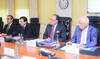
DAMMAM: Arab banks — numbering around 520 this year — are facing mounting challenges, led by the growing complexity of cross-border banking contracts and rising legal risks tied to modern financial products, Wissam Fattouh, secretary-general of the Union of Arab Banks, told Al-Eqtisadiah. 

Fattouh said addressing these challenges, driven by global economic and financial shifts, requires Arab banks — whose combined assets exceed $5.5 trillion — to strengthen risk management, continue structural reforms, and expand cooperation with foreign banks and financial institutions in line with the nature of global financial markets. 

He noted that the “Certified International Arbitrator” credential offered by the UAB to Arab banks is one of the professional tools supporting governance in banking transactions and providing effective, specialized alternatives to traditional litigation, particularly in cross-border disputes. 

Growing complexity of financial products and services 

Fattouh said the certification represents a specialized professional program aimed at preparing qualified banking and legal professionals to handle international commercial and banking disputes, particularly those linked to the financial sector, as financial products and services become more complex, regulations tighten, and global compliance requirements increase. 

In November, the UAB told Al-Eqtisadiah that the assets of 11 Saudi banks included among the 100 largest Arab banks last year, accounted for 24 percent of the total, reaching $1.1 trillion out of $4.5 trillion. 

The top 10 Arab banks were led by Qatar National Bank, followed by First Abu Dhabi Bank, Saudi National Bank, Emirates NBD, Al-Rajhi Bank, Abu Dhabi Commercial Bank, National Bank of Egypt, National Bank of Kuwait, Riyad Bank, and Kuwait Finance House. 

Fattouh said Arab banks have demonstrated a clear ability in recent years to withstand global economic shocks, supported by solid capitalization and liquidity levels, as well as a relative improvement in asset quality, strengthening the sector compared with several other emerging markets. 

Betting on continued development of regulatory frameworks 

Fattouh expects the Arab banking sector to continue playing a pivotal role in financing productive sectors, supporting small and medium-sized enterprises, and contributing to funding the transition toward a green economy, as well as advancing digital transformation across Arab economies. 

He stressed that this role depends on the continued development of regulatory frameworks and stronger risk management, particularly amid rising cyber risks, compliance challenges, and global market volatility. 

He added that digitalization has become essential for improving operational efficiency, noting that the UAB will focus in 2026 on enhancing dialogue between Arab banks and regulators, supporting the development of banking and financial policies, and contributing to regional financial stability. 

He further said that the Union also plans to organize specialized training programs in risk management, compliance, digitalization, and finance.