


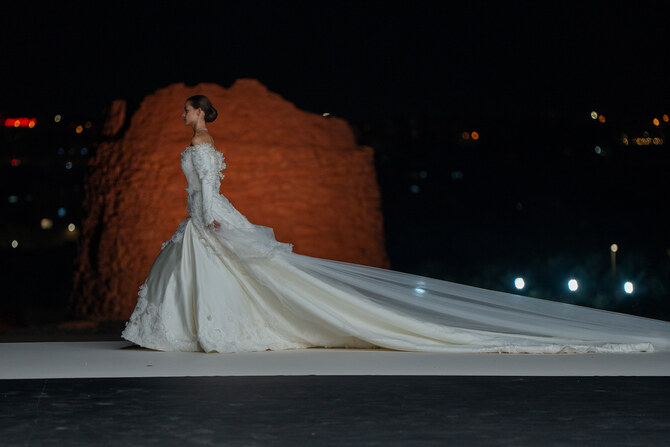
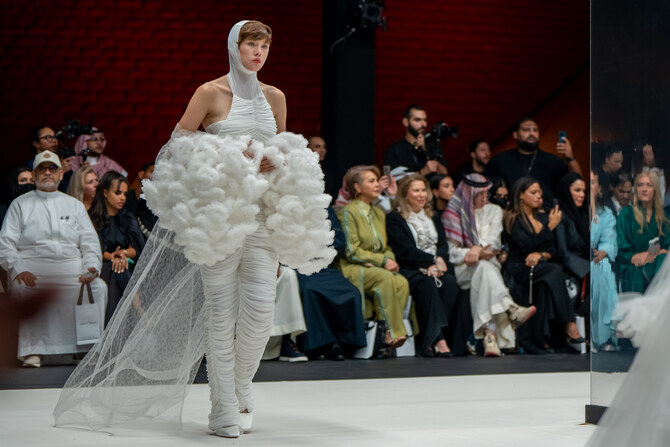

DUBAI: The second day of Riyadh Fashion Week unfolded with a vibrant celebration of Saudi fashion, featuring an impressive lineup of six runway shows. Notable designers included Waad Aloqaili, Fatima Abdulqader, Khawla Alaiban, Ashwaq Al-Marshad, Atelier Hekayat and a grand finale by Yahya Albishri. Each designer brought their unique vision and cultural influence to the fore, illustrating the dynamic evolution of Saudi fashion.
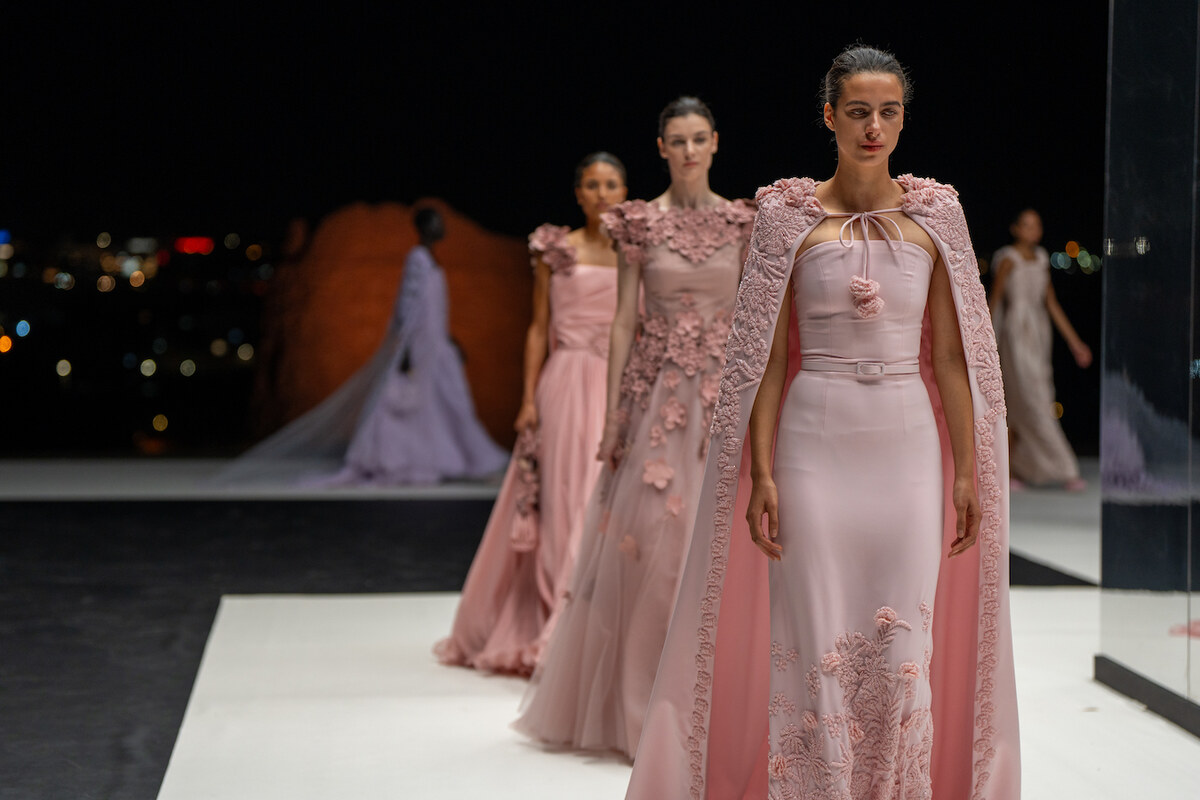
One of the standout presentations came from Ashwaq Al-Marshad, who debuted her “Fahdah” collection. Drawing inspiration from the influential women in her life, Al-Marshad’s collection encapsulates a sense of nostalgia and elegance. The fabrics used — opulent lace, flowing chiffon and luxurious silks — reflect a timeless aesthetic that is both sophisticated and feminine. A particularly striking feature of her collection is a light pink hue reminiscent of her mother’s engagement dress, symbolizing grace and femininity.
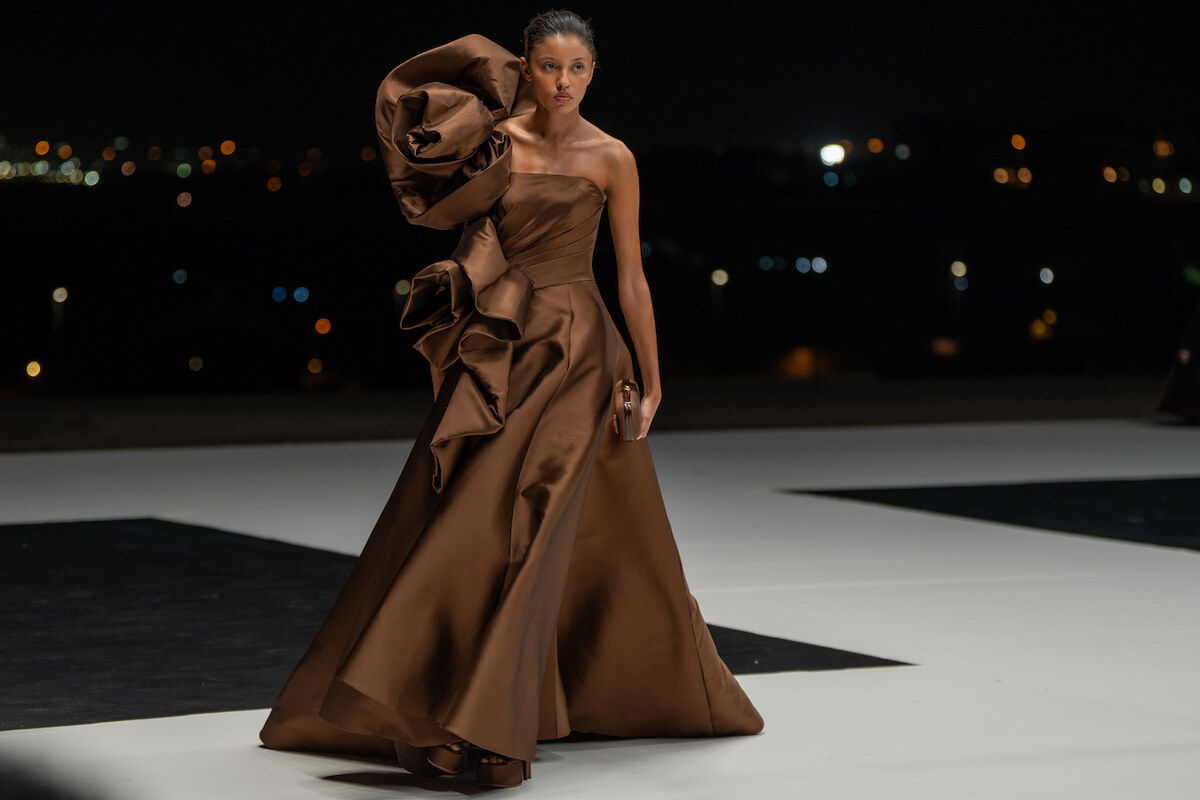
Ashwaq Al-Marshad. (AN/ Huda Bashatah)
Al-Marshad also paid tribute to her grandmother, showcasing a stunning burgundy dress paired with a delicate sheer headscarf. The intricate hand-embroidery of flowers creates a captivating 3D effect, adding depth and artistry to each piece. The haute couture collection not only highlights Al-Marshad’s craftsmanship, but also celebrates the legacy of strong women, with an emotional nod to her daughter, Fahdah.
Reem Al-Suwaidi, a prominent fashion blogger, expressed her admiration for Al-Marshad’s collection, saying: “I’m in love with the designs. I’m so proud of Ashwaq; I’m actually wearing Ashwaq couture today.” She added: “The craftsmanship is exquisite. Each piece tells a story, and you can feel the emotions behind them.” Al-Suwaidi also highlighted the launch of Al-Marshad’s new heels, crafted in Milan, which complemented the exquisite pieces showcased on the runway. She praised the color palette and intricate embroidery, noting her enthusiasm for the burgundy elements: “The richness of the burgundy pieces just captivates you. Ashwaq has truly outdone herself.”
(AN/ Huda Bashatah)
Following Al-Marshad’s emotionally charged presentation, Atelier Hekayat took to the runway with its show “Hotel De Hekayat.” The designers aimed to capture the essence of love through their collection, presenting 30 unique designs representing 30 different hotel rooms. Each design tells a story, with the audience left to interpret which room holds the most significance. The interactive concept was a creative twist that engaged viewers on a deep level.
“We are always on a journey to find love, and our show reflects that,” said Alia Oraif, a designer with Atelier Hekayat. “Each piece is inspired by a different room, each with its own narrative. It’s up to the viewer to decide which story resonates the most.” The label also introduced its signature “etoile de Jeddah” print, reimagined this year in vibrant colors. “We wanted to infuse more life and energy into our designs while staying true to our roots,” the designers added. The incorporation of the popular Arabian leopard print highlighted a significant cultural element of Saudi heritage.

Atelier Hekayat. (AN/ Huda Bashatah)
As Riyadh Fashion Week continues to showcase the talent of local designers, it is clear that the event is not just about fashion; it is a celebration of culture, legacy and creativity. Each designer brings their own narrative to the runway, contributing to a rich tapestry of stories that reflects the diverse influences shaping Saudi fashion today.
The success of the second day of RFW is indicative of the growing impact of Saudi designers on both the local and international fashion scenes. With each collection, they challenge conventions, push boundaries and elevate the art of fashion, establishing a unique identity that resonates with audiences around the world.


