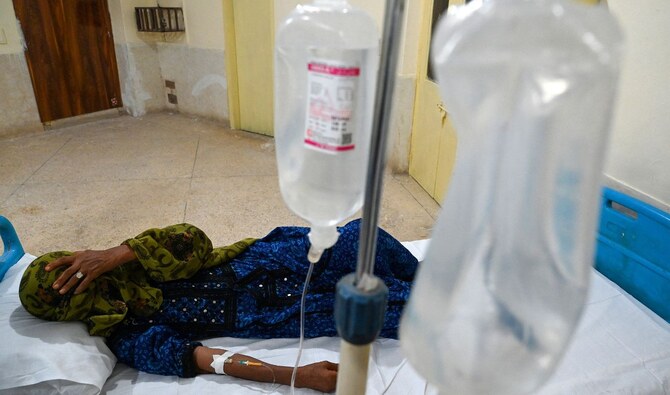
KARACHI: Pakistani health practitioners on Wednesday expressed alarm over a surge in cases of chikungunya and diphtheria diseases this year in the southern Sindh province, calling on the masses to adopt preventive measures and for government interventions to keep people safe.
At least 34 people have died this year in Pakistan’s Sindh province due to diphtheria, a highly contagious and infectious disease that causes breathing and swallowing problems. In 2024, 184 suspected cases of the disease have been reported in Sindh from January to September, up from 155 in the same period last year.
The southern port city of Karachi recorded 82 suspected cases of diphtheria this year, down from 125 in 2023,a s per official data. Other Sindh divisions reported 102 cases, a significant increase from 30 last year.
Experts believe the 34 deaths linked to diphtheria are massively underreported.
“Karachi per se has seen localized outbreaks this year and last year. There have been clusters of cases,” Professor Dr. Fatima Mir, a pediatrician at the city’s Agha Khan Hospital, told Arab News. She shared that the first diphtheria outbreak in Pakistan occurred in 2013, with sporadic localized outbreaks taking place between 2017 and 2022.
In 2022, nearly 1,000 cases were reported nationwide out of which only 82 were confirmed by laboratory results, she added.
“Diphtheria is one of those infections in which in an outbreak situation, even vaccinated children are not completely protected,” Dr. Mir explained.
Waqar Bhatti, a senior health journalist, described the surge in cases of both chikungunya and diphtheria cases as alarming. Contrary to official figures, he said diphtheria this year caused the deaths of over 100 children in Karachi.
“This surge is being attributed to failures in routine immunization efforts as the disease is largely preventable with vaccination,” Bhatti said, adding that the city’s health facilities are facing a severe shortage of the life-saving Diphtheria Anti-Toxin (DAT) necessary to treat infected individuals.
“Hospitals, particularly the Sindh Infectious Diseases Hospital, are struggling to cope with the influx of cases and authorities are facing criticism for not adequately addressing the vaccine supply gaps,” he added.
CHIKUNGUNYA’S ‘SIGNIFICANT RISE’
Cases of dengue and chikungunya, another infection caused by mosquitoes, have surged in Karachi this year as per official data. Health practitioners blame poor sanitation, stagnant water, and insufficient mosquito control efforts in the city for the rise in the number of cases.
From May to September, 894 suspected cases of chikungunya, with 164 confirmed positive out of a total of 761 screened ones, were reported from Karachi. Health practitioners and experts say the numbers are underreported.
“We can’t call it an outbreak since it’s not life threating but there is significance increase in cases of chikungunya since 2018 when Malir, one of seven districts of the city, had witnessed a massive surge,” Dr. Muhammad Inam Khan, an associate professor in medicine at the Jinnah Postgraduate Medical Center, said.
He added that the disease has spread across the city and if not contained, might spread to other parts of the country.
“Dengue was first reported in Karachi but it spread in other parts of the country,” Khan warned, calling for fumigation to be carried out in various parts of the city. “Chikungunya also needs to be controlled.”
Dr. Muhammad Omer Sultan, a general physician at Dow University of Health Sciences, said that if on average five chikungunya patients used to be brought to the hospital’s outpatient department, that number has now increased to 40.
“Of these majority are chikungunya cases,” he explained, calling on people to protect themselves from mosquito bites.


![]()

Pakistani health practitioners alarmed over surge in chikungunya, diphtheria infections in Sindh
Short Url
https://arab.news/nztu6
Pakistani health practitioners alarmed over surge in chikungunya, diphtheria infections in Sindh
- At least 34 people have died this year from mosquito-borne diphtheria infections in Sindh, as per official data
- Health practitioners say official figures massively underreported, call for increased government interventions
Latest updates


© 2026 SAUDI RESEARCH & PUBLISHING COMPANY, All Rights Reserved And subject to Terms of Use Agreement.