

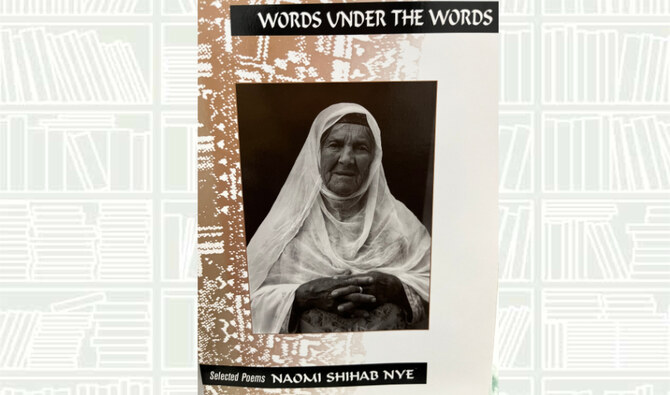

Author: Naomi Shihab Nye
Palestinian American poet Naomi Shihab Nye’s book “Words Under the Words” is a moving and deeply personal collection of poetry that seamlessly weaves together themes and threads of identity, displacement and the resiliency of the human spirit.
Born to a Palestinian father and American mother, Nye often uses her upbringing as inspiration for her poems.
“The Traveling Onion,” is perhaps my favorite poem in the book. She uses a quote from “Better Living Cookbook” to set the stage. She writes: “When I think how far the onion has traveled just to enter my stew today, I could kneel and praise all small, forgotten miracles, crackly paper peeling on the drainboard, pearly layers in smooth agreement, the way knife enters onion, and onion falls apart on the chopping block, a history revealed.”
She then writes: “And I would never scold the onion for causing tears … how at meal, we sit and eat, commenting on texture of meat or herbal aroma but never on the translucence of onion, now limp, now divided, or its traditionally honorable career: for the sake of others, disappear.”
The poem about the onion is not just about an onion, it is about much more. Many of her other poems offer the same food for thought, although not always when exploring cuisine or culture.
Her poetry often touches on themes of family, memory, displacement and finding common ground in different worlds. Known for her crisp, clear and evocative language, Nye captures the beauty of everyday life and the emotional nuances within personal and cultural histories. “Words Under the Words” is a powerful exploration of identity and seeking community connection.
Her language is simple but not too simplified. She makes everyday moments and objects feel significant and special while allowing us all to look into her life as we collectively cut a slice of life and devour the deeper philosophical and political issues that still ring true today, nearly 30 years after she published the book in 1995.
The collection stands out for its emotional honesty and its ability to connect personal experiences with the broader social and political contexts — especially around themes of exile and belonging. It is still relevant today.
The woman on the cover is Nye’s grandmother, who was a lively and significant figure in her work.


