What We Are Reading Today: Worldly Afterlives by Julia Stephens

Short Url
Updated 24 December 2025
Follow

What We Are Reading Today: Worldly Afterlives by Julia Stephens

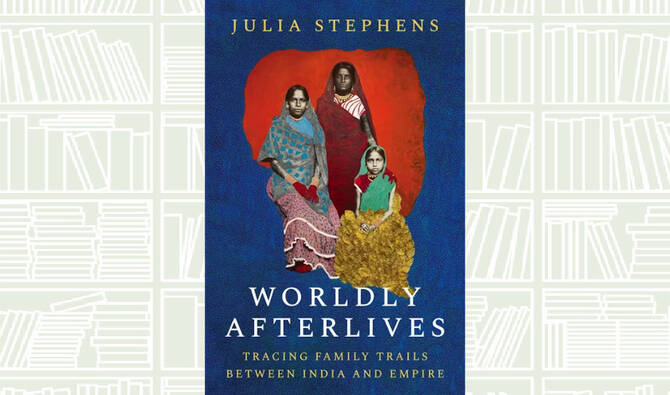
Indian migrants provided the labor that enabled the British Empire to gain control over a quarter of the world’s population and territory. In the mid-1800s, the British government began building an elaborate bureaucracy to govern its mobile subjects, issuing photo IDs, lists of kin, and wills. It amassed records of workers’ belongings such as handwritten IOUs, crumpled newspaper clippings, and copper bangles. 

“Worldly Afterlives” uses this trove of artifacts to recover the stories of the hidden subjects of empire. Navigating the remains of imperial bureaucracy — in archives scattered across Asia, Africa, the Middle East, and the Americas — Julia Stephens follows migrant families as they traverse the Indian Ocean and the British Empire. She draws on in-depth interviews to show how the histories of empire reverberate in the present.


What We Are Reading Today: Long Problems

Photo/Supplied
Updated 06 March 2026
Follow

What We Are Reading Today: Long Problems

  • In this pathbreaking book, Thomas Hale examines the politics of climate change and other “long problems”

Author: Thomas Hale

Climate change and its consequences unfold over many generations. Past emissions affect our climate today, just as our actions shape the climate of tomorrow, while the effects of global warming will last thousands of years.

Yet the priorities of the present dominate our climate policy and the politics surrounding it. Even the social science that attempts to frame the problem does not theorize time effectively. In this pathbreaking book, Thomas Hale examines the politics of climate change and other “long problems.”

He shows why we find it hard to act before a problem’s effects are felt, why our future interests carry little weight in current debates, and why our institutions struggle to balance durability and adaptability.