

Saudi Arabia launches insurance policy to protect expatriate workers

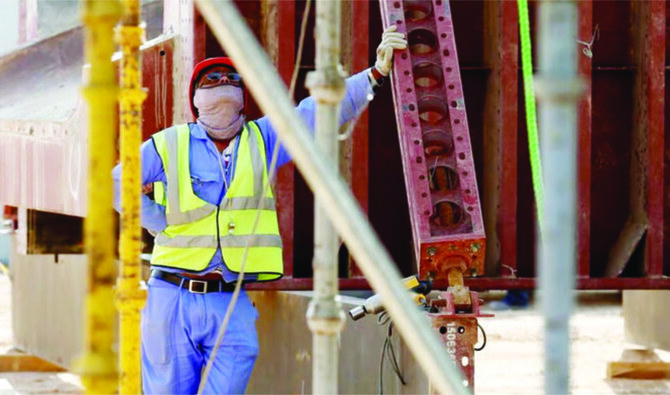
Insurance is part of a package of measures introduced by the ministry to safeguard the rights of employers and employees. (Reuters/File)
Short Url
Updated 09 October 2024
Follow

Saudi Arabia launches insurance policy to protect expatriate workers

  • Authorities to enforce penalties for employers who fail to meet their obligations, official says

RIYADH: Saudi Arabia’s Ministry of Human Resources and Social Development and the Insurance Authority have launched an insurance service that will cover unpaid wages for up to six months and provide travel assistance for expatriates in the Kingdom in the case of private sector defaults.

Director general of international communications and cooperation, Abdulrahman Al-Zaid, told Arab News: “The Expatriate Worker Wage Insurance Service for Private Sector Defaults is part of the ministry’s ongoing efforts to protect both workers and employers, while enhancing the overall efficiency and appeal of the Saudi labor market.

“The initiative is designed to create a more secure labor environment, making Saudi Arabia a leading hub for international talent.”

The service covers specific benefits as outlined in the policy, allowing foreign workers in defaulting companies to receive their entitlements — within the financial limits of the policy — and provide a plane ticket to return to their home country, if they wish to do so, within the policy’s financial limits, he said.

Insurance is part of a package of measures introduced by the ministry to safeguard the rights of employers and employees.

Al-Zaid explained how the insurance policy works for the benefit of the expatriates: “In rare cases when wages are not fulfilled, this insurance service will cover unpaid wages and entitlements for up to six months, with a maximum compensation payout of SR17,500 ($4,661) provided the combined rights of all workers do not exceed the overall insurance coverage limit for the company.”

But this payout is contingent on 80 percent or more of the workers in the establishment not having received their wages or entitlements, per the ministry’s regulations.

The initiative is part of the ministry’s commitment to creating a fair and secure labor environment for employers and employees.
 
Affected workers who wish to return to their home countries will be provided with a travel ticket, with cover up to SR1,000 ($266).
 
Al-Zaid said a worker is entitled to a return ticket to their home country “if they wish to leave the country directly without transferring their services to another company and can provide proof of completing all necessary procedures for departure, such as obtaining an exit visa and proof of a travel booking to their home country.”

Private sector employees wishing to apply for the insurance policy can submit claims through the designated insurance company responsible for handling compensation claims.

The ministry will oversee the process to ensure compliance and smooth execution of the service.
 
The introduction of this service does not absolve employers of their responsibilities, and they will still be fully responsible for meeting their wage obligations.

“The ministry will continue to enforce strict measures, including penalties for employers who deliberately fail to meet their obligations,” Al-Zaid added. 
 
Abdul Ghaffar is an expat, originally from India, who has been living in the Kingdom for the past 24 years working as a senior consultant in talent development.

When asked if he had ever been affected by a company defaulting in Saudi Arabia, Ghaffar said: “I have never personally witnessed any instances where companies defaulted on paying my salary. But one of my close friends, who worked for a private construction company, was facing financial difficulties.

“The company delayed salaries for several months, causing significant stress for him and his family. It becomes very critical, especially (for) expatriates who rely on timely wages to support their families back home.”

He said that the situation was resolved but it took months for the individual’s account settlement and exit process. The case highlighted the vulnerability that expatriate workers face in such circumstances, he added.

The ministry and the Insurance Authority's new policy aims to protect expatriates from vulnerabilities such as these.

“I believe the new wage insurance policy is a positive step forward. It shows that the Ministry of Human Resources and Social Development is taking the necessary steps to protect expatriates working in Saudi Arabia,” Ghaffar said. “This policy will not only provide financial relief to workers impacted by company defaults but also create a more secure and attractive environment for expatriates considering working in the Kingdom.”

Ghaffar said of the new policy that the “travel ticket assistance also reflects the ministry’s understanding of the needs of expatriates who might want to return home in such situations.”

He said he believes the new initiative will “enhance Saudi Arabia’s reputation as a fair and competitive destination for international talent.”

The insurance cover for eligible workers began on Oct. 6, 2024. 

Balad Beast brings global beats to historic streets

Updated 31 January 2026
Follow

Balad Beast brings global beats to historic streets

  • ‘MDLBEAST put us on the international map,’ say Saudi electronic duo Dish Dash

JEDDAH: The music festival Balad Beast concluded its fourth edition this weekend, having transformed Jeddah’s UNESCO World Heritage district of Al-Balad into an open-air celebration of music, culture and creativity that attracted thousands of music lovers over two nights.

The festival, organized by Saudi music platform MDLBEAST, featured more than 70 local, regional and international artists across four stages, offering audiences a diverse journey through electronic, hip-hop and global sounds.

French Haitian singer-songwriter Naïka performed on the second night of Balad Beast. (Supplied)

Speaking to Arab News, MDLBEAST chief creative officer Ahmad Al-Ammary, also known as DJ Baloo, described Balad Beast as a “cultural takeover” adding that finding the right spaces for dance floors was a challenge, “but Balad is constantly evolving and we work with that change.”

Addressing the challenges of working in a heritage area, he said: “Balad is sensitive and condensed, so logistics can be complex. In our first year, heavy rain flooded one of the planned squares and we had to relocate the Souq Stage to a much smaller space, but it worked and it has remained there ever since.

HIGHLIGHT

Reggae superstar Shaggy noted that the reality of playing live in Saudi Arabia often surprises those who arrive with preconceptions.

“Yes, the alleys are narrow and the district is old, but they’re full of ideas, patterns, colors and visuals. Everything flows here,” he continued. “As a festival, it’s hard to define Balad, because it gives so much of itself creatively. It’s incredibly generous with its ideas and details, and inspiration comes from everywhere.”

Balad Beast featured more than 70 local, regional and international artists across four stages, offering audiences a diverse journey through electronic, hip-hop and global sounds. (Supplied)

Balad Beast featured performances from international artists including US rapper Playboi Carti, making his first appearance in Saudi Arabia; US rapper Destroy Lonely; Swedish DJ and producer Alesso; and Bosnian-German DJ Solomun on the opening night. The following night saw French-Haitian singer-songwriter Naïka, reggae superstar Shaggy, Dutch DJ Franky Rizardo, British DJ Pawsa, and US rapper Tyga, and more take the stage, while Saudi and regional artists including Cosmicat, TUL8TE, Zeina, Vinyl Mode, Moayed, Dish Dash, Musab, Varoo and HiFi appeared across the festival, offering audiences a mix of global and local talent.

Saudi electronic duo Dish Dash reflected on the festival organizer’s impact for local artists.

As a festival, it’s hard to define Balad, because it gives so much of itself creatively. It’s incredibly generous with its ideas and details, and inspiration comes from everywhere.

Ahmad Al-Ammary, MDLBEAST chief creative officer

“MDLBEAST put us on the international map,” the brothers told Arab News. “It helped us get recognized by festivals, promoters and event organizers abroad. When we travel, people don’t expect this level of talent coming from Saudi Arabia, especially considering we didn’t have this scene before.”

Shaggy, who performed a hit-filled set during the festival, told Arab News: “I’ve been blessed with some incredible songs, and I see music as a gift and a tool for service. When I go on stage, I’m there to entertain people, to make them smile and feel good, but that service also supports many livelihoods from the people working at this festival to those who work with me. These songs have become part of people’s lives, and I don’t take that lightly.”

Balad Beast featured more than 70 local, regional and international artists across four stages, offering audiences a diverse journey through electronic, hip-hop and global sounds. (Supplied)

Shaggy also noted that the reality of playing live in Saudi Arabia often surprises those who arrive with preconceptions.

“I’ve performed in Saudi Arabia more than once, and while there are certain rules that are different, it’s not an issue for me. My focus is always on delivering the hits and giving the audience a great time,” he said.

“There’s a big misconception. People have more freedom than (outsiders) think. Everyone has been extremely nice.”

Asked what advice he would offer to aspiring artists, Shaggy said: “Understand that what you’re given is a gift and a form of service. Stay humble, do the work, and remember why you’re doing it.”

As Al-Ammary noted, there are many such aspiring artists now making a name for themselves in the Kingdom.

“Talent is emerging everywhere, at different levels,” he said. “The scene is still in a mysterious and surprising phase. There’s a rawness to it.”