

Saudi Media Forum urges ethical coverage as crises redefine Arab journalism

1 / 3
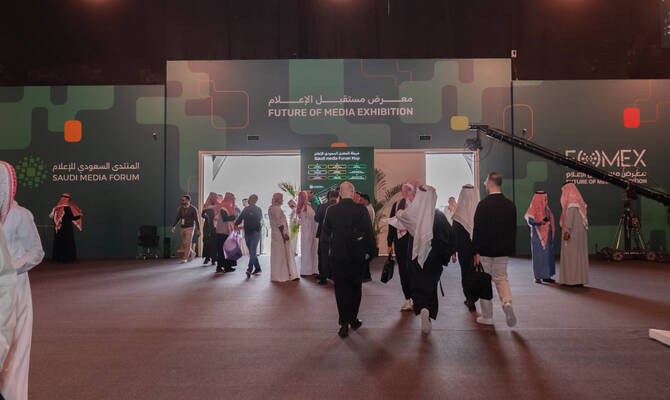
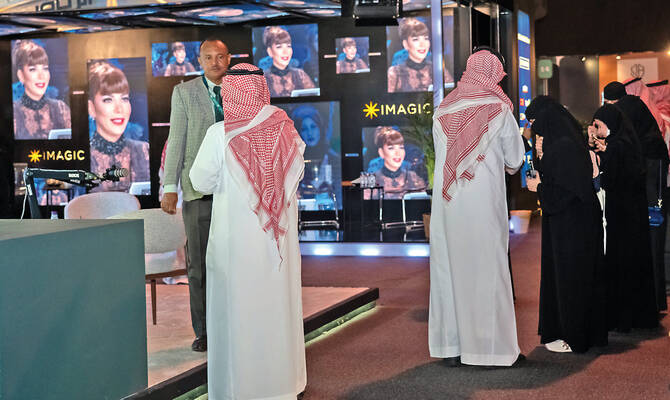
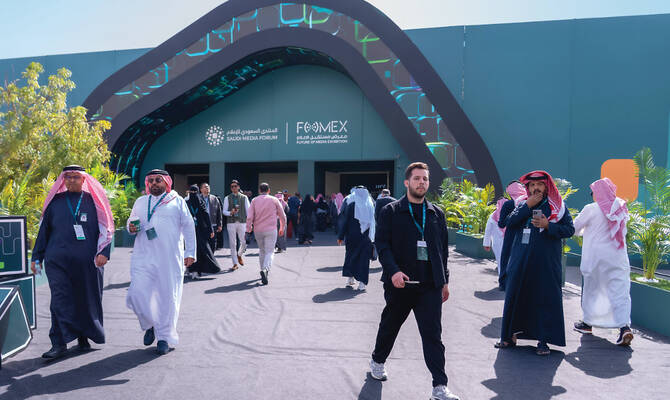
Saudi media leaders, journalists, and experts gathered at the Saudi Media Forum in Riyadh to discuss credibility, ethics, and innovation. (AN photo by Huda Bashatah/Supplied)
2 / 3
Saudi media leaders, journalists, and experts gathered at the Saudi Media Forum in Riyadh to discuss credibility, ethics, and innovation. (AN photo by Huda Bashatah/Supplied)
3 / 3
Saudi media leaders, journalists, and experts gathered at the Saudi Media Forum in Riyadh to discuss credibility, ethics, and innovation. (AN photo by Huda Bashatah/Supplied)
Short Url
Updated 04 February 2026
Follow

Saudi Media Forum urges ethical coverage as crises redefine Arab journalism

  • Raw news without context can mislead audiences and distort credibility, experts say

RIYADH: Arab media was born in crisis and shaped by conflict rather than stability, Malik Al-Rougi, general manager of Thaqafeyah Channel, said during the Saudi Media Forum in Riyadh on Wednesday.

Al-Rougi was speaking during a panel titled “Media and Crises: The Battle for Awareness and the Challenges of Responsible Coverage,” which examined how news organizations across the region navigated credibility and professional standards amid fast-moving regional developments.

“Today, when you build a media organization and invest in it for many years, a single crisis can destroy it,” he said.

Referring to recent events, Al-Rougi said that he had witnessed news channels whose credibility “collapsed overnight.”

“In journalistic and political terms, this is not a process of news production. It is a process of propaganda production,” he said. “The damage caused by such a post … is enormous for an institution in which millions, perhaps billions, have been invested.”

When a media outlet shifts from professionalism and credibility toward “propaganda,” he added, it moves away from its core role. 


Saudi media leaders, journalists, and experts gathered at the Saudi Media Forum in Riyadh to discuss credibility, ethics, and innovation. (AN photo by Huda Bashatah/Supplied)

“A crisis can work for you or against you,” Al-Rougi added. “When, in the heart of a crisis, you demonstrate high credibility and composure, you move light-years ahead. When you fail to adhere to ethical standards, you lose light-years as well.”

Abdullah Al-Assaf, professor of political media studies at Imam Muhammad bin Saud Islamic University, said that in many crises across the Arab world, agendas and directives had often prevailed over professionalism.

“Credibility was buried,” he added.

Hasan Al-Mustafa, writer and researcher at Al-Arabiya channel, said that raw information could be subject to multiple interpretations if not placed within a proper political, security, historical or geographical context.

He added that such an approach was urgently needed during periods of political and security volatility in the Middle East. 

When, in the heart of a crisis, you demonstrate high credibility and composure, you move light-years ahead. When you fail to adhere to ethical standards, you lose light-years as well.

Malik Al-Rougi Thaqafeyah, Channel general manager

“This objectivity, or this reliability, is a great responsibility,” Al-Mustafa said. “It is reflected not only in its impact on the audience, but also on the credibility of the content creator.”

Al-Mustafa warned against populism and haste in coverage, saying that they risked deepening crises rather than providing informed public perspectives.

He also said that competition with social media influencers had pushed some traditional outlets to imitate influencer-driven models instead of strengthening their own professional standards.

“Our media has been crisis-driven for decades,” he said, describing much of the region’s coverage as reactive rather than proactive.

During a separate panel titled “The Official Voice in the Digital Age: Strategies of Influence,” speakers discussed how rapid technological and social changes were reshaping the role of institutional spokespersons.

Abdulrahman Alhusain, official spokesperson of the Saudi Ministry of Commerce, said that the role was no longer limited to delivering statements or reacting to events.

“Today, the spokesperson must be the director of the scene — the director of the media narrative,” he said.

Audiences, he added, no longer accept isolated pieces of information unless they were presented within a clear narrative and structure.

“In the past, a spokesperson was expected to deliver formal presentations. Today, what is required is dialogue. The role may once required defense, but now it must involve discussion, the exchange of views, and open, candid conversation aimed at development — regardless of how harsh the criticism may be.”

He said that spokespersons must also be guided by data, digital indicators and artificial intelligence to understand public opinion before speaking.

“You must choose the right timing, the right method and the right vocabulary. You must anticipate a crisis before it happens. That is your role.”

Abdullah Aloraij, general manager of media at the Riyadh Region Municipality, said that the most important skill for a spokesperson today was the ability to analyze and monitor public discourse.

“The challenge is not in transferring words, but in transferring understanding and impact in the right way,” he said.


Saudi Arabia witnessing comprehensive cultural development, says expert

Updated 14 February 2026
Follow

Saudi Arabia witnessing comprehensive cultural development, says expert

  • Clotilde Entrecanales of Acciona hails pace of change in Kingdom

JEDDAH: Museums, exhibitions and art centers play a crucial role in the development of free and educated societies such as the one now burgeoning in Saudi Arabia, an expert has told Arab News.

Clotilde Entrecanales, the Spanish art historian and cultural executive who heads Acciona Living & Culture, a leading creator of technology-driven interactive museums, exhibits and events, said the Kingdom is making efforts to expand the role of culture development to show the world the greatest possible cultural offer.

She added that the Kingdom has quickly infused new energy into the region, and is rapidly establishing itself as a global cultural hub through massive investment in world-class museums, public art and international events, aligning with its 2030 vision.

She said: “With around 70 percent of the population under 30, cultural consumption looks very different than in Europe or the US. These spaces can’t feel like quiet, isolated institutions … they need to be fast, dynamic, brave and deeply connected to the city, blending into everyday urban life rather than sitting apart from it.”

Asked about the role of these sites in the evolving global cultural landscape, particularly in emerging cultural hubs like Saudi Arabia, Entrecanales said: “Our vision is to be a purpose-led partner for cultural and entertainment institutions, helping them be more relevant, connected, inclusive and sustainable.”

She added: “In emerging cultural hubs like Saudi Arabia, that approach feels especially relevant. The cultural transformation underway is moving fast — with major heritage and cultural destinations being developed and opened to the world.”

Speaking about her impression of the Kingdom’s approach to blending heritage with modernity face, Entrecanales said: “Others who attempt to achieve this balance often end up turning heritage into a theme, a layer of storytelling or a cultural program. What feels different about Saudi’s approach is how much pressure there is to treat heritage as the foundation, not just the surface.

“When you’re building at this speed and scale, there’s always a risk that history becomes a backdrop instead of a backbone. The projects that work best are the ones that slow down just enough to let the past set the rhythm for the present.”

Regarding opportunities and challenges, she said: “The opportunity is nothing less than positioning Saudi Arabia as a global cultural center. The challenge, as always, lies in balancing the speed and scale of that ambition with long-term sustainability and a sense of authenticity that remains credible and rooted.”

She added: “You can really feel this in places like the Islamic Arts Biennale, which shows hundreds of historical artefacts of the Islamic world, while re-framing them through contemporary scenography and designs by some of the best design studios in the world; or in AlUla, a world-class heritage site that hosts a major contemporary platform like Desert X, allowing ancient context and present-day artistic practice to coexist in a way that feels genuine.”

Under her guidance, ACCIONA Cultura aspires to create museums and cultural experiences that function as landmarks while fostering sustainable, inclusive and immersive interactions.

She elaborated on how the company is integrating technology, culture, and sustainability to preserve and promote the region’s cultural heritage: “We always start with human connection and storytelling: what’s the story, what should people leave with? Tech comes later.”

Recently, ACCIONA Cultura has been involved in significant projects in Saudi Arabia and is looking forward for more.

She said: “Right now, for example, we’re designing and curating a museum gallery where the entire space is shaped by the practice of a Saudi artist. Another example is the Net Zero exhibition at the King Abdulaziz Center for World Culture (Ithra), where we brought together Saudi and international artists to explore sustainability and our relationship with the planet, including voices like Dina Haddadin, Mohammed Al-Faraj, and Zahrah Al-Ghamdi.”

She added: “One of the projects I’m most proud of isn’t a museum, but our NEXT IN Summit, which we’ve hosted in two editions in our ACCIONA Campus in Madrid, highlighting the Kingdom’s unprecedented cultural momentum as it builds future-facing institutions with a startup mindset.”

About further collaboration with Saudi Arabia, she said: “Let’s just say … something’s definitely simmering in the kitchen.”

Commenting on being recognized among the Blooloop 50 Museum Influencers for 2025, she said: “It means a lot. More than anything, it feels like a nod to the years of teamwork and dedication behind Acciona Cultura, rather than to me personally.”