

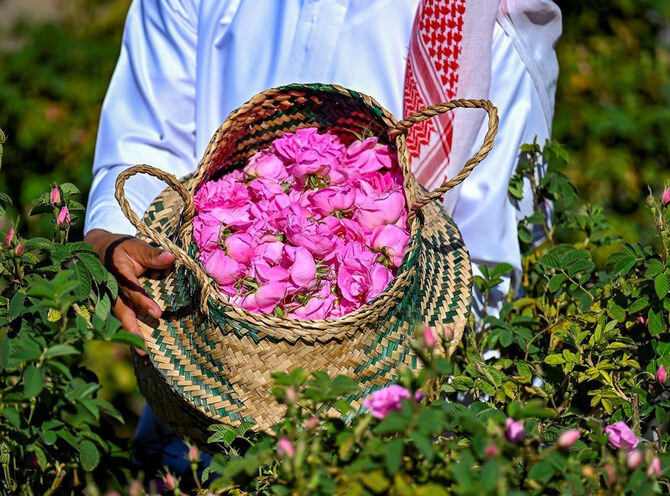
Saudi Arabia localizes rose cultivation to boost agriculture

1 / 2
Key incentives include the success of tissue culture rose cultivation, which lowers production costs while promoting growth. (SPA)
2 / 2
Key incentives include the success of tissue culture rose cultivation, which lowers production costs while promoting growth. (SPA)
Short Url
Updated 19 September 2024
Follow

Saudi Arabia localizes rose cultivation to boost agriculture

RIYADH: Saudi Arabia has announced the localization of rose cultivation to meet rising local demand, create jobs, and reduce reliance on costly, lower-quality imports.

The initiative also aims to boost exports to Gulf and Middle Eastern markets, supporting agricultural growth in line with Vision 2030, the Saudi Press Agency reported.

The Ministry of Environment, Water and Agriculture unveiled incentives to strengthen the sector, offering financial returns to enhance rose producers’ economic standing.

Key incentives include the success of tissue culture rose cultivation, which lowers production costs while promoting growth.

The ministry also offers affordable agricultural land, investment opportunities leveraging the comparative advantages of roses, and loans covering 70 percent of project costs from the Agricultural Development Fund.

Additionally, it provides technical support and streamlined licensing for rose cultivation projects.

The ministry emphasized using technologies such as hydroponics and smart systems to reduce costs and improve efficiency, as well as opportunities to produce rare and in-demand rose varieties for higher economic returns.


Rare exhibits on display at King Abdulaziz Palace

Updated 30 January 2026
Follow

Rare exhibits on display at King Abdulaziz Palace

  • The piece reflects the precision of traditional craftsmanship and its social symbolism tied to strength and horsemanship

RIYADH: Exhibits on display at the King Abdulaziz Palace in the historic village of Laynah highlight rich aspects of human history and environmental change in the Arabian Peninsula as part of a series of palace activation events organized by the Imam Turki bin Abdullah Royal Nature Reserve Development Authority during the Darb Zubaida Winter Season.

The exhibits feature rare historical artifacts carrying cultural and scientific significance that document different lifestyles and environmental shifts in the region over the centuries.

Among the most notable pieces is a traditional rifle crafted from natural wood and fitted with a handwoven leather strap, historically used for hunting and protection.

The piece reflects the precision of traditional craftsmanship and its social symbolism tied to strength and horsemanship.

The authority stated that the palace welcomes visitors daily until Feb. 15, from 3:00 p.m. to 10:00 p.m., as part of unified tourism programs aimed at organizing visitor flow and providing opportunities to explore historical sites in a safe and engaging environment.