
RIYADH: Saudi Arabia’s ambitious drive to become a global hub for esports and gaming has been highlighted at a Riyadh forum featuring industry leaders from around the world.
The New Global Sports Conference on Aug. 24-25 included panel discussions that provided a comprehensive look at the Kingdom’s strategic investments, innovative approaches, and broader vision for the future of esports.
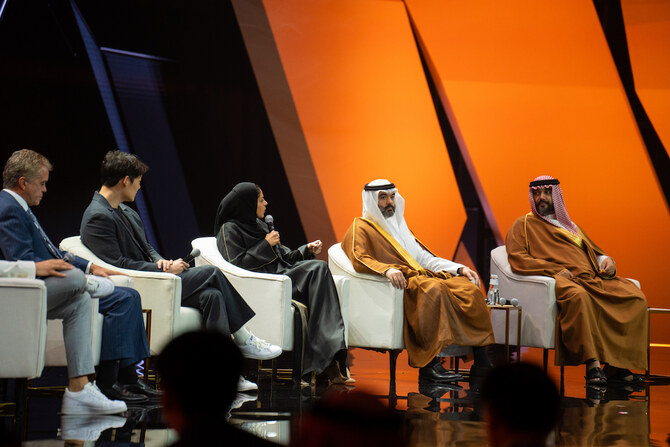
Key figures outlined their plans and aspirations in a panel discussion titled “Game On, Saudi Arabia,” showcasing the nation’s commitment to becoming a major player on the international stage.
Prince Faisal bin Bandar bin Sultan, head of the Saudi Esports Federation, talked about the Kingdom’s goal to raise its status in the global esports arena.
Historically, countries such as France, China, South Korea, and Japan have been dominant, he said. However, Saudi Arabia aims to shift this narrative from “Why Saudi?” to “Why not Saudi?”
Through events such as the Esports World Cup, and substantial investments in local talent and infrastructure, the Kingdom is determined to place itself on par with established esports powerhouses.
“We want Saudi to be a natural part of the conversation about esports, just like the other leading countries,” Prince Faisal said.
The Kingdom is not only investing in events and talent, but also improving its educational programs and infrastructure to support the growth of the esports industry.
“Things like this Esports World Cup. It showcases the talent that we have on the event side, on the players’ side, our young men and women, showing our capabilities.
“We deserve to be on the stage with all the best teams in the world like we have here,” the prince added.
Abdullah Alswaha, Saudi minister of communications and information technology, highlighted the value of the gaming industry, a sector now valued at $200 billion and tipped to exceed $1 trillion.

Adwa Alarifi, Saudi assistant minister of sport affairs, and deputy minister of strategic planning and investment, discussed the Kingdom’s strategic approach to integrating esports into its broader sports and entertainment strategy. (AN Photo/Abdulrahman Shalhoub)
Alswaha emphasized the transformative potential of esports, saying that gaming has driven technological advancements and innovation, with examples such as generative AI and its gaming connections.
“If it wasn’t for video gaming, you would not appreciate generative AI as we appreciate it today,” he said. “If it wasn’t for gaming, Elon Musk would not have started at the age of 12. Created a game called Blaster that motivated him and inspired him to move into STEM into coding into space and creating.”
Alswaha also discussed the social benefits of gaming, including its positive effects on mental health and social connections.
Saudi Arabia is committed to leveraging esports not only as a profitable sector, but also as a vehicle for societal good, he said.
“We should be all collectively, very proud as publishers, investors, and global partners, because you’re part of a movement that is the innovation trigger to the next big thing, not only for a game or a sport, but for a movement that is touching artificial intelligence, innovation, space and life as we know it.”
Adwa Alarifi, Saudi assistant minister of sport affairs, and deputy minister of strategic planning and investment, discussed the Kingdom’s strategic approach to integrating esports into its broader sports and entertainment strategy.
Since the launch of Vision 2030, “we’ve hosted more than 100 international events in the last five years, and we’ve welcomed more than 2.5 million sports fans during those events, and the impact on our people it’s just incredible,” Alarifi said.
She said that the rise in sports engagement demonstrates the profound impact of global sporting events on local communities.
Alarifi said that with women’s participation in esports surpassing the global average and substantial increases in female sports involvement, the Kingdom is making notable progress in empowering women and youth.
“Thanks to our leadership, today, we have equal opportunities across all sectors, for both men and women, and within sports, we have equal opportunities in the whole ecosystem, starting with players and athletes, and leading up to leaders as well.
“We’re one of the few countries in the world that have mandated all sports and federations to have a seat for a female represented on the board, and that resulted in having more than 40 women national teams across different sports.”
Prince Faisal also discussed the role of education in nurturing the next generation of esports professionals. The Saudi Esports Federation has established the Saudi Esports Academy to provide comprehensive training not just for players but also for roles including coaching, production, and refereeing. The initiative aims to integrate these programs into academic curricula, making esports a viable career path for Saudi youth.
“Our investment in esports is great. That really put us on the map to showcase to the world that we’re serious about what we’re doing. To me, it’s a gateway to a greater industry that we’re trying to build here,” he said.
“It’s not just about esports, it’s about the gaming and esports industries. But none of that will come to any fruition if we don’t invest in the future, the next generation, and that’s the education, but also events like this, showcasing on the main stage what you can become.”
Mike Milanov, chairman of the Advisory Board for Gaming & Esports at Qiddiya, highlighted ambitious plans for Qiddiya’s gaming and entertainment district, which seeks to offer a comprehensive gaming experience that combines entertainment, sports, and culture.
“We’re (in Qiddiya) not afraid to take risks and think big and innovate and make sure that it’s an inclusive, global, community-centered and community-designed hub for gaming and esports. So that’s the goal of the district,” he said.
The first day of the New Global Sport Conference focused on showcasing Saudi Arabia’s determination to position itself as a global leader in esports and gaming.
The conference highlighted Saudi Arabia’s evolving role in global esports and its potential to drive the industry forward in the years to come.