Pakistan implements project to link Raast cross-border payment system with Arab world

In this handout photograph, taken and released by Pakistan’s Press Information Department, Pakistan Prime Minister Shehbaz Sharif (right) presents souvenir to Arab Monetary Fund Chairperson Dr. Fahad M Alturki during the inaugural ceremony of Buna-Raast Connectivity Project Implementation Phase in Islamabad on August 22, 2024. (PID)
Short Url
Updated 22 August 2024
Follow

Pakistan implements project to link Raast cross-border payment system with Arab world

  • Pakistan’s Raast portal has been interlinked with the Arab Monetary Fund’s Buna cross-border payment system
  • Annual cross border retail payments, remittances between Arab region and Pakistan amount to over $20 billion

ISLAMABAD: Pakistan on Thursday implemented a project to link its Raast instant payment system with Buna, a cross-border payment system of the Arab Monetary Fund (AMF), to facilitate remittances in real-time between Pakistan and the Arab world, Prime Minister Shehbaz Sharif said. 
The AMF and the State Bank of Pakistan (SBP) signed a memorandum of understanding in Abu Dhabi last November to establish a framework of cooperation between Rasst and Buna, which is operated by the Arab Regional Payments Clearing and Settlement Organization (ARPCSO) and supported by all central banks in the Arab region. The development enables the inclusion of the Pakistani Rupee (PKR) as a settlement currency in Buna, in addition to existing international and Arab currencies.
Cross border retail payments and remittances between the Arab region and Pakistan amount to over $20 billion annually, according to government data.
“Under the project, the digital payment system of Pakistan is being directly linked to Buna established under the Arab Monetary Fund,” the prime minister’s office (PMO) said in a statement after Sharif launched the project. “The implementation of a fast, effective and low-cost plan to send money to overseas Pakistanis has started.”
The PMO said the Buna-Raast system would increase remittance transfers and enable millions of Pakistanis living in Arab countries to send money home “quickly, effectively and at a low cost.”
“This landmark initiative aims to facilitate our fellow Pakistanis living abroad and ensure that their efforts translate seamlessly as well as timely to support for their families back home in Pakistan,” Sharif said as he addressed the launch ceremony.
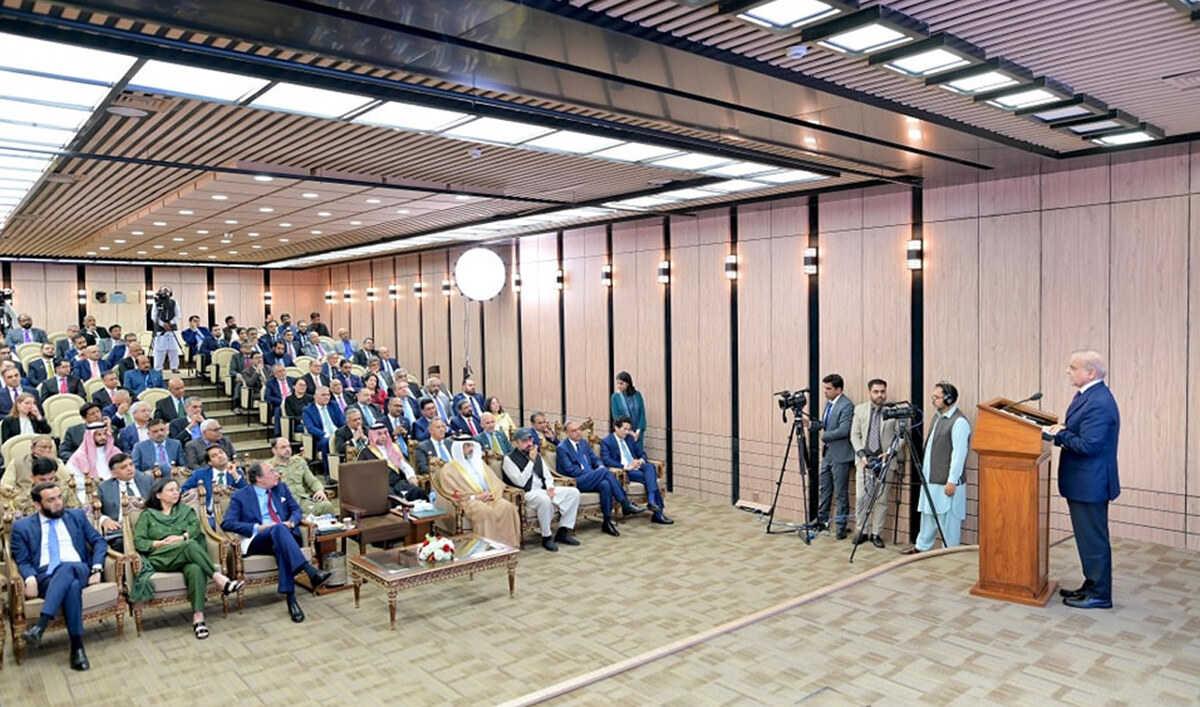


In this handout photograph, taken and released by Pakistan’s Press Information Department, Pakistan Prime Minister Shehbaz Sharif speaks during the inaugural ceremony of Buna-Raast Connectivity Project Implementation Phase in Islamabad on August 22, 2024. (PID)

“It is Pakistan’s first cross border real time payment systems linkage that will make remittances more affordable and accessible. Additionally, it also holds the potential to accelerate our connectivity into a future model of vital payment connectivity where transactions will take place region to region.”
Pakistan receives its highest contribution of remittances every month from Saudi Arabia and the UAE, with the two Gulf countries being the most preferred destinations for Pakistani laborers. 
The Buna-Raast project envisions bringing more flows to the formal channels by addressing the critical challenges faced in cross-border remittances which are often affected by inefficiencies and high costs, according to officials on both the Pakistani and AMF sides. 
“By leveraging the strengths of Buna and Raast, remittances will reach their intended recipients swiftly and securely. Our joint efforts are a testament to our shared vision of advancing financial inclusion and creating lasting values for our economies,” Fahad M. Alturki, Director General Chairman of the AMF Board and Chairman of the Board of ARPCSO, had said in a statement in July about the Buna-Raast collaboration. 
“Raast and Buna integration and addition of the Pakistani rupee in Buna as a settlement currency is a strategic milestone aimed at increasing the speed, safety, and cost-effectiveness of remittances and other cross border payments between Pakistan and Arab countries,” Jameel Ahmad, Governor State Bank of Pakistan, had said.
“The collaboration will increase remittances to Pakistan through formal channels, with enhanced customer convenience and efficiency.”
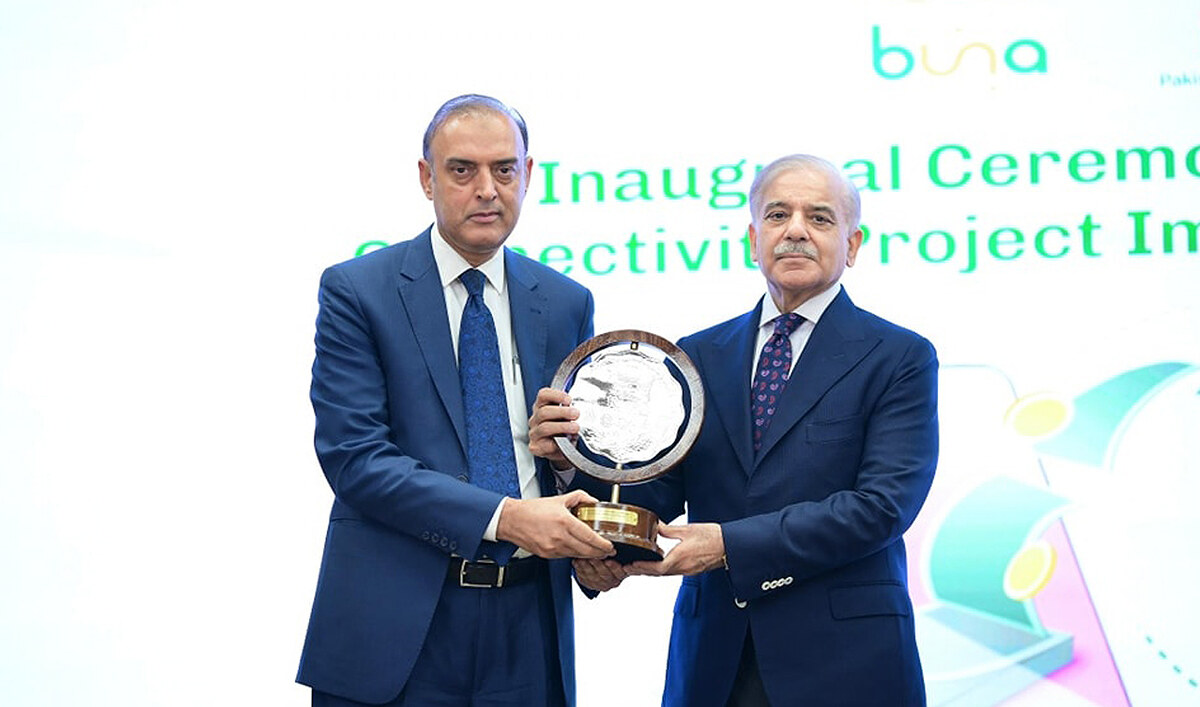


In this handout photograph, taken and released by Pakistan’s Press Information Department, Pakistan Prime Minister Shehbaz Sharif (right) presents a souvenir to the State Bank of Pakistan Governor Jameel Ahmed during the inaugural ceremony of Buna-Raast Connectivity Project Implementation Phase in Islamabad on August 22, 2024. (PID)


Daesh media chief for ISKP in Pakistan’s custody — state media

Updated 18 December 2025
Follow

Daesh media chief for ISKP in Pakistan’s custody — state media

  • Sultan Aziz Azzam, a senior member of ISKP, used to head its Al Azzam media outlet, says state media
  • Azzam was arrested in May while attempting to cross into Pakistan from Afghanistan, says state media

ISLAMABAD: Pakistani authorities have taken into custody Sultan Aziz Azzam, the head of Daesh regional affiliate ISKP’s media outlet, state media reported on Thursday citing intelligence sources. 

The state-run Pakistan TV Digital reported that Azzam was a senior member of ISKP and hailed from Afghanistan’s Nangarhar province. As per the state media report, he is also a graduate of the University of Nangarhar where he studied Islamic jurisprudence. 

Pakistan TV Digital reported Azzam joined ISKP in 2016 and later became a prominent member of its leadership council.

“He was arrested in May 2025 while attempting to cross from Afghanistan into Pakistan,” Pakistan TV Digital reported, citing intelligence sources. 

“He is believed to have overseen media operations and headed ISKP’s Al Azzam media outlet.”

In November 2021, Washington listed Azzam as a “Specially Designated Global Terrorist” (SDGT). The move bars American citizens from engaging in transactions with persons designated as SDGTs. 

According to a report on the UN Security Council’s website, Azzam has played an “instrumental role” in spreading Daesh’s violent ideology, glorifying and justifying “terrorist acts.” 

“Building on his former experience as an Afghan journalist, his activity as ISIL-K’s spokesperson has increased ISIL-K’s visibility and influence among its followers,” the report states. 

The report further states Azzam claimed responsibility on behalf of Daesh for the suicide attack near Hamid Karzai International Airport on Aug. 26, 2021, which killed at least 170 Afghans and 13 US service members and injured 150 more. 

The development takes place amid tense relations between Pakistan and Afghanistan, with Islamabad alleging militants use Afghan soil to carry out attacks against Pakistan. Kabul denies the allegations.

Tensions surged in October when Pakistan and Afghanistan engaged in fierce border clashes, claiming to have killed dozens of soldiers of the other side.

Pakistan has urged the Afghan Taliban-led government to take “decisive action” against militants it says operate from its soil. Afghanistan says it cannot be held responsible for Pakistan’s security challenges.