

Saudi Arabia launches digital platform to boost entertainment sector growth

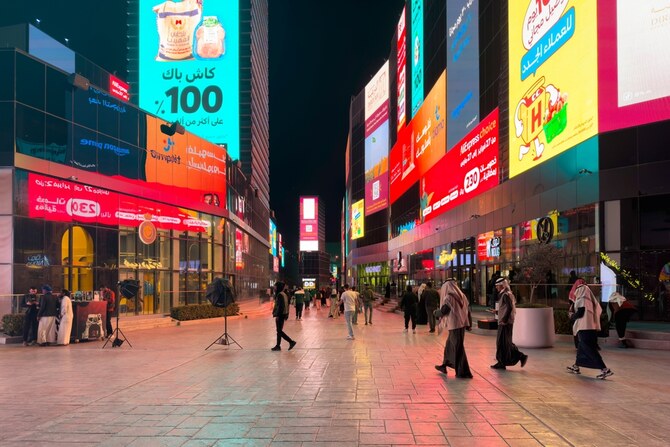
A view of Boulevard World as part of the annual Riyadh season in Saudi Arabia. Shutterstock
Short Url
Updated 12 August 2024
Follow

Saudi Arabia launches digital platform to boost entertainment sector growth

  • Initiative aims to streamline processes for entrepreneurs and companies, boosting business activity and investment
  • GEA noted significant increase in visitor numbers and licensing activities during second quarter of 2024

RIYADH: Key entertainment services, including licenses for facilities, talent management, and crowd management certifications, can now be accessed on Saudi Arabia’s new digital platform. 

Launched by the General Entertainment Authority, the initiative is available through the Saudi Business Center’s digital platform and aims to streamline processes for entrepreneurs and companies, boosting business activity and investment in the sector, according to a post on X. 

The first phase, which began on Aug. 11, focuses on critical services that will help businesses operate efficiently and adapt to the Kingdom’s evolving entertainment landscape. 

The GEA plans to expand the platform’s offerings, with additional licenses and support mechanisms to be introduced in future phases. 

This phased approach underscores the GEA’s commitment to nurturing the entertainment sector, a crucial component of Saudi Vision 2030’s economic diversification goals, reported the Saudi Press Agency. 

By integrating services with the Saudi Business Center, the authority seeks to simplify procedures for investors and strengthen collaboration with both the public and private sectors. 

The authority issues licenses for entertainment centers, facilities, ticket sales, talent management, crowd organization, and various entertainment events and shows. 

The GEA noted a significant increase in visitor numbers and licensing activities during the second quarter of this year. 

Over 16 million visitors attended various events, marking a 130 percent rise from the 7 million visitors recorded in the same period in 2023. Licensing activity also saw a 7.3 percent increase, with 1,529 licenses issued compared to 1,425 in the second quarter of last year. 

The majority of the new licenses were for live shows in restaurants and cafes, totaling 523. This was followed by 433 licenses for entertainment events, 322 for entertainment shows, 93 for entertainment cities, and 60 for crowd management. 

Additionally, the number of licensed entertainment destinations reached 97 in the second quarter of 2024. 

The entertainment sector in Saudi Arabia has seen significant growth in recent years, driven by increased government investment and rising demand for both local and international entertainment options. 

As of 2024, the Saudi entertainment and amusement market is projected to be valued at approximately $2.55 billion, with expectations to grow to $4.20 billion by 2029, reflecting a compound annual growth rate of 10.44 percent, according to London-based global publishing, research and consultancy firm Oxford Business Group. 

By 2030, the broader entertainment sector is forecasted to reach an estimated $1.17 billion, demonstrating an annual growth rate of 47.65 percent. 

This growth is driven by an increasing number of entertainment projects, including major developments like the Qiddiya entertainment city in Riyadh. 

These initiatives position Saudi Arabia as a leading entertainment hub in the region, attracting significant local and international investments. 


‘Future cities will be built for visitors, not just residents,’ Saudi tourism minister tells Arab News

Updated 17 min 1 sec ago
Follow

‘Future cities will be built for visitors, not just residents,’ Saudi tourism minister tells Arab News

RIYADH: Saudi Arabia is positioning itself at the forefront of the global travel evolution by designing destinations that will target the tourists of the future, the Kingdom’s tourism minister has said.

Ahmed Al-Khateeb added that sustainability would serve as the guiding principle behind Saudi Arabia’s role in tomorrow’s global travel landscape.

Travelers’ habits and the tourism industry’s revenue sources have shifted dramatically in recent years, he told Arab News in an interview.

“People used to travel in groups. Today, they are traveling in smaller groups. Hotels used to make most of their revenues from rooms — now, they are making more from lounges and restaurants.”

And younger generations, empowered by technology, are also redefining how travel is planned and experienced, Al-Khateeb added. “They are driving their own itineraries on the go, which puts pressure on traditional travel companies that once organized large group trips. We are witnessing big shifts in the global travel market.”

Among the world’s fastest-growing tourism markets, China and India are reshaping international travel flows. “China has become the most important source market for outbound travelers, while India is expected to double its number of travelers in the coming years,” the minister said. “This opens a major opportunity for the Middle East — and Saudi Arabia in particular — to emerge as a top destination for international tourists.”

Since 2019, Saudi Arabia has recorded the fastest tourism growth among all G20 nations, said Al-Khateeb. “We have a very strong domestic market and a very strong religious market. Now, we have opened our doors for leisure, business and holiday travelers — whether they seek the Red Sea coast, the southern mountains, our major cities or our beautiful islands.”

Yet the Kingdom’s long-term vision for tourism extends far beyond the present, with destinations being built to serve both visitors and residents sustainably, he added.

“In the 1950s and 1960s, cities were built for residents,” Al-Khateeb said. “Today, in places like Greece, visitors outnumber residents three to one. The cities of the future must be designed for visitors as well — and that’s what we are doing in Saudi Arabia.”

Sustainability has become a non-negotiable element of all tourism development in the Kingdom, he added. “In the last two decades, sustainability has become extremely important. As we build new destinations like the Red Sea, we are fully aligned with sustainability regulations. Whatever we build today is environmentally friendly, ensuring not only environmental, but also social and economic sustainability.”

This principle lies at the heart of Vision 2030’s tourism transformation: “Sustainability is at our forefront whenever we build or operate any new destination,” he added.