

Aramco raises Arab Light crude prices to Asia

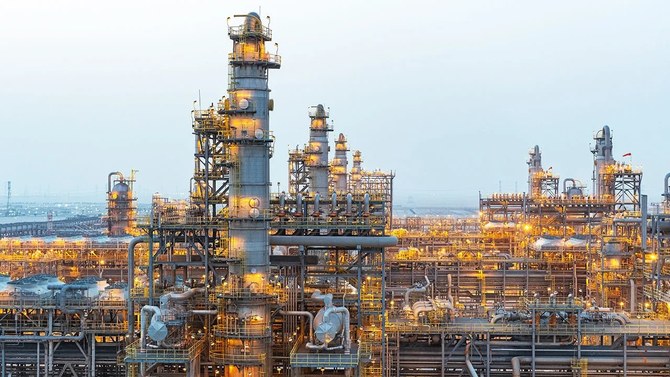
Aramco’s pricing decisions are influenced by customer recommendations and changes in the oil's value over the past month, considering yields and product prices. File
Short Url
Updated 01 October 2024
Follow

Aramco raises Arab Light crude prices to Asia

  • It marks a two-month high for the Arab Light grade, though increase is smaller than anticipated
  • Official selling price for Arab Medium was maintained at +$1.25 per barrel, while Arab Heavy kept at $+0.50 per barrel

RIYADH: Saudi Aramco has adjusted its pricing for Arab Light crude oil sold to Asia for September, increasing it to Platts Dubai/DME Oman +$2 per barrel, up from +$1.80 in August.

This marks a two-month high for the Arab Light grade, though the increase is smaller than anticipated. Other light grades sold to Asia have also seen price hikes, but the prices for Arab Medium and Arab Heavy grades remain unchanged.

The official selling price for Arab Medium was maintained at +$1.25 per barrel, while Arab Heavy kept at $+0.50 per barrel.

For Northwest Europe, the Arab Light official selling price (OSP) was set at +$1.25 per barrel over ICE Brent futures, down significantly from +$4 per barrel. Similarly, the price for Arab Medium was reduced from +$3.20 to +$0.45 per barrel.

These adjustments come despite expectations for a larger increase due to recent gains in the Dubai benchmark. The more modest price hikes are attributed to weaker refining margins in Asia and ongoing negotiations for annual term supplies.

Aramco’s pricing decisions are influenced by customer recommendations and changes in the oil's value over the past month, considering yields and product prices.

Last week, top ministers from the Organization of the Petroleum Exporting Countries and allies led by Russia, or OPEC+ as the group is known, decided to keep its oil output policy unchanged including a plan to start unwinding one layer of output cuts from October.

The oil producers’ alliance also reiterated that the hike could be paused or reversed if needed.

OPEC+, in a statement, said the members making those cuts “reiterated that the gradual phase-out of the voluntary reduction of oil production could be paused or reversed, depending on prevailing market conditions.”

These countries had announced the extension of the voluntary reduction of oil production by 2.2 million barrels per day until the end of September 2024 and outlined plans for this reduction to be gradually phased out on a monthly basis until the end of September 2025.

Oil prices have fallen from a 2024 high above $92 a barrel in April to below $82, pressured by concern about the strength of demand but finding support this week from increasing tensions in the Middle East.

OPEC+ in total is currently cutting output by 5.86 million bpd, or about 5.7 percent of global demand, in a series of steps agreed since late 2022.


EU investments in Saudi Arabia to prosper over next 5 years, says ambassador

Updated 23 January 2026
Follow

EU investments in Saudi Arabia to prosper over next 5 years, says ambassador

RIYADH: European investments in Saudi Arabia are set to see notable growth over the next five years, encompassing green energy, metals, critical raw materials, advanced industry, and the digital sector.

Christophe Farnaud, the EU Ambassador to Saudi Arabia, confirmed to Al-Eqtisadiah that an anticipated memorandum of understanding with the Kingdom in the energy field will provide an organized framework for cooperation in energy transition and sustainability, boosting investor confidence in the long-term partnership between the two sides.

The volume of trade in goods and services between Saudi Arabia and the EU amounts to €90 billion ($105.6 billion), according to the latest data from 2024, making the EU the Kingdom’s second-largest trading partner, according to Farnaud. 

Currently, 2,500 European companies operate within the Saudi market, highlighting the depth of economic relations between the two sides.

A qualitative development in relations

Farnaud affirmed that Saudi-European relations are witnessing qualitative development, especially since the EU’s adoption in 2022 of its strategy towards Gulf Cooperation Council countries, which is based on enhancing political, security, and economic cooperation, in addition to cultural and humanitarian exchange. 

He noted that Saudi Arabia’s Vision 2030 constitutes an attractive framework for strengthening this partnership.

The ambassador also pointed out that the launch of the European Chamber of Commerce in the Kingdom of Saudi Arabia during 2024 represented an important step to support cooperation between European and Saudi companies and enhance mutual investments, reflecting a positive outlook for the future of economic relations. 

Economic relations are no longer limited to traditional trade exchange but have transformed into a multi-sector partnership, including investment, services, manufacturing, energy, and sustainability, according to Farnaud.

Christophe Farnaud, the EU Ambassador to Saudi Arabia meeting Crown Prince Mohammed bin Salman in 2025. X/@EUAmbGCC

Relaunching Free Trade Agreement negotiations

The ambassador revealed ongoing discussions to relaunch negotiations for a Free Trade Agreement between the EU and GCC countries, which have been stalled since 2008, aiming to reach a modern agreement covering investment, services, intellectual property protection, technical standards, and government procurement.

He also indicated readiness to launch negotiations for a bilateral strategic partnership agreement with Saudi Arabia, including industrial cooperation, critical raw materials, energy, and sustainability, alongside working to sign a memorandum of understanding in the energy field in the coming period.

The EU, according to Farnaud, is the largest foreign investor in Saudi Arabia, holding 29 percent of the total foreign direct investment stock, which amounted to 30.7 billion euros in 2023. 

Investments are concentrated in the transport, energy, industry, tourism, education, and training sectors, with major European companies participating in strategic projects like the Riyadh Metro.

Sectors of common priority

The ambassador explained that the energy sector, especially renewable energy and green hydrogen, represents a common priority, amidst the global shift towards sustainability, in addition to significant opportunities in the high-tech manufacturing sector, industrial localization, and knowledge transfer.

He pointed to the growing interest of European investors in Saudi Arabia’s tourism sector, driven by Vision 2030’s targets to raise tourism’s contribution to the gross domestic product to 10 percent.

Wide opportunities stand out in areas of hospitality, tourist destination management, cultural tourism, transport, and sustainability, especially in major projects like NEOM, AlUla, the Red Sea Project, and Diriyah.

Farnaud cited existing partnerships with leading European companies such as Accor and Kempinski, in addition to French cooperation in developing AlUla as a global heritage and tourist site.