

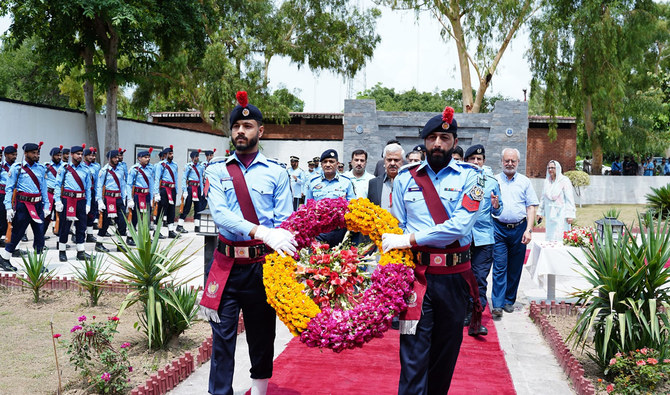
Pakistan pays homage to fallen heroes as it marks ‘day of police martyrs’

Police officials lay a wreath on the memorial monument to the Pakistani police officers in Islamabad on August 4, 2024, as Pakistan pays homage to fallen heroes as it marks ‘day of police martyrs.’ (Photo courtesy: Islamabad police)
Short Url
Updated 04 August 2024
Follow

Pakistan pays homage to fallen heroes as it marks ‘day of police martyrs’

  • Pakistan has for years faced militant groups in its western regions, while it has struggled with organized crime in other parts
  • Police have been the first line of defense in the country’s fight against militancy and crime, rendering countless sacrifices

ISLAMABAD: Pakistani civilian leaders and the military on Sunday paid tribute to police personnel who had died in the discharge of duties against militancy and crime as the South Asian country marked ‘Youm-e-Shuhada-e-Police.’
Pakistan has faced a low-level insurgency by separatists in the southwestern Balochistan province for the last two decades, while religiously motivated groups, including the Pakistani Taliban, have waged a fight in the northwestern Khyber Pakhtunkhwa (KP) province that borders Afghanistan.
The eastern Punjab and the southern Sindh provinces have seen authorities struggling to deal with organized crime, including kidnappings for ransom and drug-trafficking, in the urban centers as well as bandits based in the lawless, riverine areas along the border of the two provinces.
On Sunday, Pakistan’s president and the prime minister paid glowing tributes to hundreds of police personnel who were killed while trying to eradicate crime and guarding the country against militants, the state-run Radio Pakistan broadcaster reported.
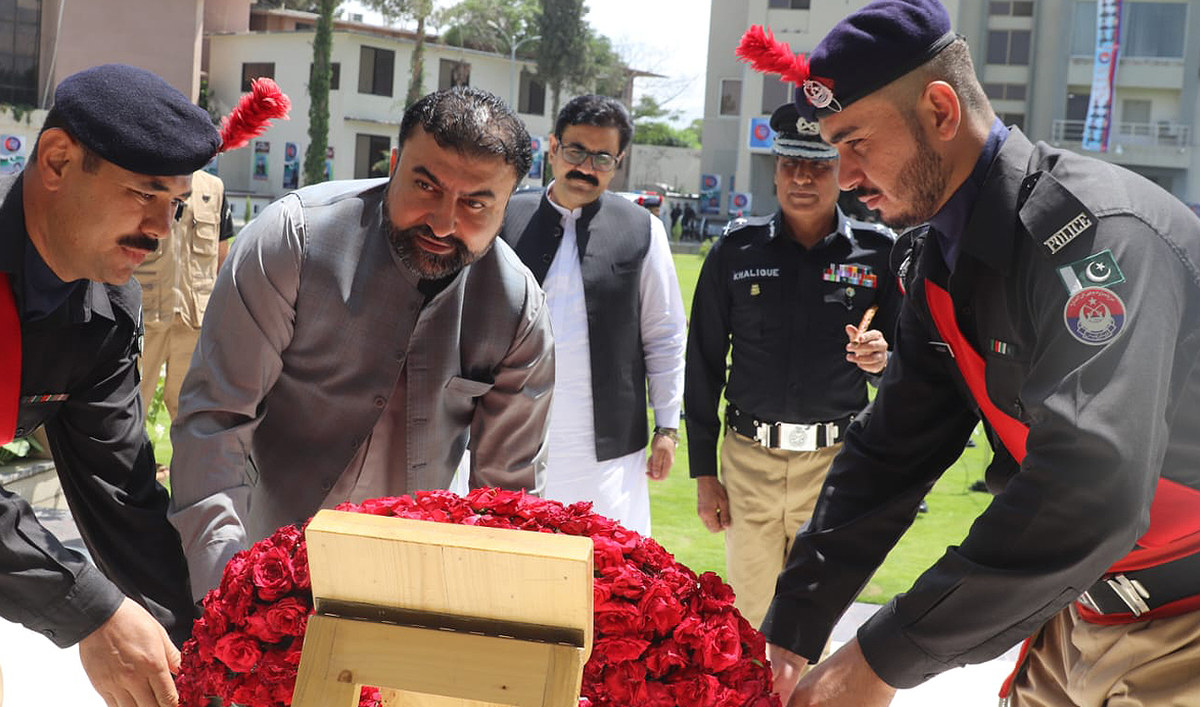


Balochistan Chief Minister Sarfaraz Bugti lays a wreath on the memorial monument to the Pakistani police officers in Quetta on August 4, 2024, as Pakistan pays homage to fallen heroes as it marks ‘day of police martyrs.’ (Photo courtesy: Balochistan police)

“Federal government would take all possible steps for the provision of education and health facilities to the children of shuhada (martyrs),” Prime Minister Shehbaz Sharif was quoted as saying by the broadcaster. “The bereaved families would be taken care of in every possible way.”
President Asif Ali Zardari highlighted the role of police force in Pakistan’s successful fight against militancy and said the entire nation saluted them for their sacrifices.
Separately, the Inter-Services Public Relations (ISPR), the Pakistani military’s media wing, said the armed forces paid a solemn tribute to the “valiant” personnel of the Pakistan police who had made the ultimate sacrifice in the line of duty.
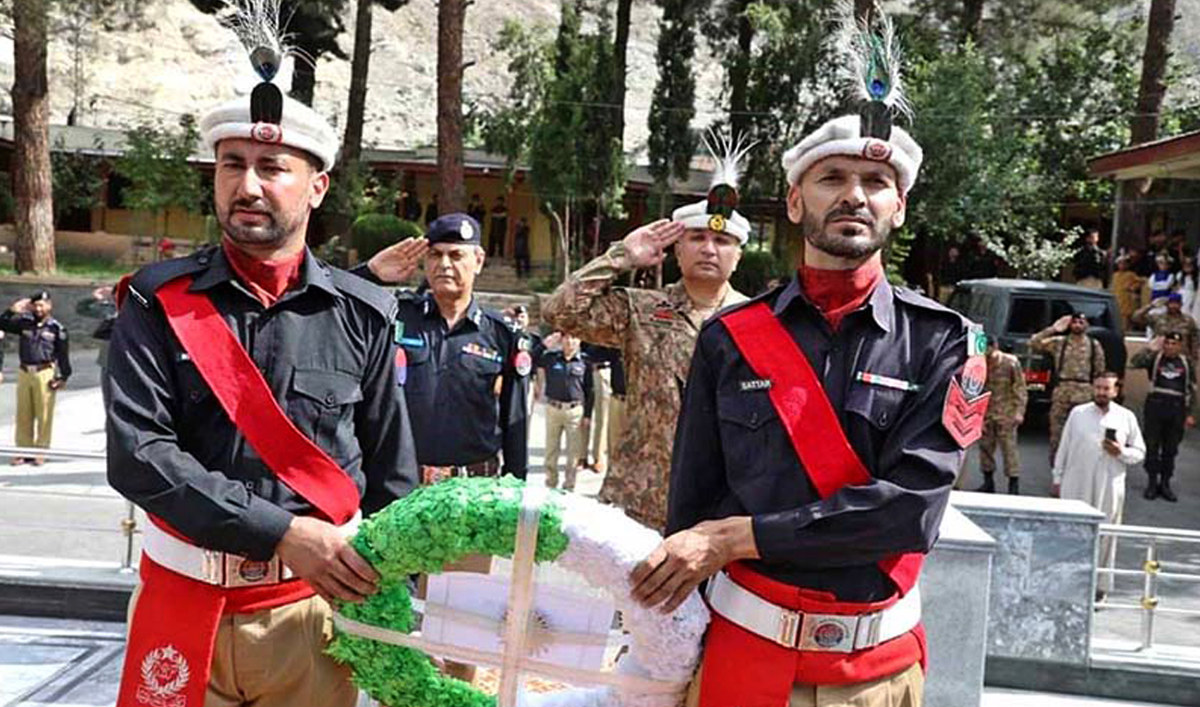


Inspector General of Police Gilgit-Baltistan Afzal Mehmood Butt and Force Commander GB Kashif Khalil lay floral wreath on Yadgar-e-Shuhda in Gilgit on August 4, 2024, as Pakistan pays homage to fallen heroes as it marks ‘day of police martyrs.’ (APP)

“The Armed Forces, comprising officers and men, salute the memory of our fallen heroes who have protected the nation with their sweat and blood,” the ISPR said in its statement.
“Their noble and selfless service has ensured the safety and security of our communities, and their legacy continues to inspire and motivate us. We stand in solidarity with their families and reaffirm our commitment to supporting them in every possible manner.”
The military reiterated its commitment to defending the country alongside police and other law enforcement agencies with “unshakeable resolve” and determination.
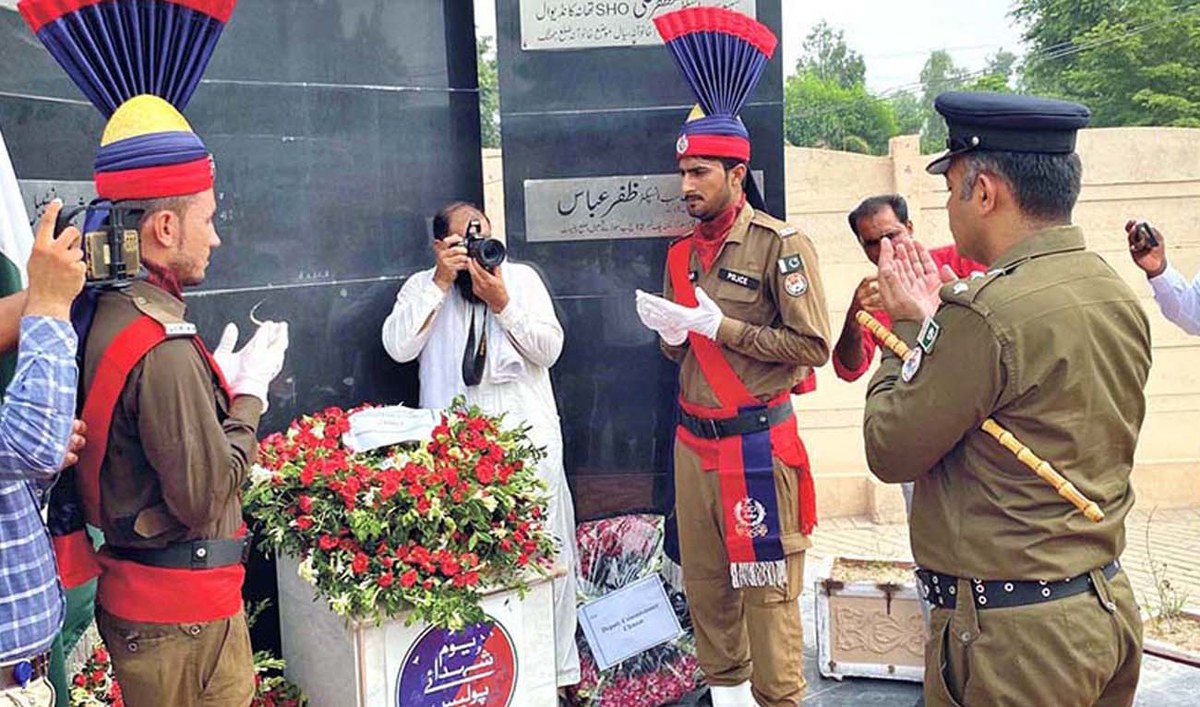


District Police Officer Abdullah Ahmad offering prayers at the memorial monument to the Pakistani police officers in front of DPO office in Chiniot on August 4, 2024, as Pakistan pays homage to fallen heroes as it marks ‘day of police martyrs.’ (APP)


Senior Superintendent Police Dr. Farukh Ali along with other police officials and business community participating in a walk in Hyderabad on August 4, 2024, as Pakistan pays homage to fallen heroes as it marks ‘day of police martyrs.’ (APP)
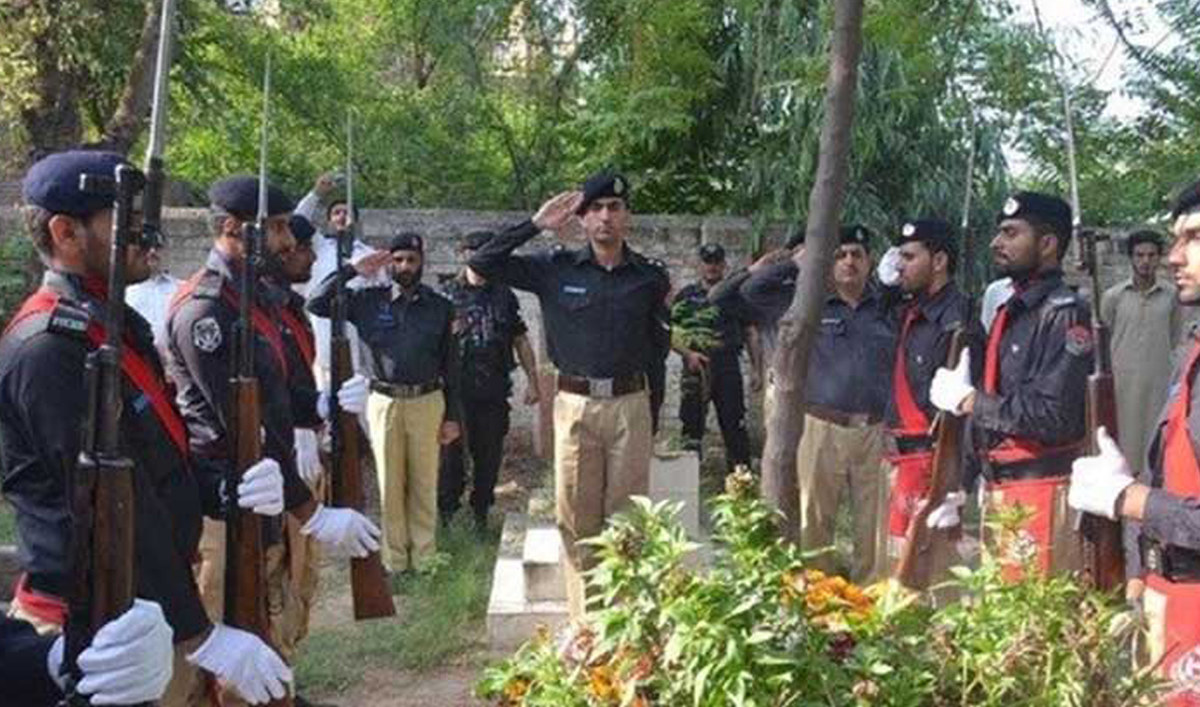


Police officials salute during prayers at the memorial monument to the Pakistani police officers in Peshawar on August 4, 2024, as Pakistan pays homage to fallen heroes as it marks ‘day of police martyrs.’ (APP)


Pakistan rejects India’s ‘irresponsible assertions’ after FM Jaishankar’s ‘bad neighbors’ remarks

Updated 03 January 2026
Follow

Pakistan rejects India’s ‘irresponsible assertions’ after FM Jaishankar’s ‘bad neighbors’ remarks

  • Indian FM Jaishankar accused Pakistan of fomenting militancy, backed New Delhi’s decision to put Indus Waters Treaty in abeyance
  • Islamabad calls the remarks an attempt to deflect attention from India’s ‘troubling record as a neighbor,’ vows to safeguard rights

ISLAMABAD: Pakistan on Saturday rejected “irresponsible assertions” made by Indian External Affairs Minister S. Jaishankar after his remarks about “bad neighbors” and the 1960 Indus Waters Treaty (IWT) between the two countries.

Jaishankar mentioned about “bad neighbors” at an event in Madras on Friday and said that New Delhi had a right to defend itself. “When you have bad neighbors... if you look to the one to the West, if a country decides that they will deliberately, persistently, unrepentantly continue with terrorism, we have a right to defend our people,” he was quoted as saying by The Hindu newspaper.

The remarks came months after New Delhi blamed Pakistan for a militant attack in Indian-administered Kashmir and conducted missile strikes inside Pakistan. Islamabad, which denied involvement in the Kashmir attack, responded to the strikes, leading to a four-day military conflict that saw the use of armed drones, fighter jets and artillery between the neighbors in May.

In a statement, Pakistani foreign office spokesman Tahir Andrabi said Islamabad firmly rejects the irresponsible assertions made by the Indian external affairs minister, describing the remarks as an attempt to deflect attention from India’s own “troubling record as a neighbor that promotes terrorism and contributes to regional instability.”

“India’s documented involvement in promoting terrorist activities in the region, particularly in Pakistan, is well known. The case of Commander Kulbhushan Jadhav remains a stark example of organized, state-sponsored terrorism directed against Pakistan,” he said.

“Equally concerning are recurring instances of extraterritorial killings, sabotage through proxies, and covert support to terrorist networks.”

Jadhav, an Indian navy officer who Islamabad said had been working with Indian spy agency, RAW, when Pakistani agencies arrested him in Balochistan in 2016. He was later sentenced to death by a Pakistani military court for alleged espionage. India disputes the conviction and has challenged it at the International Court of Justice.

Pakistan and India routinely accuse each other of supporting militant groups waging attacks against the other. The two countries have fought multiple wars, including two of them over the disputed region of Kashmir, since their independence from British rule in 1947. Both rule the region in part but claim it in full.

Jaishankar also spoke on Friday about the IWT that divides control of the Indus basin rivers between the neighbors and ensures water for 80 percent of Pakistani farms. India announced in April, following the Kashmir attack, that it was putting the 1960 World Bank-mediated treaty in abeyance.

“Many years ago, we agreed to a water-sharing arrangement — the belief was it was gesture of goodwill — because of good neighborliness we were doing it … but if you have decades of terrorism, there is no good neighborliness and you don’t get the benefit of good neighborliness,” Jaishankar was quoted as saying.

Pakistan foreign office spokesman Andrabi said the IWT is an international agreement concluded in good faith and at a considerable cost.

“Any unilateral violation of the Treaty by India would undermine regional stability and call into question its credibility as a state that claims to respect international legal obligations,” he said.

“Pakistan will take all necessary measures to safeguard its legitimate rights under the Treaty.”