



ISLAMABAD: Pakistan on Sunday warned of glacial lake outbursts, flash floods and landslides in the country’s northern regions as well as the southwestern Balochistan province amid continuing monsoon downpours, with nearly 40 people killed across the country this week in rain-related disasters.
According to figures from the Provincial Disaster Management Authorities (PDMA) in the Punjab and Balochistan provinces, 32 people were killed in rain-related incidents this week in the northwestern Khyber Pakhtunkhwa province while six died in Punjab.
Pakistan is recognized as one of the world’s worst-affected countries from climate change impacts. The South Asian country has experienced torrential rains, droughts and heat waves that have become more severe and erratic over the past couple of years.
“NDMA [National Disaster Management Authority] National Emergencies Operation Center anticipated that the latest hydrometeorological conditions suggest that high to very high-level flash flooding is likely in Balochistan,” the authority said in a statement.
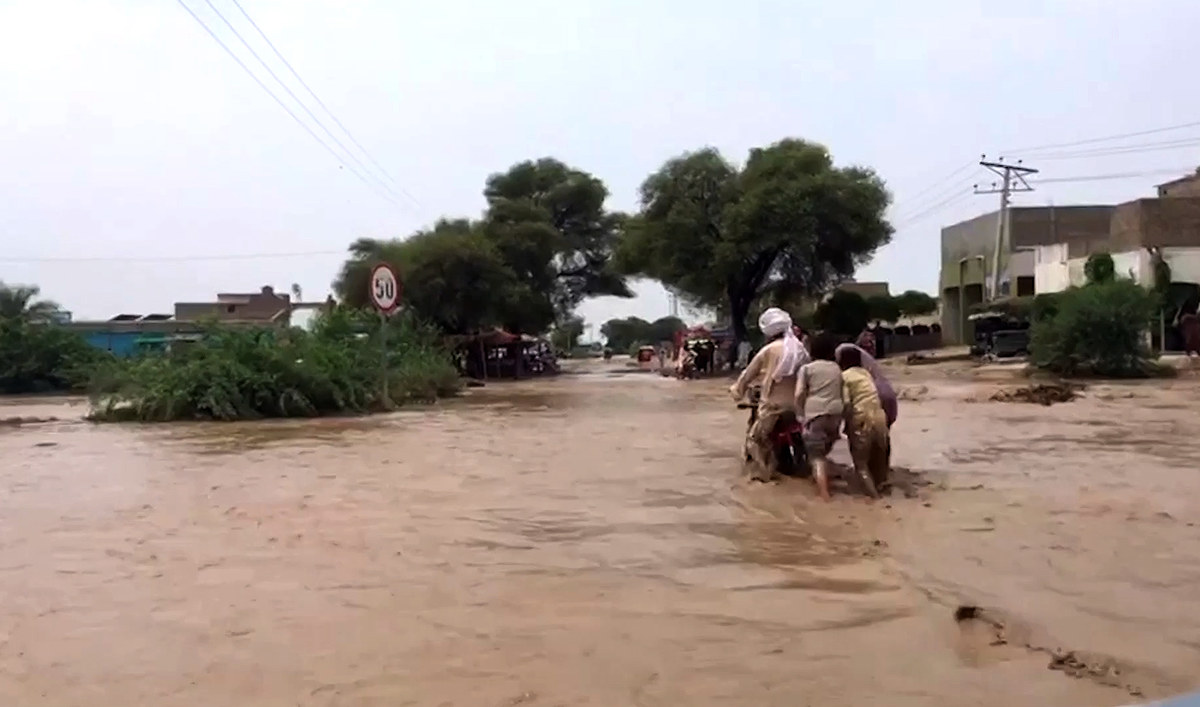
People push motorcycle across muddy water in Chitral, Pakistan on August 4, 2024. (Photo courtesy: Screengrab/Reuters)
It warned that hill torrents of the local nullahs of Zhob, Kalat, Nasirabad and Sibbi divisions in Balochistan wre likely to experience “high to very high level” of flash flooding, saying it could damage infrastructure.
“Similarly, The hill torrents of and local nullahs of Dera Ghazi Khan are likely to experience high to very high level of flash flooding which may result in damage to infrastructure,” it added.
The authority warned populations at risk to avoid flood waters and find safe locations away from flood-prone areas.
Separately, Pakistani state-run media, the Associated Press of Pakistan (APP), warned of glacial lake outbursts (GLOF), flash floods and landslides in Pakistan’s northern Gilgit-Baltistan (GB) and Khyber Pakhtunkhwa areas from Aug. 3-6.
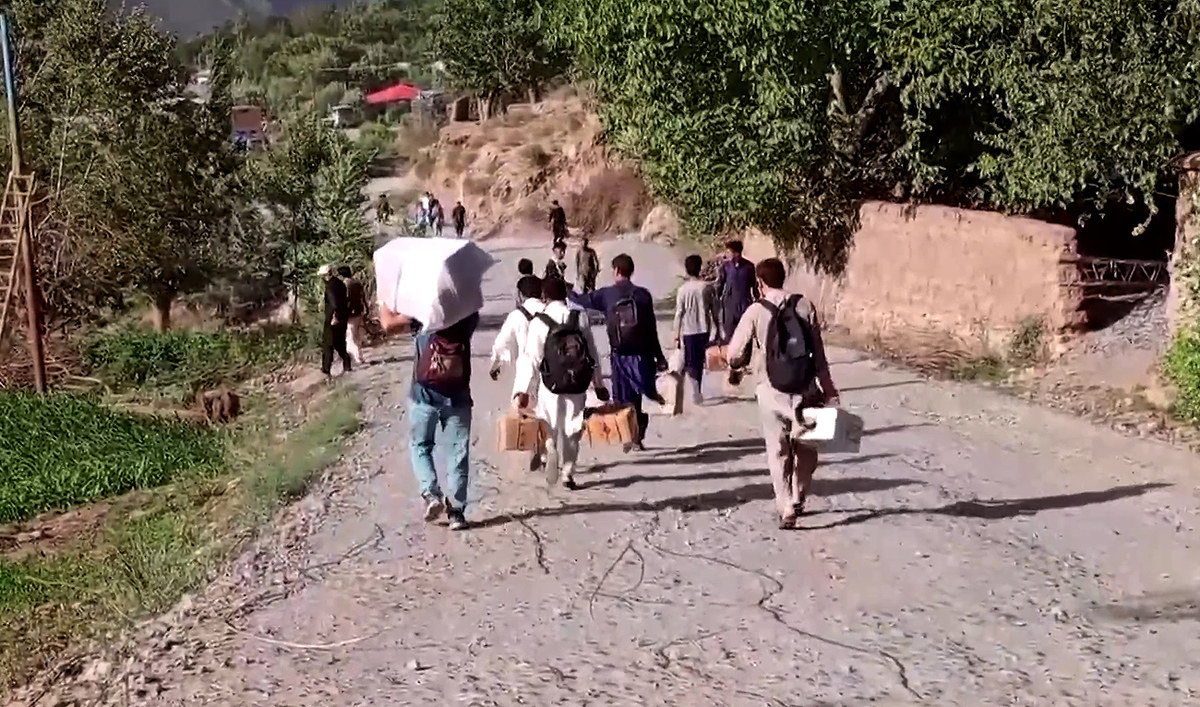
Residents move carrying belonging from the flooded areas in Chitral, Pakistan on August 4, 2024. (Photo courtesy: Screengrab/Reuters)
“The National Disaster Management Authority (NDMA) Emergencies Operation Center anticipated that a glacial lake outburst flood (GLOF), Landslides and Flash Flood is expected in Khyber Pakhtunkhwa and Gilgit Baltistan due to increasing glacier melt, persistent high temperatures and weather system bringing intermittent rains from today till Tuesday,” APP said on Saturday.
The NDMA has said intermittent rains and high temperatures are expected to trigger low-level/localized flash floods in KP and GB, which in turn could impact temporary bridge and road connections for upstream areas.
The authority has advised the provincial disaster management authorities and local administrations in KP and GB to closely monitor the situation, identify at-risk populations, and evacuate them to safer zones in case of medium to high flows, APP reported.
Unusually heavy rains in June 2022 triggered flash floods in many parts of the country, killing over 1,700 people, inflicting losses of around $30 billion, and affecting at least 30 million people.
In June, a UN official warned that an estimated 200,000 people in Pakistan could be affected by the upcoming monsoon season, which has brought heavier rains than usual.


