Drug trafficker hanged in Singapore: narcotics bureau

Singapore on Friday hanged a convicted drug trafficker, authorities said, in the city-state's second execution this year. (AP/File)
Short Url
Updated 02 August 2024
Follow

Drug trafficker hanged in Singapore: narcotics bureau

  • The 45-year-old Singaporean man was executed at Changi prison for trafficking 36.93 grams
  • “He was accorded full due process under the law, and was represented by legal counsel throughout the process,” CNB said in a statement

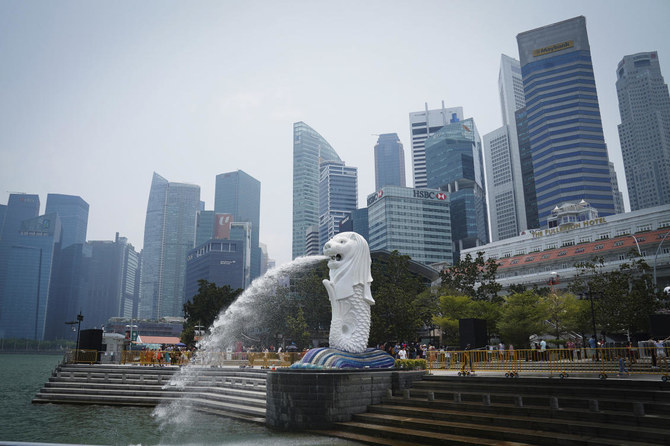
SINGAPORE: Singapore on Friday hanged a convicted drug trafficker, authorities said, in the city-state’s second execution this year.
The 45-year-old Singaporean man was executed at Changi prison for trafficking 36.93 grams (1.3 ounces) of pure heroin, more than twice the 15 grams that merits the death penalty in the strict city-state, the Central Narcotics Bureau (CNB) said.
Rights groups declined to give details about the convict’s identity and his case as the family has requested privacy.
“He was accorded full due process under the law, and was represented by legal counsel throughout the process,” CNB said in a statement late Friday.
The man was convicted and sentenced to death in February 2019, and his legal appeals and petition for clemency have been dismissed, CNB added.
In February, a 35-year-old Bangladeshi man, Ahmed Salim, was sent to the gallows for the murder of his former fiancee in Singapore.
Friday’s execution brings the number of people hanged since Singapore resumed executions in March 2022 to 18, according to an AFP tally.
It had previously halted hangings for a two-year period during the Covid-19 pandemic.
The United Nations, rights groups and other opponents of capital punishment say it has no proven deterrent effect and have called for it to be discontinued.
Singaporean officials insist it has helped make the country one of Asia’s safest.


Nigerian president vows security reset in budget speech

Updated 6 sec ago
Follow

Nigerian president vows security reset in budget speech

  • Government plans to buy 'cutting-edge' equipment to boost the fighting capability of military


ABUJA: Nigeria’s president vowed a national security overhaul as he presented the government budget, allocating the largest share of spending to defense after criticism over the handling of the country’s myriad conflicts.
Nigeria faces a long-running insurgency in the northeast, while armed “bandit” gangs commit mass kidnappings and loot villages in the northwest, and farmers and herders clash in the center over dwindling land and resources.
President Bola Tinubu last month declared a nationwide security emergency and ordered mass recruitment of police and military personnel to combat mass abductions, which have included the kidnapping of hundreds of children at their boarding school.
He told the Senate that his government plans to increase security spending to boost the “fighting capability” of the military and other security agencies by hiring more personnel and buying “cutting-edge” equipment.
Tinubu promised to “usher in a new era of criminal justice” that would treat all violence by armed groups or individuals as terrorism, as he allocated 5.41 trillion naira ($3.7 billion) for defense and security.
Security officials and analysts say there is an increasing alliance between bandits and extremists from Nigeria’s northeast, who have in recent years established a strong presence in the northwestern and central regions.
“Under this new architecture, any armed group or gun-wielding non-state actors operating outside state authority will be regarded as terrorists,” said Tinubu, singling out, among others, bandits, militias, armed gangs, armed robbers, violent cult groups, and foreign-linked mercenaries.
He said those involved in political or sectarian violence would also be classified as terrorists.
On the economic front, Tinubu hailed his “necessary” but not “painless” reforms that have plunged Nigeria into its worst economic crisis in a generation.
He said inflation has “moderated” for eight successive months, declining to 14.45 percent in the last month from 24.23 percent in March this year.
He projected that the budget deficit will drop next year to 4.28 percent of GDP from around 6.1 percent of GDP in 2023, the year he came into office.