HONG KONG: Singapore on Wednesday executed a man accused of coordinating a cannabis delivery, despite pleas for clemency from his family and protests from activists that he was convicted on weak evidence.
Tangaraju Suppiah, 46, was sentenced to death in 2018 for abetting the trafficking of 1 kilogram of cannabis. Under Singapore laws, trafficking more than 500 grams of cannabis may result in the death penalty.
Tangaraju was hanged Wednesday morning and his family was given the death certificate, according to a tweet from activist Kirsten Han of the Transformative Justice Collective, which advocates for abolishing the death penalty in Singapore.
Although Tangaraju was not caught with the cannabis, prosecutors said phone numbers traced him as the person responsible for coordinating the delivery of the drugs. Tangaraju had maintained that he was not the one communicating with the others connected to the case.
At a United Nations Human Rights briefing Tuesday, spokesperson Ravina Shamdasani called on the Singapore government to adopt a “formal moratorium” on executions for drug-related offenses.
“Imposing the death penalty for drug offenses is incompatible with international norms and standards,” said Shamdasani, who added that increasing evidence shows the death penalty is ineffective as a deterrent.
Singapore authorities say there is a deterrent effect, citing studies that traffickers carry amounts below the threshold that would bring a death penalty.
The island-state’s imposition of the death penalty for drugs is in contrast with its neighbors. In Thailand, cannabis has essentially been legalized, and Malaysia has ended the mandatory death penalty for serious crimes.
Singapore executed 11 people last year for drug offenses. One case that spurred international concern involved a Malaysian man whose lawyers said he was mentally disabled.
The Anti-Death Penalty Asia Network condemned Tangaraju’s execution as “reprehensible.”
“The continued use of the death penalty by the Singaporean government is an act of flagrant disregard for international human rights norms and casts aspersion on the legitimacy of Singapore’s criminal justice system,” the statement said.
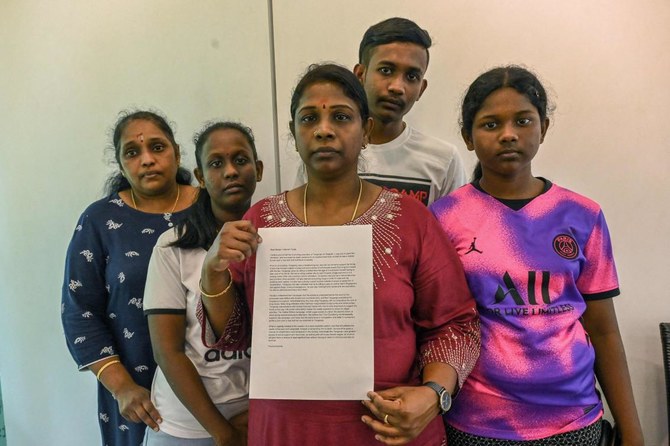
Relatives and activists had sent letters to Singapore’s President Halimah Yacob to plead for clemency. In a video posted by the Transformative Justice Collective, Tangaraju’s niece and nephew appealed to the public to raise concerns to the government over Tangaraju’s impending execution.
An application filed by Tangaraju on Monday for a stay of execution was dismissed without a hearing Tuesday.
“Singapore claims it affords people on death row ‘due process’, but in reality fair trial violations in capital punishment cases are the norm: Defendants are being left without legal representation when faced with imminent execution, as lawyers who take such cases are intimidated and harassed,” said Maya Foa, director of non-profit human rights organization Reprieve.
Critics say Singapore’s death penalty has mostly snared low-level mules and done little to stop drug traffickers and organized syndicates. But Singapore’s government says that all those executed have been accorded full due process under the law and that the death penalty is necessary to protect its citizens.
British billionaire Richard Branson, who is outspoken against the death penalty, had also called for a halt of the execution in a blog post, saying that “Singapore may be about to kill an innocent man.”
Singapore authorities criticized Branson’s allegations, stating that he had shown disrespect for the Singaporean judicial system as evidence had shown that Tangaraju was guilty.

Singapore executes man for coordinating cannabis delivery
Short Url
https://arab.news/n7x6u
Singapore executes man for coordinating cannabis delivery
- Tangaraju Suppiah was sentenced to death in 2018 for abetting the trafficking of 1 kilogram of cannabis
- Under Singapore laws, trafficking more than 500 grams of cannabis may result in the death penalty
France investigates two Franco-Israelis for ‘complicity in genocide’
PARIS: French authorities have issued warrants for two Franco-Israeli nationals for “complicity in genocide” over allegations that they tried to stop humanitarian aid entering conflict stricken Gaza, a legal source said Monday.
According to a lawyer for the NGOs that made a legal complaint last year, it is the first time that a country has considered the blocking of aid as possible “complicity in genocide.”
The warrants were issued in July last year for Nili Kupfer-Naouri of the Israel is Forever group and Rachel Touitou of the Tsav 9 group, the source close to the investigation told AFP following a French media report.
The warrants call for the two to appear before an investigating magistrate but not for their detention.
The pair are accused of seeking to block aid trucks entering Gaza between January and November 2024 and in May last year at the Nitzana and Kerem Shalom frontier posts.
Olivier Pardo, a lawyer for Kupfer-Naouri, said the “pacifist” actions sought to condemn the “hijacking” of humanitarian aid by Hamas and other groups that launched the October 7, 2023 attacks that set off the Gaza war.
“If peacefully demonstrating with an Israeli flag against a terrorist organization seizing humanitarian aid, diverting it, and reselling it at exorbitant prices to Gazans is a crime — then there is no need to look down on the mullahs, France is Iran!” said Touitou, 34, on her social media account.
In an interview with The News website, Kupfer-Naouri, 50, called the French investigation “anti-semitic madness.”
Pardo said Kupfer-Naouri was in Israel but was ready to speak to French investigators there.
The two activists are also suspected of “public provocation for genocide” by calling for aid to be prevented from reaching Gaza, the source said.
Another source close to the investigation said warrants could be issued for about 10 other people.
The complaints were made last year by the Palestinian Center for Human Rights and the rights groups Al-Haq and Al-Mezan. Clemence Bectarte, a lawyer for the groups, said it was the first investigation of its kind in genocide law.
Other legal complaints have also been made in France for “war crimes” over the deaths of Franco-Palestinian children in Gaza in an Israeli bombing raid and against two Franco-Israeli soldiers who took part in operations in the territory.
Another complaint is over the Hamas attack that set off the war.
According to a lawyer for the NGOs that made a legal complaint last year, it is the first time that a country has considered the blocking of aid as possible “complicity in genocide.”
The warrants were issued in July last year for Nili Kupfer-Naouri of the Israel is Forever group and Rachel Touitou of the Tsav 9 group, the source close to the investigation told AFP following a French media report.
The warrants call for the two to appear before an investigating magistrate but not for their detention.
The pair are accused of seeking to block aid trucks entering Gaza between January and November 2024 and in May last year at the Nitzana and Kerem Shalom frontier posts.
Olivier Pardo, a lawyer for Kupfer-Naouri, said the “pacifist” actions sought to condemn the “hijacking” of humanitarian aid by Hamas and other groups that launched the October 7, 2023 attacks that set off the Gaza war.
“If peacefully demonstrating with an Israeli flag against a terrorist organization seizing humanitarian aid, diverting it, and reselling it at exorbitant prices to Gazans is a crime — then there is no need to look down on the mullahs, France is Iran!” said Touitou, 34, on her social media account.
In an interview with The News website, Kupfer-Naouri, 50, called the French investigation “anti-semitic madness.”
Pardo said Kupfer-Naouri was in Israel but was ready to speak to French investigators there.
The two activists are also suspected of “public provocation for genocide” by calling for aid to be prevented from reaching Gaza, the source said.
Another source close to the investigation said warrants could be issued for about 10 other people.
The complaints were made last year by the Palestinian Center for Human Rights and the rights groups Al-Haq and Al-Mezan. Clemence Bectarte, a lawyer for the groups, said it was the first investigation of its kind in genocide law.
Other legal complaints have also been made in France for “war crimes” over the deaths of Franco-Palestinian children in Gaza in an Israeli bombing raid and against two Franco-Israeli soldiers who took part in operations in the territory.
Another complaint is over the Hamas attack that set off the war.
© 2026 SAUDI RESEARCH & PUBLISHING COMPANY, All Rights Reserved And subject to Terms of Use Agreement.


