


RIYADH: FIFA revealed on Wednesday the details of the book of Saudi Arabia’s bid to host the largest-ever edition of a FIFA World Cup to be held in a single country.
The unveiling came after the Kingdom’s FIFA World Cup 2034 official bid book submission during an official FIFA ceremony that was held in Paris on Monday.
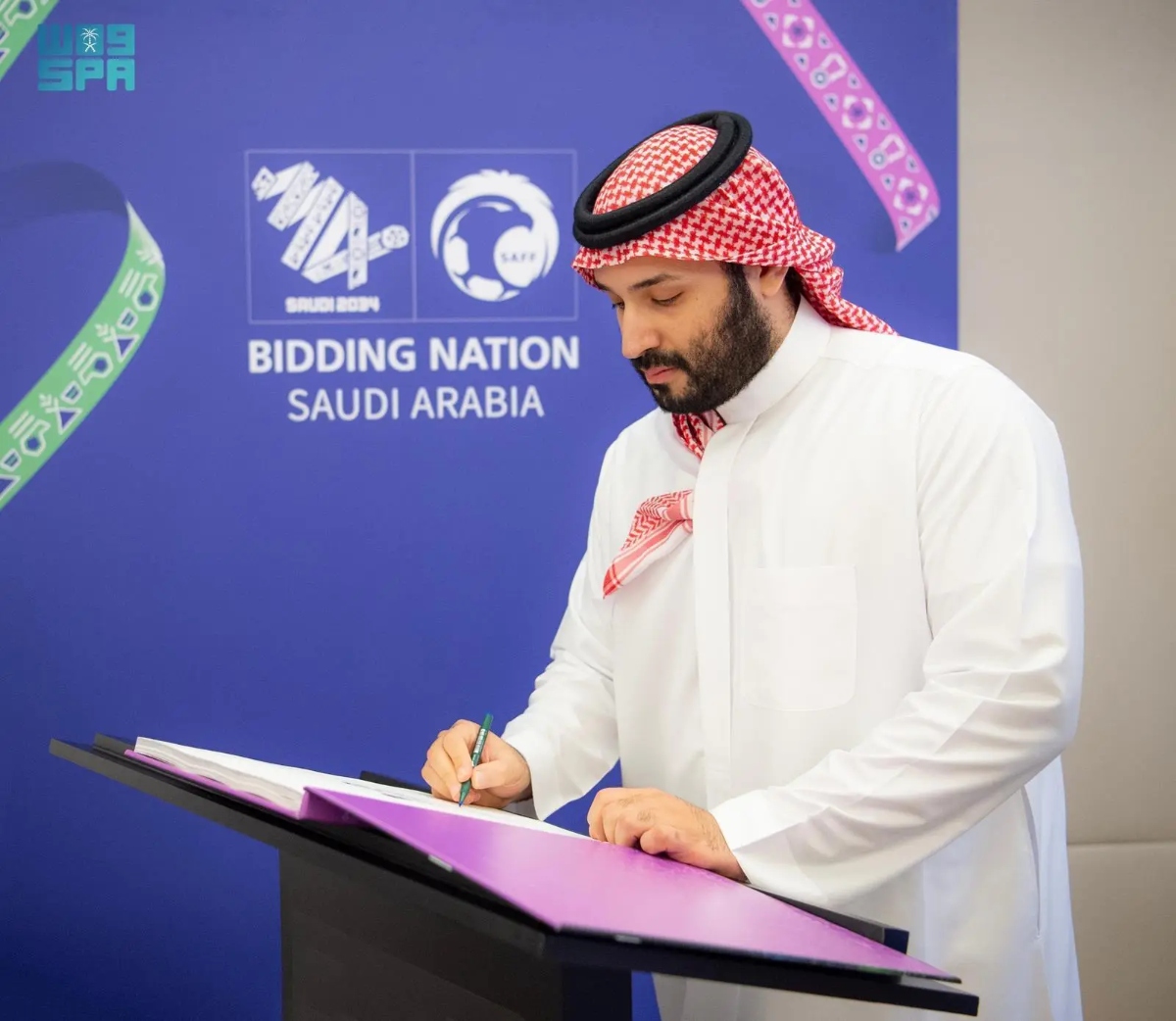
Titled “Growing Together,” the official bid’s slogan has received full support from the Saudi Crown Prince Mohammed bin Salman. It outlines Saudi Arabia’s extensive plans and infrastructure projects while reflecting the Kingdom’s historic transformation.
Prince Abdulaziz bin Turki Al-Faisal, the minister of sport and president of the Saudi Olympic and Paralympic Committee, said: “Together we are working toward materializing Saudi Arabia’s dream of hosting the FIFA World Cup into a tangible reality — as outlined within our official bid book.”
He expressed appreciation to the Saudi leadership for its unlimited support of the Kingdom’s sports sector, and the crown prince for his continuous guidance and significant empowerment over Saudi Arabia’s official FIFA World Cup 2034 bid.
The official bid book provides the Kingdom’s plan to stage one of the world’s largest and most important sporting events, the FIFA World Cup.

Prince Abdulaziz, speaking on the official bid book’s publication, said: “These plans will combine our rich football heritage with our deep passion for the game and will ensure Saudi Arabia’s success as the first nation to host a 48-team tournament in one country.”
Yasser Al-Misehal, the president of the Saudi Arabian Football Federation, said: “It is a moment that marks the natural step in the journey of developing Saudi Arabia’s football and sports sectors.”
He described the bid submission as a pivotal moment for Saudi Arabian football and expressed confidence that the bid would capture the global football community’s attention and inspire future generations.
He told Arab News: “Fans will have the opportunity to explore Saudi Arabia’s diverse locales, from the coastal cities of Jeddah and Alkhobar to the vibrant heart of the desert in Riyadh. They will experience our culture and hospitality firsthand.”
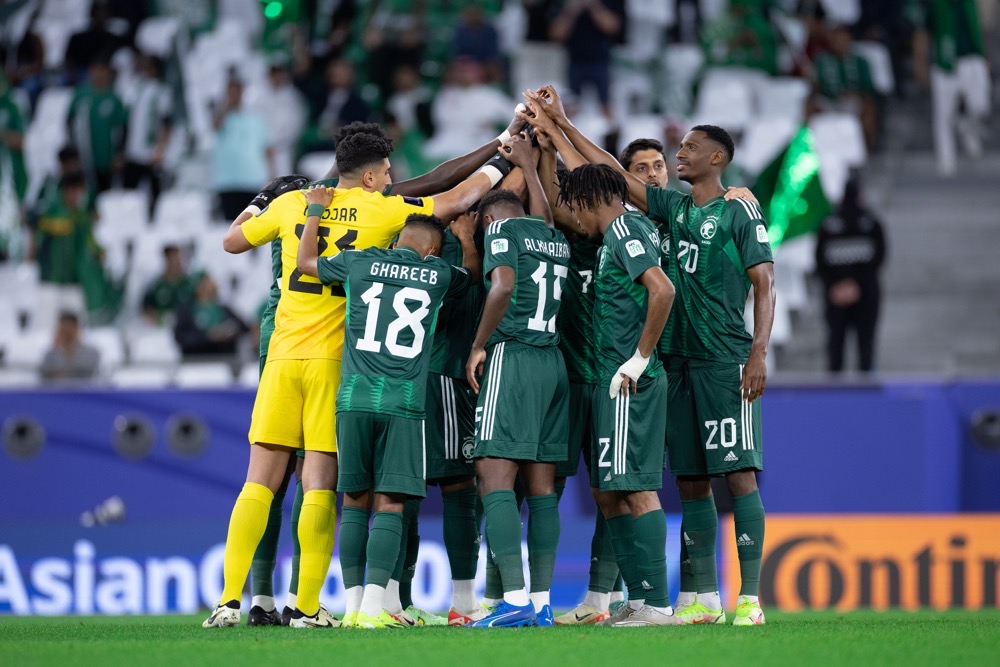
The Kingdom’s football scene has evolved significantly, and Al-Misehal said: “We now have a women’s national team, and that contributes to the country’s commitment to inclusivity and diversity in sports.”
He added that the federation would soon hold a press conference detailing the national team’s preparations and developments.
He went on to describe the submission of the formal bid book and the unveiling of the Kingdom’s plans as a significant historic moment for Saudi Arabia.
Al-Misehal expressed the hope that the Kingdom’s plans would excite football fans worldwide and inspire them for generations to come.
Prince Abdulaziz led the SAFF delegation which submitted the formal bid book at the ceremony in Paris.
Riyadh, Jeddah, Alkhobar, Abha, and NEOM will be the five cities proposed to host the tournament. The cities will feature 15 stadiums, including 11 currently being planned.
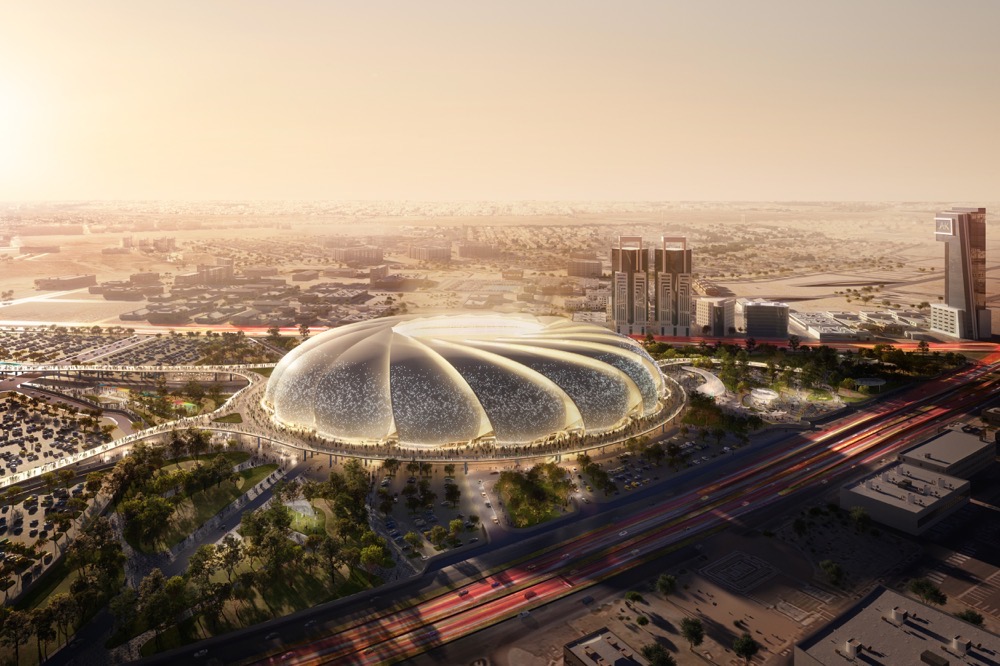
Riyadh would be home to eight stadiums for the World Cup matches, including the King Salman Stadium, scheduled for completion in 2029, which will accommodate over 92,000 spectators and would host the opening and final matches of the tournament. It will become the new home ground for the Saudi national team.
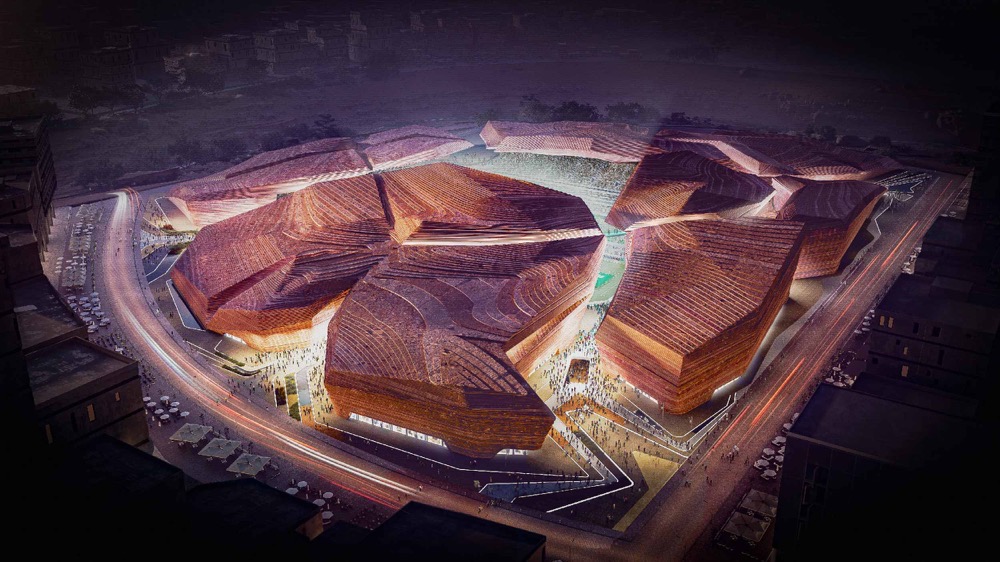
In addition, the Prince Mohammed bin Salman Stadium in Riyadh is scheduled to be a remarkable architectural marvel with triple-tiered stands and a stunning view of one of the Tuwaiq cliffs.
Riyadh also includes King Fahd Sports City Stadium, which is set to be refurbished to the highest global standards. The arena is expected to accommodate 70,000 spectators.

The Jeddah Central Development Stadium will feature an architectural design inspired by the area’s local heritage and traditional wooden architecture from the historic Al-Balad, while the coastal King Abdullah Sports City Stadium will feature a natural design inspired by the Red Sea’s coral reefs.
The Aramco Stadium in Alkhobar will be situated on the Arabian Gulf coast and will feature a dynamic design inspired by the sea while, in Abha, King Khalid University Stadium is set to undergo an expansion to increase its capacity to over 45,000 during the tournament.
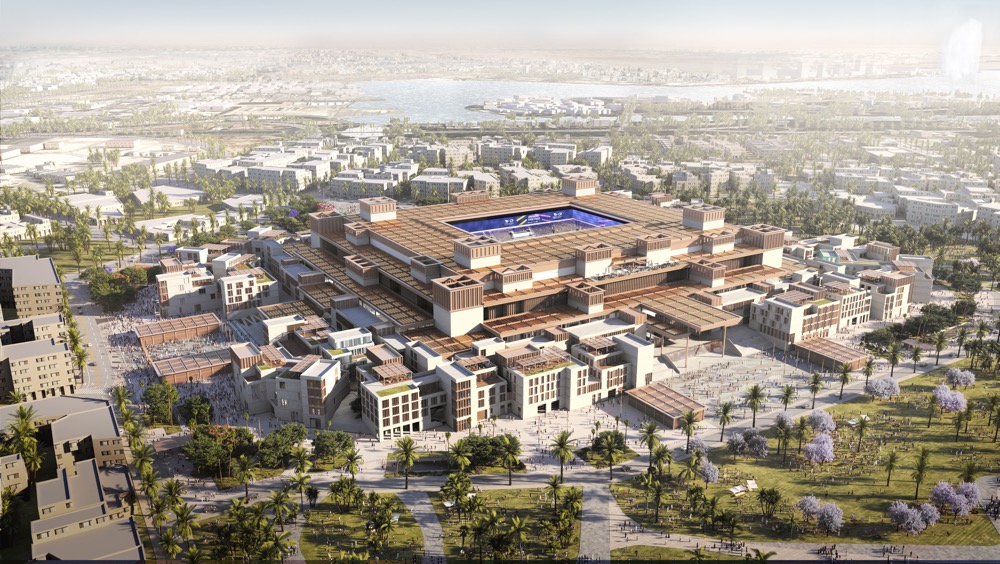
Meanwhile, NEOM Stadium is expected to be one of the most distinctive, and iconic, stadiums in the world. The arena will be situated within The Line and will provide an unprecedented experience for fans. The stadium will also run entirely on renewable energy, generated primarily from wind and solar sources.
Leveraging the Kingdom’s diverse and picturesque geography, the hosting plan also includes 10 other host locations scheduled to be the home of some of the training camps for participating teams.
Saudi Arabia would have more than 230,000 rooms available across the five host cities, in line with FIFA requirements. These rooms would cater to VIPs, FIFA delegations, participating teams, media personnel, and fans.

A total of 132 training venues located across 15 cities are proposed as base camps for the 48 teams, including 72 locations designated for Base Camp Training Sites, with referees scheduled to have access to two Referee Base Camp Training Sites.
The official bid book outlines the 10 proposed FIFA Fan Festival sites in the Kingdom. FIFA will select one site in each host city from a list that includes King Salman Park in Riyadh, which is set to become the world’s largest urban park.
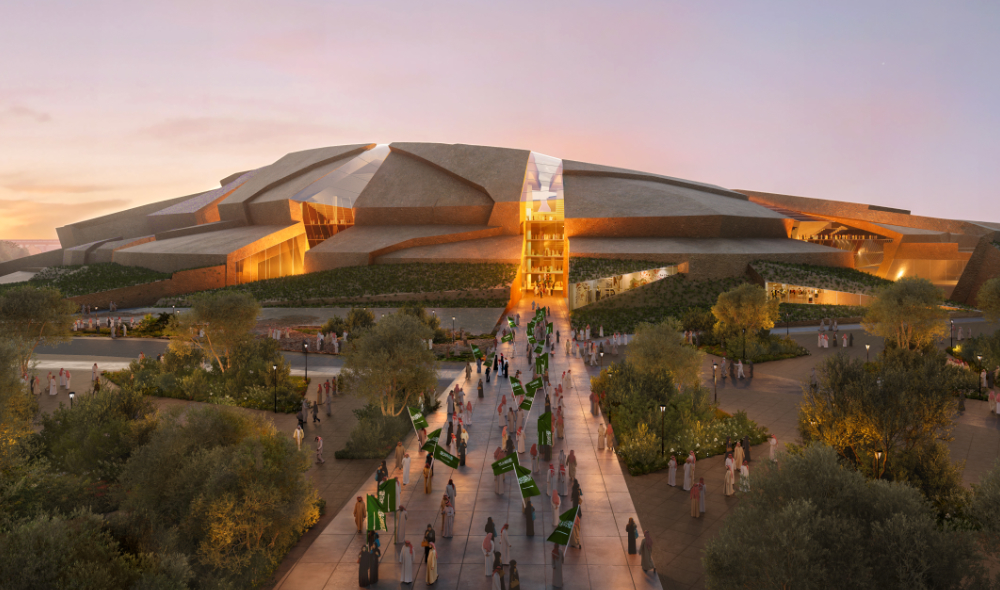
Other sites include the Jeddah Waterfront on the Red Sea; the Al Bihar Square in Abha; the marina within The Line project in NEOM; and King Abdullah Park in Alkhobar.
Should the Kingdom be granted the right to host the FIFA World Cup 2034, it would rank among the most-watched sporting events in history, while providing an unforgettable experience for all.


