

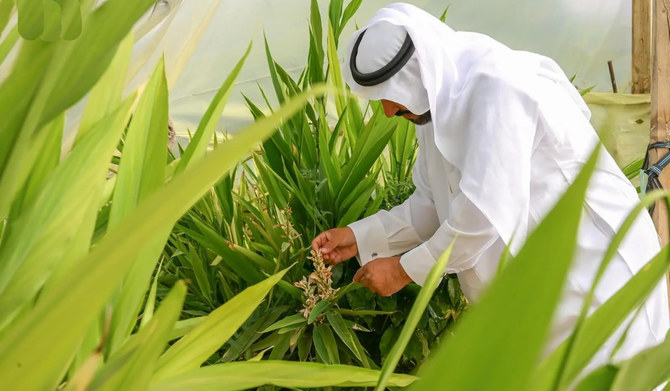

RIYADH: A farmer in Baha has found a way to cultivate the elusive cardamom, the ingredient that gives Saudi coffee, or gahwa, its signature flavor and aroma.
Driven by his love and passion for cardamom-flavored coffee, Abdullah Al-Zahrani, a farmer in Bani Hassan, northwest Baha, tried agricultural experiments that led to him growing more than 350 cardamom plants.
Abdullah Al-Zahrani’s passion and love for agriculture has inspired him to cultivate rare plants and trees, including cardamom and herbaceous plants. (SPA)
In an interview with the Saudi Press Agency, Al-Zahrani said: “I started cultivating cardamom about three years ago in agricultural terraces in the village using a limited quantity of seedings.”
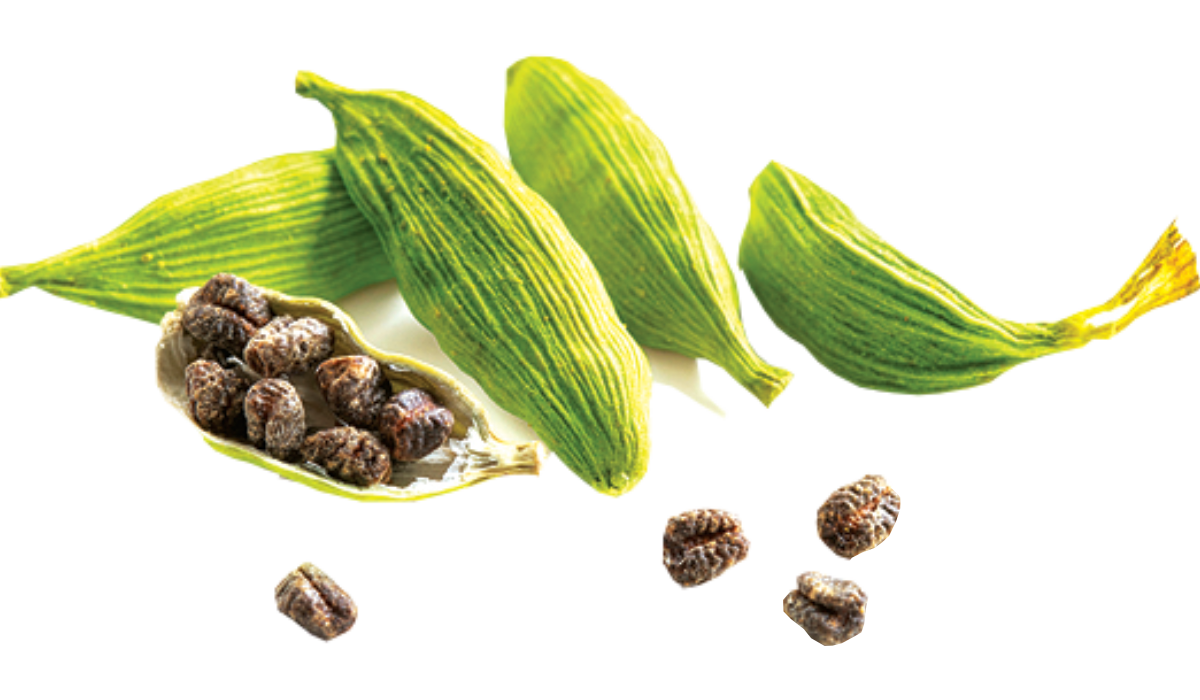
He added that he had no previous experience in growing the plant. “Some believe that cardamom seedlings can only grow in specific regions and climatic conditions,” he said. “Today, I have over 350 cardamom seedlings and I will harvest the first crop within the next couple of months. This experience has been fun to me, and I am working on scaling it up to a production experience in larger commercial quantities.”
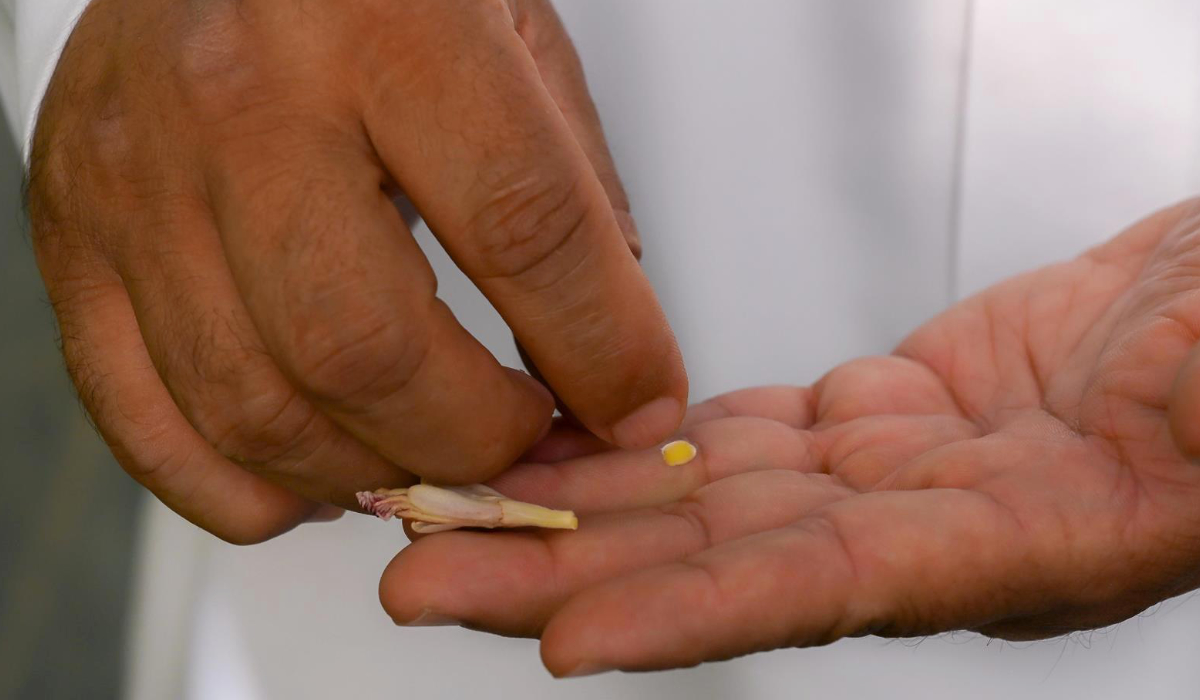
Abdullah Al-Zahrani’s passion and love for agriculture has inspired him to cultivate rare plants and trees, including cardamom and herbaceous plants. (SPA)
Al-Zahrani said that his passion and love for agriculture inspired him to cultivate rare plants and trees, including cardamom and herbaceous plants.
To cultivate the spice, he took advantage of the region’s environmental and natural elements, namely soil fertility, fresh water and moderate weather. He planted healthy cardamom seeds 3 cm deep in the ground and left a 20–30 cm distance in between each sowing. Al-Zahrani said that the Ministry of Environment, Water and Agriculture’s branch in Baha provided agricultural guidance that helped him along the way.
FASTFACTS
• To cultivate cardamom, Abdullah Al-Zahrani took advantage of the region’s environmental and natural elements, namely soil fertility, fresh water and moderate weather.
• He planted healthy cardamom seeds 3 cm deep in the ground and left a 20–30 cm distance in between each sowing.
After planting, if carefully tended, cardamom takes about eight months to reach the harvesting stage. A cardamom tree can grow to a height of up to two meters. The tree’s mature fruit is like that found in the market in terms of size, flavor and taste.
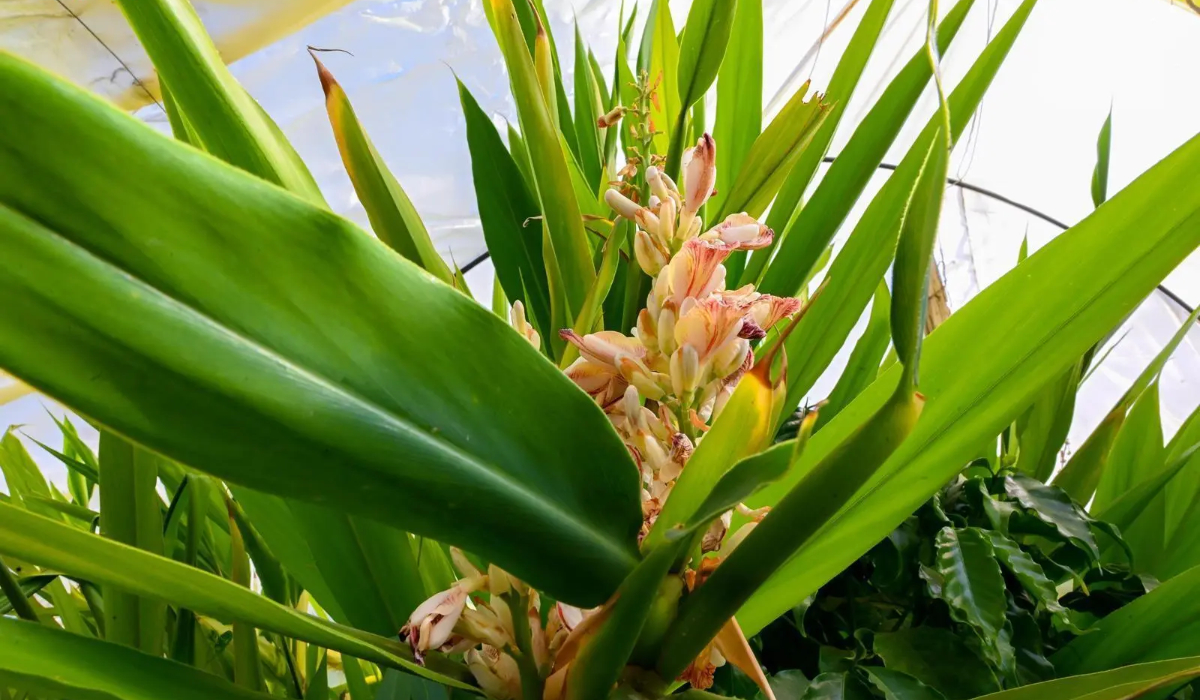
Abdullah Al-Zahrani’s passion and love for agriculture has inspired him to cultivate rare plants and trees, including cardamom and herbaceous plants. (SPA)
The Baha farmer aspires to increase the area and number of cardamom trees on his farm in the coming years, and take advantage of the region’s natural elements.
“Crops diversity leads to income source diversity,” he added. “It (agriculture) is also one of the most beautiful manifestations of rural life, capturing the attention of tourists and visitors with its beauty and quality. Agriculture is a tributary of rural tourism, enhancing the region’s identity and the human-land relationship.”
According to the report by the Saudi Press Agency, Baha residents rely on agriculture for its commercial benefits and contribution to developing their livelihoods. With the support of the ministry, the region has embraced various agricultural innovations as well as the cultivation of new and rare varieties of fruit trees for environmental sustainability.


