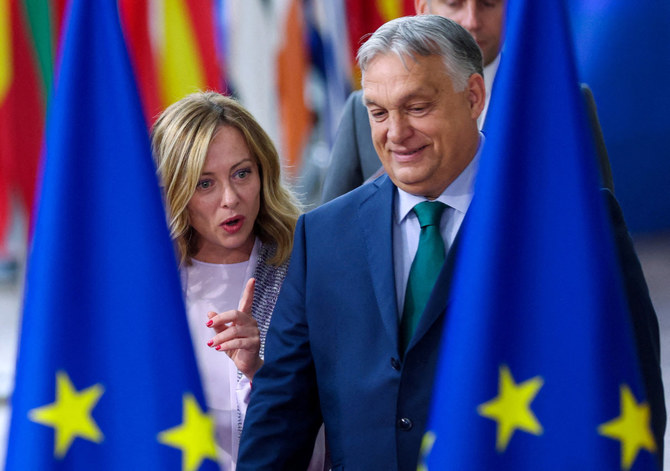
BUDAPEST/BRUSSELS: Hungary’s nationalist government launches its presidency of the European Union on Monday with a Trump-like call to “Make Europe Great Again” after EU lawmakers questioned whether it should be allowed to take on the role.
Their concerns are based on Prime Minister Viktor Orban’s many clashes with Brussels over democratic norms.
Hungarian diplomats say the country will be an honest broker, while analysts say Budapest’s actions at the forefront of EU policy-making are likely to be restricted given that Brussels is in a transition phase following elections in June.
The presidency’s role is to set the agenda, chair meetings of EU members in all fields except foreign or euro zone matters, seek consensus among EU member states and broker agreements on legislation with the European Parliament.
It will take months for a new European Commission and the new members of parliament to be in their stride, analysts say.
That means that, even though far-right gains politicians potentially sympathetic to Hungary’s priorities made gains in the EU elections, the presidency’s ability to drive policy through is limited.
“There’ll only be a small influence on the legislative agenda. That starts much later, possibly at the end of the year, possibly at the beginning of next year,” said Pavel Havlicek, research fellow at the Association for International Affairs.
Hungary has said its priorities include pushing western Balkan membership of the EU, illegal migration and economic competitiveness.
Critics note its enlargement push does not include Ukraine.
Hungary has a history of blocking or delaying funds and arms for Ukraine, as well as maintaining ties with Moscow. It has also criticized EU efforts to cut dependence on China.
Ahead of its assumption of the EU presidency, the bloc hurried through new sanctions against Russia and launched membership talks with Ukraine.
Susi Dennison, senior fellow at the European Council on Foreign Relations, said a “ballsy” presidency launch suggested Hungary might seek to push its nationalist line.
Johannes Greubel, senior policy analyst at the European Policy Center, said some of priorities, such as on competitiveness, struck a chord with the rest of the EU, but this would likely be combined with right-wing rhetoric on migration, the Ukraine war and the rule of law.
“It is a presidency of a mixed narrative, but far-right elements will prevail.”


![]()

Hungary takes EU presidency echoing Trump but likely to lack bite
Short Url
https://arab.news/25mzg
Hungary takes EU presidency echoing Trump but likely to lack bite
- In launching a Trump-like call to make to “Make Europe Great Again”, Hungary's PM promises to be an honest broker
- Hungary has a history of blocking or delaying funds and arms for Ukraine, as well as maintaining ties with Moscow


Latest updates


© 2026 SAUDI RESEARCH & PUBLISHING COMPANY, All Rights Reserved And subject to Terms of Use Agreement.